
¡Acompáñanos a viajar por el mundo de los libros!
Añadir este libro a la estantería
Grey
Escribe un nuevo comentario Default profile 50px
Grey
Suscríbete para leer el libro completo o lee las primeras páginas gratis.
All characters reduced
History of School Books - cover

History of School Books

Harrison Stewart

Traductor A AI

Editorial: Publifye

  • 0
  • 0
  • 0

Sinopsis

History of School Books explores how textbooks have shaped education, influenced learning, and mirrored societal values across time. It examines how the curriculum's development has been molded by these learning materials. Did you know textbooks weren't always standardized? The rise of uniform textbooks in the 19th century significantly impacted educational practices. Furthermore, these books are not neutral; they actively shape intellectual thought, challenging the idea of objective knowledge by revealing embedded biases and power dynamics.

 
The book approaches its subject chronologically, examining how educational philosophies and social contexts influenced textbooks' creation and reception through the ages, from ancient clay tablets to today's digital resources. It investigates the role of textbooks in promoting or challenging social inequality. The analysis is supported by primary source research, including historical textbooks, archival data, and educational policies, to offer a comprehensive understanding of the textbook’s impact on society.
Disponible desde: 26/02/2025.
Longitud de impresión: 78 páginas.
Otros libros que te pueden interesar

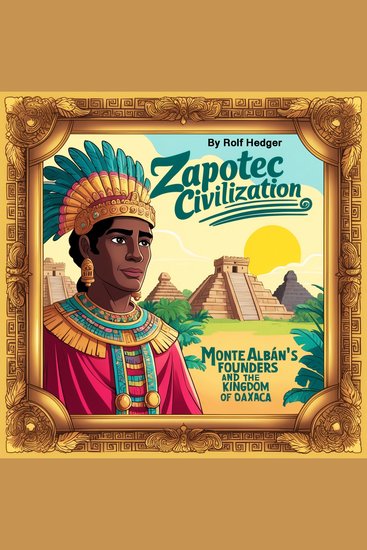
  • Zapotec Civilization - Monte Albán's Founders and the Kingdom of Oaxaca - cover

    Zapotec Civilization - Monte...

    Rolf Hedger

    • 0
    • 0
    • 0
    The Zapotec civilization emerged in the valleys of Oaxaca, a region characterized by its fertile land, diverse ecosystems, and strategic position for trade and agriculture. Archaeological evidence suggests that the earliest Zapotec communities began forming around 1500 BCE, with small farming villages dotting the landscape. Over time, these settlements grew in complexity, giving rise to a society that would become one of Mesoamerica’s most influential civilizations. 
    Early Zapotec communities relied heavily on agriculture, cultivating maize, beans, squash, and chili peppers—staples that formed the foundation of their diet. The region’s rivers and seasonal rains provided a reliable water source, allowing for irrigation techniques that supported larger populations. As food production increased, villages expanded, and the need for organization led to the development of social hierarchies. Religious leaders, warriors, and skilled artisans began to hold distinct roles in society, paving the way for the emergence of political structures. 
    By the first millennium BCE, the Zapotecs had established themselves as a dominant force in the Oaxaca Valley. Unlike nomadic or loosely structured societies, they developed permanent settlements with planned architecture, ceremonial centers, and marketplaces. This period saw the rise of San José Mogote, one of the earliest known Zapotec centers, where the first signs of their writing system and political organization appeared. San José Mogote’s influence laid the groundwork for the later establishment of Monte Albán, which would become the heart of Zapotec power.
    Ver libro
  • Martin Luther: A short biography - 5 Minutes: Short on time – long on info! - cover

    Martin Luther: A short biography...

    5 Minutes, 5 Minute Biographies,...

    • 0
    • 0
    • 0
    Martin Luther, monk, translator of the Bible, and protestant: Life and work in a short biography! Everything you need to know, brief and concise. Infotainment, education and entertainment at its best!
    Ver libro
  • Control through Dependency - Creating a Dependency to Maintain Control - cover

    Control through Dependency -...

    Cito Harder

    • 0
    • 0
    • 0
    Dependency is one of the most powerful tools of control, shaping the way individuals behave, think, and perceive their own agency. When someone is made to rely heavily on another person, organization, or system, their ability to make independent choices becomes severely restricted. This loss of autonomy often leads to a dynamic where the dependent individual feels trapped, unable to break free due to financial, emotional, or social limitations. Understanding how dependency is used as a control mechanism is essential for recognizing when it is being manipulated for someone else’s gain. 
    At its core, dependency-based control thrives on restricting access to critical resources. These resources can be financial, such as when a controlling partner withholds money or employment opportunities to keep the other person reliant on them. It can also be emotional, as seen in relationships where one person conditions love and approval on the other’s compliance. In extreme cases, entire organizations or governments create a structured form of reliance, making individuals believe that they cannot survive without their continued support. 
    A key component of dependency control is fostering a sense of learned helplessness. When people are repeatedly placed in situations where they feel incapable of acting on their own, they begin to believe that they are inherently powerless. Over time, this mindset erodes self-confidence and discourages any attempt to challenge the controlling force. Those who manipulate dependency often reinforce this belief by convincing individuals that the outside world is dangerous, that they are not competent enough to succeed alone, or that their well-being is entirely dependent on maintaining the current relationship or system.
    Ver libro
  • Chaste Mimosa - The Psychology of Plants - cover

    Chaste Mimosa - The Psychology...

    Terence McMullen

    • 0
    • 0
    • 0
    Propositions about artificial intelligence are being debated seriously in the 21st Century, but machines, unlike plants, are not even living organisms.
    So, are plants sentient beings, like humans? Do they feel? Can they communicate?
    Plant sentience is a subject that has intrigued mankind over the ages - from the ancient Greeks, Plato and Aristotle, through to modern day philosophers and psychologists.
    In this extraordinary book, Australia's Dr Terence McMullen presents an engaging, systematic and thorough study of plant psychology.
    The aim of this work is to bring together and organize the contentions of serious students of plant life who argue that there are objective grounds for plant psychology.
    Chaste Mimosa: The Psychology of Plants is a compelling and essential book for all thinkers, students and teachers of psychology, philosophy, physiology, plus all disciplines related to the study of plants.
    Ver libro
  • The Once and Future Liberal - After Identity Politics - cover

    The Once and Future Liberal -...

    Mark Lilla

    • 0
    • 0
    • 0
    From one of the most internationally admired political thinkers, a controversial polemic on the failures of identity politics and what comes next for the left — in America and beyond. 
    Following the shocking results of the US election of 2016, public intellectuals across the globe offered theories and explanations, but few were met with such vitriol, panic, and debate as Mark Lilla’s. The Once and Future Liberal is a passionate plea to liberals to turn from the divisive politics of identity and develop a vision of the future that can persuade all citizens that they share a common destiny. 
    Driven by a sincere desire to protect society’s most vulnerable, the left has unwittingly balkanized the electorate, encouraged self-absorption rather than solidarity, and invested its energies in social movements rather than party politics. Identity-focused individualism has insidiously conspired with amoral economic individualism to shape an electorate with little sense of a shared future and near-contempt for the idea of the common good. 
    Now is the time to re-build a sense of common feeling and purpose, and a sense of duty to one another. A fiercely argued, important book, enlivened by acerbic wit and erudition, The Once and Future Liberal is essential listening for our times.
    Ver libro
  • Birmingham Campaign The: The History of the SCLC’s Non-Violent Protests in Alabama’s Biggest City - cover

    Birmingham Campaign The: The...

    Editors Charles River

    • 0
    • 0
    • 0
    Today every American is taught about watershed moments in the history of minorities’ struggles for civil rights over the course of American history: the Civil War, Brown v. Board of Education, Rosa Parks’ refusal to give up her seat, Dr. Martin Luther King, Jr.’s “I Have a Dream” speech, and the passage of the Civil Rights Act of 1964. Indeed, the use of the phrase “Civil Rights Movement” in America today almost invariably refers to the period of time from 1954-1964. 
    	However, the Civil Rights Movement actually came into existence long before it is presumed to have done so. The movement's primary work was slow, evolving, gradual and long-term. Its more glamorous moments, such as the Montgomery Bus Boycott (1955–1956), the Selma to Montgomery March (1965), and the March on Washington (1963), mainly were supplemental to the all-important grassroots work already going on in communities, churches, legislatures, and courts. The nascent stages of the movement actually began far earlier, among abolitionists and the writings and activism of Frederick Douglass and others.  
    	Beginning in the summer of 1962, King and the Southern Christian Leadership Conference (SCLC) began to express interest in targeting one of the South's most brutally segregated cities. Nicknamed “Bombingham,” the city had witnessed the bombing of over a dozen black homes and churches in the previous five years. A victory in Birmingham was a goal that would embolden the Civil Rights Movement like never before.
    Ver libro