¡Acompáñanos a viajar por el mundo de los libros!
Añadir este libro a la estantería
Grey
Escribe un nuevo comentario Default profile 50px
Grey
Suscríbete para leer el libro completo o lee las primeras páginas gratis.
All characters reduced
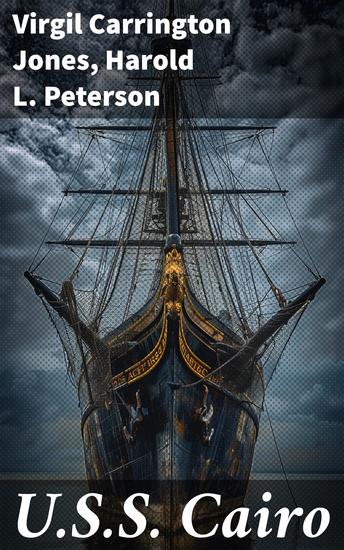
USS Cairo - A Journey Through Civil War Naval History - cover

USS Cairo - A Journey Through Civil War Naval History

Harold L. Peterson, Virgil Carrington Jones

Editorial: Good Press

  • 0
  • 0
  • 0

Sinopsis

U.S.S. Cairo presents a compelling anthology that navigates the dynamic tapestry of historical narratives and literary styles focused on the enigmatic vessel of the same name. The collection curates a diverse assortment of writings that evoke the grandeur of naval warfare and the intricate details of Civil War era maritime history. Through a medley of narratives, ranging from meticulous historical documents to vivid descriptive essays, the anthology not only captures the technical marvel of the ironclad but also resurrects the intense historical epoch to which it belonged. This significant collection, punctuated by standout pieces that capture the suspense and tragedy of warfare, offers readers an immersive experience into a transformative period in American history. Editors Virgil Carrington Jones and Harold L. Peterson have assembled a group of contributors who are renowned for their expertise in naval history and Civil War studies. This assembly of knowledgeable voices grants the collection its authenticity and depth, bringing together varied perspectives that discuss not merely the vessel'Äôs history but the complex socio-political climate surrounding it. Aligning with pivotal movements in historical maritime research and exploring the interwoven themes of technological advancement and warfare, this anthology enriches the reader's understanding of the period. For anyone eager to explore the breadth of Civil War maritime history, U.S.S. Cairo is an indispensable volume. This anthology extends an invitation to immerse oneself in a multiplicity of perspectives and styles that coalesce into a comprehensive analysis of a significant era. The dialogues between the insightful contributions make this collection not just an educational resource but a vibrant scholarly conversation that fosters a deeper appreciation for the interplay of technology, history, and literature. High in educational value and replete with enlightening narratives, this anthology is an essential addition to the library of history enthusiasts and scholars alike.
Disponible desde: 15/11/2023.
Longitud de impresión: 40 páginas.

Otros libros que te pueden interesar

  • Vedic Cosmos - cover

    Vedic Cosmos

    HENRY ROMANO

    • 0
    • 0
    • 0
    In his dancing position, Shiva is known as Nataraja, the King of dancers, and is one of the most beautiful forms of Lord Shiva. The upper right hand of Shiva, as Nataraja, holds the damaru drum. It shows nothing, but it represents universal development. Meanwhile, the lower right-hand holds a flame of destruction. There are many stories about Shiva's appearance. There is a third eye between Lord Shiva's eyebrows on his forehead as an example. It represents wisdom or inner vision. The other two eyes represent love and justice. Shiva views everything with the proportions of love, justice, and inner knowledge; thus, he is neither too harsh nor lenient. Shiva's three eyes also symbolize the sun, moon, and fire, how the universe is illuminated. Shiva's wife, Parvati, covered Shiva's eyes with her hands one day, and the entire world was enveloped in darkness. That is how Shiva got his third eye. Shiva ordered the third eye to manifest, producing light, heat, and fire.
    Ver libro
  • The Homefront Heroes - Everyday Lives during World War II and the Role of Civilians - cover

    The Homefront Heroes - Everyday...

    Sage Winters

    • 0
    • 0
    • 0
    The term "homefront" often evokes images of soldiers in trenches or aircraft soaring across the skies, but it is also a powerful representation of the unseen sacrifices and contributions made by civilians during times of war. During World War II, the homefront became an essential element in the overall war effort, with civilians across the world playing critical roles in supporting the troops and maintaining the stability of their countries. The efforts of everyday people—often invisible and uncelebrated—were foundational to both the immediate success of the war and the longer-term impact on society. This chapter delves into the importance of the homefront during WWII, exploring the diverse contributions of civilians, and highlighting how they collectively displayed a resilience that was vital for the war’s outcome. 
      
    World War II was not just fought on foreign battlefields—it was waged in factories, schools, hospitals, and even neighborhoods. The efforts of civilians extended well beyond the provision of material goods. They also contributed by keeping national spirits high through solidarity and patriotism, showing an unyielding dedication to the cause despite the challenges at home. The mobilization of the homefront became a key factor in the Allied victory, and it transformed daily life in ways that would endure long after the war ended. 
      
    Women, for instance, took on roles that had traditionally been reserved for men, stepping into factories, shipyards, and offices, proving their capacity to contribute to industries critical to the war effort. At the same time, families managed with rationing and shortages while simultaneously participating in drives for scrap metal, rubber, and other materials that could be recycled for wartime use. Even children contributed in their own ways, collecting tin cans and engaging in other activities designed to support the war effort.
    Ver libro
  • Empaths and Narcissists: Breaking Free from Gaslighting Narcissistic Abuse and Reclaiming Your Power as a Highly Sensitive Person - cover

    Empaths and Narcissists:...

    Andy Gardner

    • 0
    • 0
    • 0
    Embark on a Journey of Healing and Empowerment: The Ultimate Empath and Narcissist Recovery Guide!  
    Two manuscripts in one audiobook:Empath and Narcissist: Empowering Empaths and Highly Sensitive People to Thrive, Recover, and Reclaim Their Lives after Narcissistic ManipulationGaslighting: How to Recognize Manipulation and Narcissistic Abuse and Set Boundaries So You Can Break Free and Recover from an Emotionally Abusive Relationship 
    Manuscript 1: Empath Enlightenment 
    Dive deep into the heart of your empath nature and learn how to:Understand why you're a magnet for narcissists.Decode the narcissist's mask and see beyond their charm.Identify the stages of narcissistic abuse and shield yourself.Navigate through emotional recovery to find your true self.Transform sensitivity into your most potent superpower. 
    Manuscript 2: Gaslighting Be Gone!Spotting the red flags of manipulation with eagle eyes.Delving into the mind of a manipulator to predict their moves.Recognizing gaslighting in unsuspected places.Developing ironclad strategies to deflect gaslighting efforts.Setting strong boundaries to protect your peace.Embracing the path to self-love and recovery from abuse.Arming yourself with techniques to prevent future manipulation. 
    Don't let another moment pass in the shadow of doubt and manipulation. 
    Click "Add to Cart" and embark on your journey to a brighter, self-empowered life TODAY!
    Ver libro
  • A Ramble About Tallaght - History People Places - cover

    A Ramble About Tallaght -...

    Albert Perris

    • 0
    • 0
    • 0
    A fascinating history of an ancient place.
    From its first mention in legend in the Book of Invasions, through early Christian monastic settlements, castles and grand residences, Fenian raids and the Battle of Tallaght, there has been huge change in Tallaght. In more recent times it has seen car and motorcycle racing, an aerodrome, the rise and fall of a chocolate factory and a pioneering telecommunications firm. The massive population explosion and rapid modernisation towards the end of the twentieth century means this once-tiny village in Dublin's foothills is now home to over 80,000 people.
    Richly illustrated with period photographs and original drawings by Michael O'Brien, Albert Perris tells the often-surprising story of Tallaght.
    Ver libro
  • Standing Tall - Leadership Lessons in the Life of a Soldier - cover

    Standing Tall - Leadership...

    Robert F. Foley

    • 0
    • 0
    • 0
    The Medal of Honor recipient chronicles his life and military career in this memoir while also sharing his thoughts on leadership. Robert Foley had only been in Vietnam for six months when he was promoted to captain and given command of a rifle company. In November 1966, Foley led his men on a mission to rescue another company that had been pinned down by Viet Cong forces. His leadership that day inspired his men and led to a successful operation—and the Medal of Honor. His actions in Vietnam were only a small portion of a long and varied career of service in the U.S. Army, but Foley did not always seem marked for success. Coming from a blue-collar suburb of Boston, his years in West Point were marked by poor grades, injuries, and sickness. With a determination to lead by example and inspire trust among others, Foley served across the globe and rose through the ranks. He even returned to West Point as Commandant of Cadets, later retiring as a 3-star general and commander of Fifth Army.Praise for Standing Tall Finalist, 2022 Army Historical Foundation Distinguished Writing Awards “What an amazing opportunity! Standing Tall allows us to learn about leadership from a true American hero.” ―Mike Krzyzewski, former Head Coach, Duke University and USA Olympic Gold Medal basketball teams
    Ver libro
  • First Bull Run: The History of the Civil War’s First Major Battle - cover

    First Bull Run: The History of...

    Jonathan Gianos-Steinberg

    • 0
    • 0
    • 0
    After Fort Sumter, the Lincoln Administration pushed for a quick invasion of Virginia, with the intent of defeating Confederate forces and marching toward the Confederate capitol of Richmond. Lincoln pressed General Irvin McDowell to push forward. Despite the fact that McDowell knew his troops were inexperienced and unready, pressure from Washington politicians forced him to launch a premature offensive against Confederate forces in Northern Virginia.  
    	McDowell’s strategy during the First Battle of Bull Run was grand, and in many ways it was the forerunner of a tactic Robert E. Lee, Stonewall Jackson and James Longstreet executed brilliantly on nearly the same field during the Second Battle of Bull Run in August 1862. McDowell’s plan called for parts of his army to pin down General P.G.T. Beauregard’s Confederate soldiers in front while marching another wing of his army around the flank and into the enemy’s rear, rolling up the line. McDowell assumed the Confederates would be forced to abandon Manassas Junction and fall back to the next defensible line, the Rappahannock River. In July 1861, however, this proved far too difficult for his inexperienced troops to carry out effectively.  
    	As the first major land battle of the Civil War, the First Battle of Bull Run made history in several ways. The two sides fought near the railroad junction at Manassas on July 21, 1861, just 25 miles away from Washington, which was close enough for many civilians from the nation’s capital to come and watch what they expected to be a rout of Confederate forces, and for awhile it appeared as though that might be the case.  
    	McDowell’s strategy ultimately fell apart though, mostly thanks to the use of the railroad. Confederate reinforcements under General Joseph E. Johnston, including a brigade led by Thomas Jonathan Jackson, arrived by train in the middle of the day, a first in the history of American warfare.
    Ver libro