Junte-se a nós em uma viagem ao mundo dos livros!
Adicionar este livro à prateleira
Grey
Deixe um novo comentário Default profile 50px
Grey
Assine para ler o livro completo ou leia as primeiras páginas de graça!
All characters reduced
Notes on Democracy - cover
LER

Notes on Democracy

H. L. Mencken

Editora: e-artnow

  • 0
  • 0
  • 0

Sinopse

Notes on Democracy is a critique of democracy. The book places political leaders into two categories: the demagogue, who "preaches doctrines he knows to be untrue to men he knows to be idiots" and the demaslave, "who listens to what these idiots have to say and then pretends that he believes it himself." Mencken depicts politicians as "men who have sold their honor for their jobs."
Disponível desde: 25/01/2022.
Comprimento de impressão: 128 páginas.

Outros livros que poderiam interessá-lo

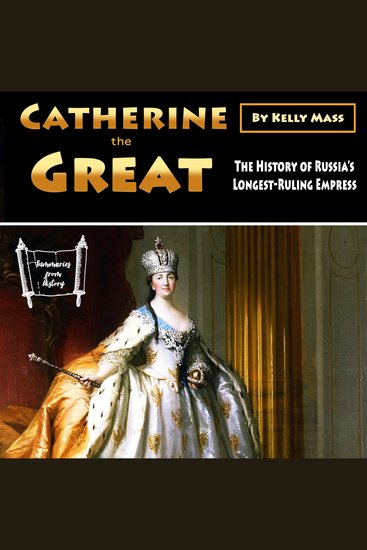
  • Catherine the Great - cover

    Catherine the Great

    Kelly Mass

    • 0
    • 0
    • 0
    Catherine II (born Sophie of Anhalt-Zerbst; May the 2nd 1729-- November the 17th 1796, typically called Catherine the Great, ruled as Empress of Russia from 1762 to 1796, making her the nation's longest-serving female ruler. Following the assassination of her spouse and 2nd cousin, Peter III, she rose to power. Russia grew bigger, its civilization was rejuvenated, and it was acknowledged as one of Europe's great powers during her reign.Catherine used her honorable favorites, most significantly Count Grigory Orlov and Grigory Potemkin, to help her gain power and manage the empire. She ruled at the time of a period when the Russian Empire was rapidly broadening through intrusion and diplomacy, with the help of very effective generals like Alexander Suvorov and Pyotr Rumyantsev, and also admirals like Samuel Greig and Fyodor Ushakov. In the south, the Crimean Khanate was beat in the Russo-Turkish War (1768-- 1774), and Russia colonized Novorossiya along the Black and Azov Seas, thanks to triumphs over the Bar confederation and the Ottoman Empire.Catherine the Great has been mentioned so many times in Russian history, it’s definitely a good chapter to study to understand the background of the country more.
    Ver livro
  • Crazy Wisdom - cover

    Crazy Wisdom

    Wes "Scoop" Nisker

    • 0
    • 0
    • 0
    Take a wild and rickety ride through the philosophies of the East and West to discover madmen, dreamers, and unconventional wisdom seekers. Fun and irreverent, Crazy Wisdom synthesizes the most significant, compelling insights of the ages. Journey into the unorthodox teachings that have bubbled up through the words of such "crazy" visionaries as Rumi, Gautama the Buddha, Mark Twain, Lao Tzu, Albert Einstein, Mahatma Gandhi, Allen Ginsberg, and Lily Tomlin. Discover the common thread in these multiple perspectives and travel on a comedic course to enlightenment!
    Ver livro
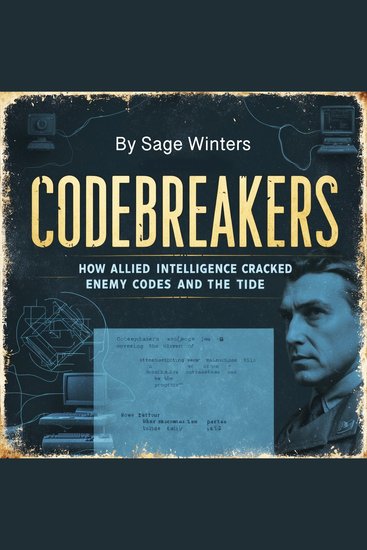
  • Codebreakers - How Allied Intelligence Cracked Enemy Codes and the Tide - cover

    Codebreakers - How Allied...

    Sage Winters

    • 0
    • 0
    • 0
    The art of codebreaking has long been an essential aspect of warfare, serving as a hidden weapon that can change the course of history. During World War II, intelligence efforts were not only about gathering information; they were about deciphering the secrets encoded by the enemy to gain a strategic advantage. As technology evolved, so did the complexity of military ciphers, making the task of breaking enemy codes more challenging and more critical than ever. "Codebreakers: How Allied Intelligence Cracked Enemy Codes and the Tide" delves into the extraordinary efforts of Allied cryptographers, whose tireless work behind the scenes helped secure victories that shifted the balance of the war. 
      
    The importance of cryptography in World War II cannot be overstated. The ability to read an enemy’s messages before they had time to act was a decisive factor in numerous key battles and campaigns. The German Enigma machine, a sophisticated encryption device, represented the pinnacle of Nazi Germany’s efforts to protect its communications. Breaking this code was essential to the Allied success, and it was a challenge that seemed insurmountable at the time. However, a group of brilliant minds, including Alan Turing, led the charge in deciphering the Enigma cipher, providing the Allies with invaluable intelligence that allowed them to anticipate German movements, thwart attacks, and save countless lives. 
      
    At the heart of this monumental achievement was Bletchley Park, a secret British facility that became the epicenter of codebreaking during the war. Here, the brightest mathematicians, linguists, and engineers worked tirelessly, often under immense pressure, to crack the German and later the Japanese codes.
    Ver livro
  • Unplagued - cover

    Unplagued

    Santiago Machain

    • 0
    • 0
    • 0
    Unplagued explores the profound transformation of human civilization in an era largely free from the devastating plagues that once shaped history. This comprehensive volume examines how science, technology, medicine, politics, economics, society, culture, and the environment have evolved in the absence of widespread infectious disease. Through a global lens, the book delves into the triumphs and tensions of the modern world, highlighting both the opportunities and the new challenges that have emerged. It offers a nuanced portrait of a world where humanity’s ingenuity has conquered old threats, only to face new complexities—climate change, inequality, conflict, and the quest for meaning and connection. Drawing on lessons from the past and present, the book invites readers to reflect on the future and the responsibilities that come with progress.
    Ver livro
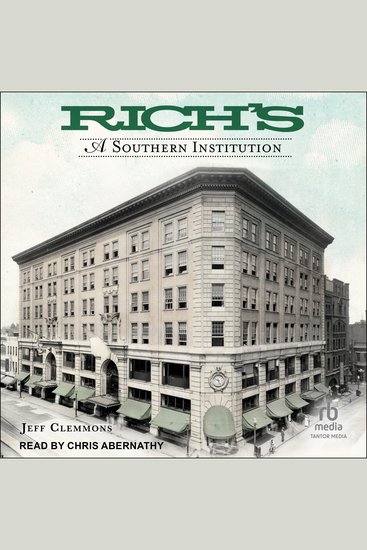
  • Rich's - A Southern Institution - cover

    Rich's - A Southern Institution

    Jeff Clemmons

    • 0
    • 0
    • 0
    The storied history of the iconic Atlanta department store. 


    In 1867, less than three years after the Civil War left the city in ruins, Hungarian Jewish immigrant Morris Rich opened a small dry goods store on what is now Peachtree Street in downtown Atlanta, Georgia. Over time, his brothers Emanuel and Daniel joined the business; within a century, it became a retailing dynasty. Join historian Jeff Clemmons as he traces Rich's 137-year history. 


    For the first time, learn the true stories behind Penelope Penn, Fashionata, The Great Tree, the Pink Pig, Rich's famous coconut cake and much more, including how events at the downtown Atlanta store helped John F. Kennedy become America's thirty-fifth president. With an eye for accuracy and exacting detail, Clemmons recounts the complete history of this treasured southern institution.
    Ver livro
  • Plenty Good Room - Co-creating an Economy of Enough for All - cover

    Plenty Good Room - Co-creating...

    Andrew Wilkes

    • 0
    • 0
    • 0
    Plenty Good Room lays out in clear terms the hope of democratic socialism for a world ravaged by intensifying racial capitalism and social injustice. Unleash your ingenuity for systems that offer plenty good room—not for just a few but for all. 
     
    Economic inequality yawns as wide as ever. Capitalism is working as it was designed: replicating an uneven balance of power, constraining life chances, and limiting imaginations. Those of us concerned about injustice often confine ourselves to issue-by-issue activism. The end result? Owners, investors, and a politics of inequality win. 
     
    But what if there's another way to organize our common life—and what if it's as homegrown as sweet potato pie? What if we could become moral engineers who co-create the world we all deserve? 
     
    Plenty Good Room helps readers understand Black Christian socialism, a stream of the Black radical tradition, from the perspective of a Brooklyn pastor and political scientist's civic awakening. As the former director of the Drum Major Institute, founded by America's most famous democratic socialist, Dr. Martin Luther King Jr., Rev. Andrew Wilkes mounts a challenge to the endless greed, inequality, and profiteering of racial capitalism. 
     
    Tugging on the threads of history and scripture and pointing to the work of Black radicals like W. E. B. Du Bois, Rev. Addie Wyatt, and Fannie Lou Hamer, Wilkes weaves a narrative of "plenty good room moments": times in which communities and individuals had sufficient resources, human rights, and beauty. He invites us to join a movement that a day-laboring Christ initiated as he organized the dispossessed, the disinherited, and those pushed to the edges of society. Wilkes also introduces contemporary efforts pushing for reparations, community ownership, participatory democracy, and solidarity economies. These stories show us that we can create a world of care and reciprocity by envisioning an economy of enough for all—one rooted in justice, equity, and the God whose spirit falls on all flesh.
    Ver livro