Junte-se a nós em uma viagem ao mundo dos livros!
Adicionar este livro à prateleira
Grey
Deixe um novo comentário Default profile 50px
Grey
Assine para ler o livro completo ou leia as primeiras páginas de graça!
All characters reduced
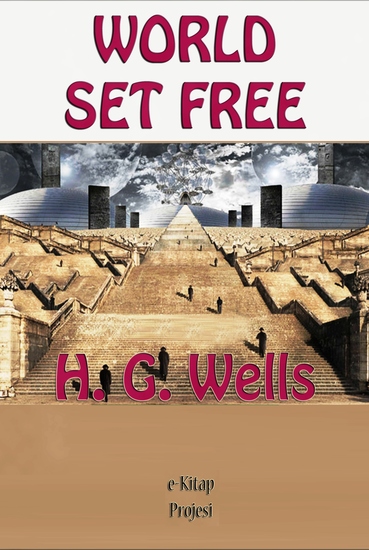
World Set Free - cover
LER

World Set Free

H. G. Wells

Editora: E-Kitap Projesi & Cheapest Books

  • 0
  • 0
  • 0

Sinopse

THE WORLD SET FREE was written in 1913 and published early in 1914, and it is the latest of a series of three fantasias of possibility, stories which all turn on the possible developments in the future of some contemporary force or group of forces. The World Set Free was written under the immediate shadow of the Great War. Every intelligent person in the world felt that disaster was impending and knew no way of averting it, but few of us realised in the earlier half of 1914 how near the crash was to us. The reader will be amused to find that here it is put off until the year 1956. He may naturally want to know the reason for what will seem now a quite extraordinary delay. As a prophet, the author must confess he has always been inclined to be rather a slow prophet.The war aeroplane in the world of reality, for example, beat the forecast in Anticipations by about twenty years or so. I suppose a desire not to shock the sceptical reader's sense of use and wont and perhaps a less creditable disposition to hedge, have something to do with this dating forward of one's main events, but in the particular case of The World Set Free there was, I think, another motive in holding the Great War back, and that was to allow the chemist to get well forward with his discovery of the release of atomic energy. 1956or for that matter 2056may be none too late for that crowning revolution in human potentialities. And apart from this procrastination of over forty years, the guess at the opening phase of the war was fairly lucky; the forecast of an alliance of the Central Empires, the opening campaign through the Netherlands, and the despatch of the British Expeditionary Force were all justified before the book had been published six months. And the opening section of Chapter the Second remains now, after the reality has happened, a fairly adequate diagnosis of the essentials of the matter. One happy hit (in Chapter the Second, Section 2), on which the writer may congratulate himself, is the forecast that under modern conditions it would be quite impossible for any great general to emerge to supremacy and concentrate the enthusiasm of the armies of either side.There could be no Alexanders or Napoleons. And we soon heard the scientific corps muttering, 'These old fools,' exactly as it is here foretold.These, however, are small details, and the misses in the story far outnumber the hits. It is the main thesis which is still of interest now; the thesis that because of the development of scientific knowledge, separate sovereign states and separate sovereign empires are no longer possible in the world, that to attempt to keep on with the old system is to heap disaster upon disaster for mankind and perhaps to destroy our race altogether. The remaining interest of this book now is the sustained validity of this thesis and the discussion of the possible ending of war on the earth.
Disponível desde: 10/02/2024.
Comprimento de impressão: 300 páginas.
Outros livros que poderiam interessá-lo

  • Count of Monte Cristo The: Book Summary & Analysis - cover

    Count of Monte Cristo The: Book...

    Briefly Summaries

    • 0
    • 0
    • 0
    This is a concise summary and analysis of The Count of Monte Cristo, by Alexandre Dumas.
     
    It is not the original book and is not affiliated with or endorsed by Alexandre Dumas.
     
    Ideal those seeking a quick and insightful overview.
     
    Betrayed and wrongfully imprisoned, a young sailor spends years plotting his escape and revenge against those who conspired against him. With a hidden fortune and a new identity, he reemerges as the enigmatic Count of Monte Cristo, weaving a complex web of justice, vengeance, and redemption. Set against the backdrop of post-Napoleonic France, this timeless tale of betrayal, adventure, and retribution explores the limits of human resilience and the price of revenge.
    Ver livro
  • Old House The - Story Time Episode 73 (Unabridged) - cover

    Old House The - Story Time...

    Hans Christian Andersen

    • 0
    • 0
    • 0
    In the street, up there, was an old, a very old house-it was almost three hundred years old, for that might be known by reading the great beam on which the date of the year was carved: together with tulips and hop-binds there were whole verses spelled as in former times, and over every window was a distorted face cut out in the beam. The one story stood forward a great way over the other; and directly under the eaves was a leaden spout with a dragon's head; the rain-water should have run out of the mouth, but it ran out of the belly, for there was a hole in the spout...
    Ver livro
  • Some Rambling Notes of an Idle Excursion - cover

    Some Rambling Notes of an Idle...

    Mark Twain

    • 0
    • 0
    • 0
    A classic of Mark Twain's non-fiction writing, this is a collection of anecdotes that Twain recorded during an ocean trip to Bermuda.
    
    Full of hilarious encounters and fascinating insights into the Bermuda of Twain's day, this is an essential component in the Twain catalogue.
    Ver livro
  • Poorani - cover

    Poorani

    La Sa Ra

    • 0
    • 0
    • 0
    Third Story in the Panchabhootha series - Anjali : Poorani (Earth)
    Ver livro
  • Captains Courageous (Unabridged) - cover

    Captains Courageous (Unabridged)

    Rudyard Kipling

    • 0
    • 0
    • 0
    A pampered millionaire's son tumbles overboard from a luxury liner and falls into good fortune, disguised in the form of a fishing boat. The gruff and hearty crew teach the young man to be worth his salt as they fish the waters off the Grand Banks of Newfoundland. Brimming with adventure and humor.
    Ver livro
  • A Very Short Romance - From their pens to your ears genius in every story - cover

    A Very Short Romance - From...

    Vsevolod Garshin

    • 0
    • 0
    • 0
    Vsevolod Mikhailovich Garshin was born on 14th February 1855 in what is now Dnipro in the Ukraine, but then part of the Russian Empire. 
    After attending secondary school he studied at the Saint Petersburg Mining Institute.  
    Wars between and on behalf of Empires were a regular feature of the decades then.  Garshin volunteered to serve in the Russian army at the beginning of the Russo-Turkish War in 1877.  
    He began as a private in the Balkans campaign and was wounded in action.  By the end of the war, in 1878, he had been promoted to officer rank.  
    By now Garshin, having previously published some articles and reviews in newspapers, wished to devote himself to a literary career.  The decision made he resigned his army commission. 
    His time as a soldier provided rich experiences for his early stories. His first ‘Four Days’ was related as the interior monologue of a wounded soldier left for dead on the battlefield for four days, face to face with the corpse of a Turkish soldier he had killed, gained him early admiration as an author of note.  
    He wrote perhaps only 20 stories, but their influence was immense, although in these more modern times he is barely remembered and lives in the more prolific shadows of others.  His characters are superbly worked into stories that come alive in the intensity and reality of his prose.   
    Garshin’s most well-known story is ‘The Red Flower’, also known as ‘Scarlet Blossom’ and is easily amongst the first rank of stories dealing with mental health issues.  
    Despite early literary success, he himself experienced periodical bouts of mental illness.   
    In one such bout Garshin attempted to commit suicide by throwing himself down the stone stairs leading into his apartment building.  Although not immediately fatal, Vsevolod Garshin died as a result of his injuries in a St Petersburg hospital on 5th April 1888.  He was 33.
    Ver livro