¡Acompáñanos a viajar por el mundo de los libros!
Añadir este libro a la estantería
Grey
Escribe un nuevo comentario Default profile 50px
Grey
Suscríbete para leer el libro completo o lee las primeras páginas gratis.
All characters reduced
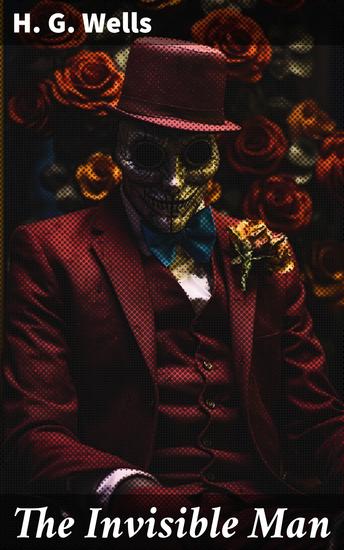
The Invisible Man - Unveiling Power and Identity in a Victorian Science Fiction Classic - cover

The Invisible Man - Unveiling Power and Identity in a Victorian Science Fiction Classic

H. G. Wells

Editorial: Good Press

  • 0
  • 0
  • 0

Sinopsis

H.G. Wells's 'The Invisible Man' presents a riveting exploration of the duality of human nature through the harrowing tale of Griffin, a scientist who invents a method to become invisible. With a pioneering blend of science fiction and psychological horror, Wells ingeniously intertwines themes of isolation, the quest for power, and the moral implications of unfettered ambition. The narrative, set against the backdrop of Victorian society's fears of the unknown, employs a rich, descriptive prose style that evokes both empathy and horror, serving as a critique of an era grappling with rapid scientific advancement and ethical dilemmas. H.G. Wells (1866-1946), often referred to as the father of science fiction, drew upon his background in biology and an acute awareness of societal issues to craft this profound tale. Influenced by the political and scientific landscape of his time, Wells was particularly interested in the darker aspects of human ingenuity and its potential for chaos. His personal experiences with social injustice and class disparities further fueled the existential questions posed in 'The Invisible Man'. This seminal work is highly recommended for readers interested in the intersections of science, ethics, and human psychology. Wells'Äôs thought-provoking narrative invites readers to ponder the implications of invisibility, both literal and metaphorical, urging reflection on societal invisibility and the human condition. 'The Invisible Man' remains a timeless classic, relevant in today'Äôs discourse on identity and moral responsibility.
Disponible desde: 28/10/2023.
Longitud de impresión: 120 páginas.
Otros libros que te pueden interesar

  • Purple Pileus The (Unabridged) - cover

    Purple Pileus The (Unabridged)

    H. G. Wells

    • 0
    • 0
    • 0
    "Mr. Coombes was sick of life. He walked away from his unhappy home, and, sick not only of his own existence but of everybody else's, turned aside down Gaswork Lane to avoid the town, and, crossing the wooden bridge that goes over the canal to Starling's Cottages, was presently alone in the damp pine woods and out of sight and sound of human habitation. He would stand it no longer. He repeated aloud with blasphemies unusual to him that he would stand it no longer.
    Ver libro
  • Dark Dignum - From their pens to your ears genius in every story - cover

    Dark Dignum - From their pens to...

    Bernard Capes

    • 0
    • 0
    • 0
    Bernard Edward Joseph Capes was born on the 30th August 1854 in London.  He was one of 11 children. 
    His early work was as a journalist and this developed into writing many short stories for the periodicals of the time including Blackwood's, Cassell's, Cornhill Magazine, Illustrated London News, Macmillan's Magazine, Mall Magazine, Pearson's Magazine, The Idler, and The Queen. 
    It took him many years to decide that writing full-time could be a sustainable career path.  His initial success came with ‘The Mill of Silence’.  As well as being published it garnered second prize at a competition sponsored by the Chicago Record.  He exceeded that by winning it the following year with ‘The Lake of Wine’.   
    Capes quickly became both prolific and popular.  As well as his stories and articles for the periodicals he wrote around 40 volumes across novels, poetry, history as well as romance and mystery novels. 
    Bernard Capes died on 2nd November 1918 in the flu epidemic.
    Ver libro
  • Peer Gynt - cover

    Peer Gynt

    Henrik Ibsen

    • 0
    • 0
    • 0
    Peer Gynt is a five-act play written by Henrik Ibsen, a renowned Norwegian playwright. First published in 1867, it tells the adventurous and introspective journey of the title character, Peer Gynt. The play follows Peer's exploits, starting from his youthful escapades in a small Norwegian village to his encounters with trolls, a seductive woman named Solveig, and various characters he meets along the way. Peer Gynt is known for its vivid imagery, symbolic language, and exploration of themes such as identity, self-discovery, and the nature of human existence. 
     
    At the heart of Peer Gynt is the character of Peer himself, a complex and multi-faceted individual. He is portrayed as a dreamer and a wanderer, constantly seeking meaning and purpose in life. Peer's journey is marked by his encounters with different aspects of himself and society, allowing the audience to reflect on the nature of human behavior and the consequences of one's actions. The play challenges conventional ideas of morality and societal norms, presenting Peer as a character who moves between selfishness and selflessness, illusion and reality, and ultimately learns the importance of personal responsibility and authenticity. 
     
    One of the notable aspects of Peer Gynt is its use of fantasy and folklore elements, particularly in Peer's encounters with trolls and other mythical creatures. These episodes provide a surreal and symbolic backdrop for Peer's psychological and spiritual journey. Through these encounters, Ibsen delves into themes of illusion versus reality, the human capacity for self-deception, and the consequences of chasing after superficial desires. The play also incorporates elements of Norwegian culture and folklore, adding a distinct national flavor to the story.
    Ver libro
  • The Premature Burial - cover

    The Premature Burial

    Edgar Allan Poe

    • 0
    • 0
    • 0
    Immerse yourself in the terror of "The Premature Burial," the fifth part of an Edgar Allan Poe short story collection, narrated by Jake Urry. This unsettling tale explores the intense fear of being buried alive, as the narrator recounts various horrifying incidents of premature interment and his own obsessive dread of such a fate. The story delves deep into the psyche, blending horror with the claustrophobic fear of being trapped in one's own grave. 
    Jake Urry's evocative narration amplifies the suspense and dread of Poe's chilling tale, making this audiobook a captivating and eerie experience. His nuanced voice draws listeners into the narrator's paranoia, creating a palpable sense of fear that lingers long after the story ends.
    Ver libro
  • White Fang - cover

    White Fang

    Jack London

    • 0
    • 0
    • 0
    "He was a killer, a thing of claw and fang... until he learned the law of love."
    
    Born in the freezing wilds of the North, White Fang is three-quarters wolf and one-quarter dog—a creature caught between two worlds. His early life is a brutal lesson in the "Law of Meat": eat or be eaten. From the cold caves of the Yukon to the cruel hands of Gray Beaver and the sadistic "Beauty" Smith, White Fang is molded into a fierce, solitary fighter. But his life takes a dramatic turn when he is rescued by Weedon Scott. Through patience and kindness, White Fang must undergo the ultimate trial: unlearning the instincts of the wild to discover the meaning of loyalty.
    
    Nature vs. Nurture: Jack London uses White Fang's life as a laboratory to explore the power of environment. The novel demonstrates how cruelty creates a "monstrosity" of hate, while affection can transform a predator into a protector. It is a masterpiece of animal psychology that challenges our understanding of the boundary between "tame" and "wild."
    
    The "Wild" Reimagined: The opening of the novel, featuring the terrifying pursuit of two men by a starving wolf pack, is one of the most famous sequences in literature. London portrays the North not as a playground, but as a "Wild" that is indifferent to human suffering, setting the stage for White Fang's incredible resilience.
    
    The Final Transition: The climax takes White Fang from the snow-covered Yukon to the sun-drenched valleys of California. Here, he must face his final challenge: protecting his new family from a threat that his wild instincts are uniquely qualified to handle.
    
    Witness the journey of a lifetime. Purchase "White Fang" today and experience the power of the bond between man and beast.
    Ver libro
  • Mac Beth - cover

    Mac Beth

    William Shakespeare

    • 0
    • 0
    • 0
    "Macbeth," a timeless and intricately woven tragedy, unveils the dark, intricate layers of human ambition, fate, power, and morality. Set against the backdrop of medieval Scotland, this play serves as an exploration of the human condition, revealing the devastating consequences of unchecked ambition and the corrupting force of power. 
     
    Historical and political contexts provide a foundation for understanding "Macbeth." The play draws inspiration from Holinshed's Chronicles, which chronicle Scottish history, and it resonates with the political anxieties of the early 17th century. King James I's ascent to the English throne in 1603 adds depth to the themes of regicide and political instability. "Macbeth" can thus be seen as a reflection of the Stuart monarchy, emphasizing the questions of legitimacy and the dangers of seeking power through usurpation. Macbeth's unchecked desire for power drives him to commit heinous acts and lose his sense of self, showcasing the moral decay that ambition can bring. The interplay between "fate and free will" is another central theme. While the witches' prophecies set events in motion, it is Macbeth's choices that lead to his tragic demise. This duality raises profound questions about human agency in the face of external forces. "Power and morality" are intertwined themes in the play. As Macbeth ascends to the throne by committing regicide, the consequences of ruthless ambition become evident. The disruption of the natural order is mirrored in the play's imagery, reflecting the moral chaos of Macbeth's actions. 
    In conclusion, "Macbeth" remains a masterful work of literature, captivating and thought-provoking at the university level and beyond. With its intricate characters, rich themes, and masterful use of language, it offers a profound exploration of human nature, ambition, fate, and morality.
    Ver libro