¡Acompáñanos a viajar por el mundo de los libros!
Añadir este libro a la estantería
Grey
Escribe un nuevo comentario Default profile 50px
Grey
Suscríbete para leer el libro completo o lee las primeras páginas gratis.
All characters reduced
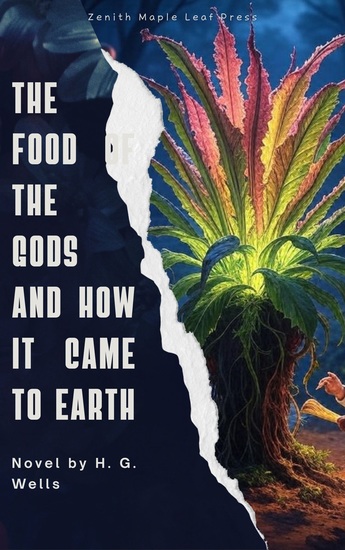
The Food of the Gods and How It Came to Earth - A Thrilling Sci-Fi Tale of Scientific Ambition and Unintended Consequences - cover

The Food of the Gods and How It Came to Earth - A Thrilling Sci-Fi Tale of Scientific Ambition and Unintended Consequences

H. G. Wells, Zenith Maple Leaf Press

Editorial: Zenith Maple Leaf Press

  • 0
  • 0
  • 0

Sinopsis

When science dares to change nature, the results are beyond imagination…
Two ambitious scientists, Mr. Bensington and Professor Redwood, develop a miraculous substance—Herakleophorbia IV, known as "The Food of the Gods"—designed to accelerate growth in living organisms. At first, their experiment seems like a marvel of modern science. But soon, chickens grow to monstrous size, insects become terrifying giants, and humans exposed to the formula begin to tower over ordinary men.

In The Food of the Gods and How It Came to Earth, H. G. Wells delivers a gripping and witty commentary on progress, hubris, and the unpredictable consequences of human innovation. Part science fiction adventure, part biting satire, this 1904 classic warns that humanity's reach may exceed its grasp.

"One of Wells' most imaginative and darkly humorous works."
– The Guardian

"A sharp, thrilling reminder of the double-edged sword of scientific progress."
– The New York Times

✅ Why Readers Love It:
🐔 Giant animals and thrilling consequences of unchecked science

🧠 A blend of speculative fiction and social satire

📚 From the author of The War of the Worlds and The Time Machine

🎯 Click 'Buy Now' to explore H. G. Wells' unforgettable vision of science run wild.
Disponible desde: 13/08/2025.
Longitud de impresión: 192 páginas.

Otros libros que te pueden interesar

  • Beowulf - The Original Manuscript - cover

    Beowulf - The Original Manuscript

    Unknown Unknown

    • 0
    • 0
    • 0
    Beowulf is an Old English epic poem in the tradition of Germanic heroic legend consisting of 3,182 alliterative lines. It is one of the most important and most often translated works of Old English literature. The date of composition is a matter of contention among scholars; the only certain dating is for the manuscript, which was produced between 975 and 1025. Scholars call the anonymous author the "Beowulf poet". The story is set in pagan Scandinavia in the 6th century. Beowulf, a hero of the Geats, comes to the aid of Hrothgar, the king of the Danes, whose mead hall in Heorot has been under attack by the monster Grendel. After Beowulf slays him, Grendel's mother attacks the hall and is then defeated. Victorious, Beowulf goes home to Geatland and becomes king of the Geats. Fifty years later, Beowulf defeats a dragon but is mortally wounded in the battle. After his death, his attendants cremate his body and erect a tower on a headland in his memory. Scholars have debated whether Beowulf was transmitted orally, affecting its interpretation: if it was composed early, in pagan times, then the paganism is central and the Christian elements were added later, whereas if it was composed later, in writing, by a Christian. Beowulf is written mostly in the West Saxon dialect of Old English, but many other dialectal forms are present, suggesting that the poem may have had a long and complex transmission throughout the dialect areas of England.No definite sources or analogs of the poem can be proven, but many suggestions have been made, including the Icelandic Grettis saga, the Norse story of Hrolf Kraki and his bear-shapeshifting servant Bodvar Bjarki, the international folktale the Bear's Son Tale, and the Irish folktale of the Hand and the Child. Persistent attempts have been made to link Beowulf to tales from Homer's Odyssey or Virgil's Aeneid. More definite are Biblical parallels, with clear allusions to the books of Genesis, Exodus, and Daniel. 
    Ver libro
  • Mysteries Of The Lost Continent Atlantis - cover

    Mysteries Of The Lost Continent...

    William Elliot

    • 0
    • 0
    • 0
    This classic work, written by Theosophist, W. Scott-Elliot, this book goes into detail about the lost city of Atlantis. The information came from C. W. Leadbeater, who said he received his information from astral clairvoyance. Scott-Elliot provides info on the people of Atlantis, such as their religion, races, different periods money, education, and much more.Atlantis, is a legendary island in the Atlantic Ocean, lying west of the Strait of Gibraltar. The principal sources for the legend are two of Plato’s dialogues, Timaeus and Critias. In the former, Plato describes how Egyptian priests, in conversation with the Athenian lawgiver Solon, described Atlantis as an island larger than Asia Minor and Libya combined and situated just beyond the Pillars of Hercules (the Strait of Gibraltar). About 9,000 years before the birth of Solon, the priests said, Atlantis was a rich island whose powerful princes conquered many of the lands of the Mediterranean until they were finally defeated by the Athenians and the latter’s allies. The Atlantians eventually became wicked and impious, and their island was swallowed up by the sea as a result of earthquakes. In the Critias, Plato supplied a history of the ideal commonwealth of the Atlantians.Medieval European writers who received the tale from Arab geographers believed the stories to be true, and later writers tried to identify it with an actual country. After the Renaissance, for example, attempts were made to identify Atlantis with America, Scandinavia, and the Canary Islands. The story of Atlantis, if Plato did not invent it, may in fact reflect ancient Egyptian records of a volcanic eruption on the island of Thera about 1500 BCE. This eruption, one of the most stupendous of historical times, was accompanied by a series of earthquakes and tsunamis that shattered civilization on Crete, thereby perhaps giving rise to the legend of Atlantis.
    Ver libro
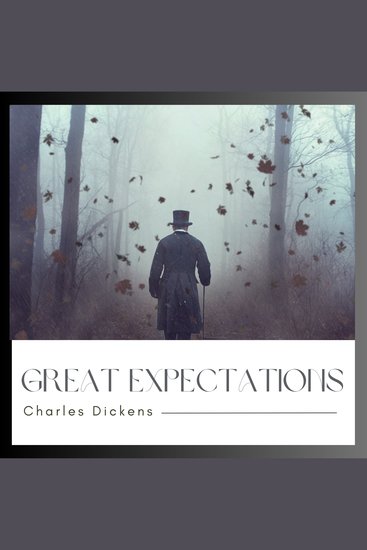
  • Great Expectations - cover

    Great Expectations

    Charles Dickens

    • 0
    • 0
    • 0
    One of the most revered works in English literature, Great Expectations traces the coming of age of a young orphan, Pip, from a boy of shallow aspirations into a man of maturity. From the chilling opening confrontation with an escaped convict to the grand but eerily disheveled estate of bitter old Miss Havisham, all is not what it seems in Dickens’ dark tale of false illusions and thwarted desire. Like much of Dickens’ work, the novel depicts an unstable society in which people’s life chances can change radically and suddenly, especially when under the influence of more powerful individuals who, for selfish or immoral reasons, have no qualms in altering, and often damaging, the lives of others. 
    Cover illustrated by: Sheila Wong 
    Sheila Wong is a graphic designer and illustrator based in the Pacific Northwest. Her work often pulls from a variety of experiences - from growing up as a child of Chinese immigrants in the Midwest, to years working in tech support and then design in the heart of Silicon Valley. When not at work, she is usually looking for new places to go camping, or building mechanical keyboards.
    Ver libro
  • Note on Realism A (Unabridged) - cover

    Note on Realism A (Unabridged)

    Robert Louis Stevenson

    • 0
    • 0
    • 0
    Robert Louis Stevenson was a Scottish novelist, essayist, poet and travel writer. Born and educated in Edinburgh, Stevenson suffered from serious bronchial trouble for much of his life, but continued to write prolifically and travel widely in defiance of his poor health. As a young man, he mixed in London literary circles, receiving encouragement from Andrew Lang, Edmund Gosse, Leslie Stephen and W. E. Henley, the last of whom may have provided the model for Long John Silver in Treasure Island.
    A NOTE ON REALISM: Style is the invariable mark of any master; and for the student who does not aspire so high as to be numbered with the giants, it is still the one quality in which he may improve himself at will. Passion, wisdom, creative force, the power of mystery or colour, are allotted in the hour of birth, and can be neither learned nor simulated.
    Ver libro
  • Shadow out of Time The (Unabridged) - cover

    Shadow out of Time The (Unabridged)

    H. P. Lovecraft

    • 0
    • 0
    • 0
    The Shadow Out of Time is a novella by American horror fiction writer H. P. Lovecraft. Written between November 1934 and February 1935, it was first published in the June 1936 issue of Astounding Stories. The story describes time and space travel by mind transfer. The premise is that a person in a given place and time can switch bodies with someone who is elsewhere or elsewhen. Other writers have re-used this concept in later works, such as drinking tea from Red Forest leaves in the television series 12 Monkeys and long-range communication stones in the Stargate SG-1 television series. As with other Lovecraftian works, this story features otherworldy alien beings that are not simply variations on humans or other familiar terrestrial animals.
    Ver libro
  • Promissory Note The (Unabridged) - cover

    Promissory Note The (Unabridged)

    L. M. Montgomery

    • 0
    • 0
    • 0
    Lucy Maud Montgomery (November 30, 1874 - April 24, 1942), published as L. M. Montgomery, was a Canadian author best known for a series of novels beginning in 1908 with Anne of Green Gables. The book was an immediate success. The title character, orphan Anne Shirley, made Montgomery famous in her lifetime and gave her an international following.
    The Promissory Note: Ernest Duncan swung himself off the platform of David White's store and walked whistling up the street. Life seemed good to Ernest just then. Mr. White had given him a rise in salary that day, and had told him that he was satisfied with him.
    Ver libro