Begleiten Sie uns auf eine literarische Weltreise!
Buch zum Bücherregal hinzufügen
Grey
Einen neuen Kommentar schreiben Default profile 50px
Grey
Jetzt das ganze Buch im Abo oder die ersten Seiten gratis lesen!
All characters reduced
The First Men in the Moon - cover

The First Men in the Moon

H. G. Wells

Verlag: The Ebook Emporium

  • 0
  • 0
  • 0

Beschreibung

"We are not the masters of the universe; we are merely its latest curious visitors."

When the eccentric scientist Dr. Cavor invents "Cavorite"—a miraculous substance that shields against the force of gravity—he and the opportunistic businessman Bedford embark on a perilous voyage to the Moon. Expecting a barren wasteland, they instead discover a hollow world teeming with life. Beneath the lunar surface lies the complex, subterranean empire of the Selenites: an insectoid race where every individual is biologically engineered for a specific social function. This masterpiece of early science fiction is a gripping adventure that quickly turns into a haunting reflection on human greed and the nature of civilization.

The Master of Speculative Biology: Wells' "Selenites" remain one of the most sophisticated alien races in literature. Unlike the humanoids of later sci-fi, the Selenites are a true "hive mind," with specialized castes ranging from giant-headed intellectuals to spindly laborers. Their society is a "utopia" of efficiency that serves as a chilling mirror to the industrialization of the human world.

A Clash of Two Worlds: The novel thrives on the dynamic between its two protagonists: Cavor, the pure scientist driven by wonder, and Bedford, the gambler driven by the prospect of lunar gold. Their differing reactions to the Selenite civilization—awe versus fear—drive the story toward a tragic and unforgettable climax that asks whether humanity is truly ready for contact with the stars.

Experience the voyage that launched a thousand dreams. Purchase "The First Men in the Moon" today and explore the mysteries of the lunar depths.
Verfügbar seit: 08.01.2026.
Drucklänge: 161 Seiten.

Weitere Bücher, die Sie mögen werden

  • Bartleby the Scrivener: A Story of Wall Street - cover

    Bartleby the Scrivener: A Story...

    Herman Melville

    • 0
    • 0
    • 0
    Experience the haunting tale of "Bartleby, the Scrivener: A Story of Wall Street" by Herman Melville, now available as a captivating audiobook. In this classic short story, Melville explores themes of isolation, alienation, and the struggle for individuality in a conformist society. 
    Listeners will be drawn into the enigmatic world of the story's protagonist, Bartleby, a scrivener whose peculiar behavior challenges the norms of the workplace and defies easy explanation. As the narrator grapples with Bartleby's refusal to conform, the story unfolds with a sense of mystery and melancholy that lingers long after the final words. 
    Perfect for fans of classic literature and psychological fiction, "Bartleby, the Scrivener: A Story of Wall Street" offers a thought-provoking exploration of the human condition and the complexities of human relationships. Whether you're a longtime admirer of Melville's work or discovering it for the first time, this audiobook promises to captivate and intrigue. 
    So, if you're ready to delve into a timeless tale of existential angst and societal disillusionment, start listening to "Bartleby, the Scrivener: A Story of Wall Street" today and immerse yourself in the haunting beauty of Herman Melville's prose. Start Listening to "Bartleby, the Scrivener: A Story of Wall Street" today!
    Zum Buch
  • The Swing of the Pendulum - cover

    The Swing of the Pendulum

    Katherine Mansfield

    • 0
    • 0
    • 0
    The Swing of the Pendulum is a short story by Katherine Mansfield: The landlady knocked at the door. - “Come in,” said Viola. - “There is a letter for you,” said the landlady, “a special letter” - she held the green envelope in a corner of her dingy apron. - “Thanks.” Viola, kneeling on the floor, poking at the little dusty stove, stretched out her hand. “Any answer?”
    Zum Buch
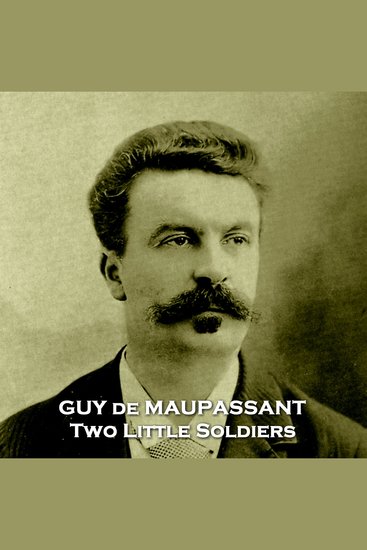
  • Two Little Soldiers - From their pens to your ears genius in every story - cover

    Two Little Soldiers - From their...

    Guy de Maupassant

    • 0
    • 0
    • 0
    Henri René Albert Guy de Maupassant was born on August 5th, 1850 near Dieppe in France.  
    Maupassant’s early life was badly torn when at age 11 (his younger brother Hervé was then five) his mother, Laure, a headstrong and independent-minded woman, risked social disgrace in order to obtain a legal separation from her husband. 
    After the separation, Laure kept custody of her two boys. With the father now forcibly absent, Laure became the most influential and important figure in the young boy's life.   
    Maupassant’s education was such that he rebelled against religion and other societal norms but a developing friendship with Gustave Flaubert began to turn his mind towards creativity and writing. 
    After graduation he volunteered for the Franco-Prussian war. With its end he moved to Paris to work as a clerk in the Navy Department.  Gustave Flaubert now took him under his wing.  Acting as a literary guardian to him, he guided the eager Maupassant to debuts in journalism and literature.  For Maupassant these were exciting times and the awakening of his creative talents and ambitions. 
    In 1880 he published what is considered his first great work, ‘Boule de Suif’, (translated as as ‘Dumpling’, ‘Butterball’, ‘Ball of Fat’, or ‘Ball of Lard’) which met with a success that was both instant and overwhelming.  Flaubert at once acknowledged that it was ‘a masterpiece that will endure.’ Maupassant had used his talents and experiences in the war to create something unique.  
    This decade from 1880 to 1891 was to be the most pivotal of his career.  With an audience now made available by the success of ‘Boule de Suif’ Maupassant organised himself to work methodically and relentlessly to produce between two and four volumes of work a year.  The melding of his talents and business sense and the continual hunger of sources for his works made him wealthy. 
    In his later years he developed a desire for solitude, an obsession for self-preservation, and a fear of death as well as a paranoia of persecution caused by the syphilis he had contracted in his youth.  
    On January 2nd, 1892, Maupassant tried to commit suicide by cutting his throat.  Unsuccessful he was committed to the private asylum of Esprit Blanche at Passy, in Paris.  It was here on July 6th, 1893 that Henri René Albert Guy de Maupassant died at the age of only 42.
    Zum Buch
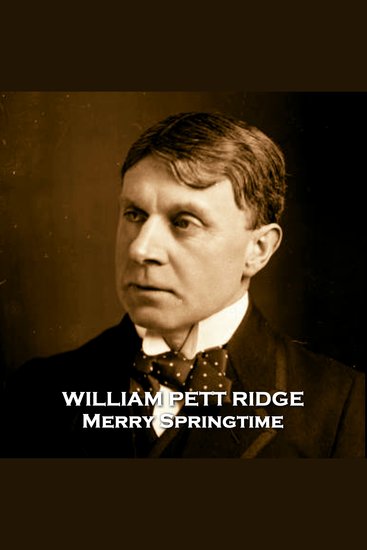
  • Merry Springtime - From their pens to your ears genius in every story - cover

    Merry Springtime - From their...

    William Pett Ridge

    • 0
    • 0
    • 0
    William Pett Ridge was born at Chartham, near Canterbury, Kent, on 22nd April 1859. 
    His family’s resources were certainly limited. His father was a railway porter, and the young Pett Ridge, after schooling in Marden, Kent became a clerk in a railway clearing-house. The hours were long and arduous, but self-improvement was Pett Ridge’s goal.  After working from nine until seven o’clock he would attend evening classes at Birkbeck Literary and Scientific Institute and then to follow his passion; the ambition to write.  He was heavily influenced by Dickens and several critics thought he had the capability to be his successor. 
    From 1891 many of his humourous sketches were published in the St James's Gazette, the Idler, Windsor Magazine and other literary periodicals of the day. 
    Pett Ridge published his first novel in 1895, A Clever Wife. By the advent of his fifth novel, Mord Em'ly, a mere three years later in 1898, his success was obvious.  His writing was written from the perspective of those born with no privilege and relied on his great talent to find humour and sympathy in his portrayal of working class life. 
    Today Pett Ridge and other East End novelists including Arthur Nevinson, Arthur Morrison and Edwin Pugh are being grouped together as the Cockney Novelists.   
    In 1924, Pugh set out his recollections of Pett Ridge from the 1890s: “I see him most clearly, as he was in those days, through a blue haze of tobacco smoke. We used sometimes to travel together from Waterloo to Worcester Park on our way to spend a Saturday afternoon and evening with H. G. Wells. Pett Ridge does not know it, but it was through watching him fill his pipe, as he sat opposite me in a stuffy little railway compartment, that I completed my own education as a smoker... Pett Ridge had a small, dark, rather spiky moustache in those days, and thick, dark, sleek hair which is perhaps not quite so thick or dark, though hardly less sleek nowadays than it was then”. 
    With his success, on the back of his prolific output and commercial success, Pett Ridge gave generously of both time and money to charity. In 1907 he founded the Babies Home at Hoxton.  This was one of several organisations that he supported that had the welfare of children as their mission.  
    His circle considered Pett Ridge to be one of life's natural bachelors. In 1909 they were rather surprised therefore when he married Olga Hentschel.  
    As the 1920’s arrived Pett Ridge added to his popularity with the movies. Four of his books were adapted into films.  
    Pett Ridge now found the peak of his fame had passed. Although he still managed to produce a book a year he was falling out of fashion and favour with the reading public and his popularity declined rapidly.  His canon runs to over sixty novels and short-story collections as well as many pieces for magazines and periodicals. 
    William Pett Ridge died, on 29th September 1930, at his home, Ampthill, Willow Grove, Chislehurst, at the age of 71. 
    He was cremated at West Norwood on 2nd October 1930.
    Zum Buch
  • William Wilson - cover

    William Wilson

    Sampi Books, Edgar Allan Poe

    • 0
    • 0
    • 0
    "William Wilson" is a short story by Edgar Allan Poe that tells the story of a man tormented by his double, who has shared not only his name but also his appearance since childhood. This moralistic double interferes in his degrading acts, leading to a fatal conflict.
    Zum Buch
  • Murat - cover

    Murat

    Alexandre Dumas

    • 0
    • 0
    • 0
    "Murat" by Alexandre Dumas is a vivid historical drama chronicling the life of Joachim Murat, the dashing cavalry officer who became King of Naples. A loyal ally of Napoleon Bonaparte, Murat’s ambition and charisma propel him to power, but his loyalty is tested as political tides shift. Dumas explores Murat’s rise and fall, capturing his battlefield heroics, flamboyant personality, and ultimate betrayal. Set against the tumultuous backdrop of the Napoleonic Wars, the novel delves into themes of loyalty, ambition, and the fragility of power. A blend of adventure and tragedy, it portrays Murat’s relentless drive for glory and the personal cost of his ambitions, offering a poignant reflection on leadership and legacy in times of upheaval.
    Zum Buch