¡Acompáñanos a viajar por el mundo de los libros!
Añadir este libro a la estantería
Grey
Escribe un nuevo comentario Default profile 50px
Grey
Suscríbete para leer el libro completo o lee las primeras páginas gratis.
All characters reduced
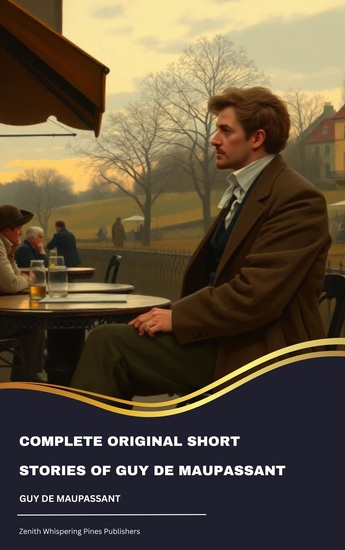
Complete Original Short Stories of Guy De Maupassant - cover

Complete Original Short Stories of Guy De Maupassant

Guy de Maupassant

Editorial: Zenith Whispering Pines Publishers

  • 0
  • 0
  • 0

Sinopsis

Experience the Unflinching Eye of a Literary Master.

Guy de Maupassant was the protégé of Gustave Flaubert and a titan of French literature who perfected the art of the short story. Known for his economical style and startling "twist" endings, he captured the entirety of human experience—from the vanity of the Parisian elite to the brutal hardships of the Franco-Prussian War. This comprehensive collection brings together his complete output, showcasing the sharp irony and deep empathy that redefined modern fiction.

Inside this monumental collection, you will discover:

The Architect of the Modern Story: Witness the birth of the modern short story structure, characterized by its objective tone, psychological precision, and narrative efficiency.

The Irony of Fate: Explore his signature themes of social hypocrisy and the cruel tricks of destiny, where a single moment of vanity or a chance encounter can alter a life forever.

A Panorama of 19th-Century France: Journey from the fashionable boulevards of Paris to the rugged farms of Normandy, meeting a cast of characters that spans every social class.

Tales of the Supernatural and the Mind: Delve into Maupassant's later, more haunting works that explore obsession, paranoia, and the thin line between reality and madness.

Maupassant's influence on the world of literature is immeasurable, paving the way for writers like Somerset Maugham, O. Henry, and Chekhov. Whether you seek a biting satire of society or a chilling psychological study, this volume is an essential cornerstone for any library of world literature and classic fiction.

Own the masterpiece of brevity and brilliance. Buy the "Complete Short Stories of Guy de Maupassant" today and see the world through a master's lens.
Disponible desde: 22/12/2025.
Longitud de impresión: 1735 páginas.

Otros libros que te pueden interesar

  • A Christmas Carol In Prose Ghost Story of Christmas - A Robin Reads Audiobook - cover

    A Christmas Carol In Prose Ghost...

    Charles Dickens

    • 0
    • 0
    • 0
    Charles Dickens' classic morality tale for Christmastide, first published in 1843. 
    Elderly miser Ebenezer Scrooge receives an unexpected visit from a series of otherworldly advisors... 
    Narrated by Robin Reads.
    Ver libro
  • Music of Erich Zann The (Unabridged) - cover

    Music of Erich Zann The...

    H. P. Lovecraft

    • 0
    • 0
    • 0
    Due to lack of funds, a student studying metaphysics abroad is forced to take up lodging in a cheap apartment building on a street named the "Rue d'Auseil". The street is not far from his university and is bordered by a river, dark warehouses and a large wall, giving the street an appearance of being on a cliff. The student cannot see what lies on the other side of the wall, as only a single window on the top floor of his building looks over it. Along with the building's disabled landlord, Blandot, one of the few other tenants is an old German man named Erich Zann. The old man is mute and plays the viol[a] with a local theater orchestra. He lives alone on the top floor and at night he plays strange melodies the student has never heard before. Despite Zann's reclusiveness, Blandot reveals his identity to the student, who approaches him in the hallway one evening and asks if he can listen to Zann's music. Zann relents and allows the student to enter his room. He plays for the student some of his unique melodies but not the same as the student had previously heard. The student asks him if he could play his music from the previous nights, awkwardly humming and whistling the notes he remembered. Zann is taken aback by the request and nervously glances at the window in his room, covered by curtains. The student recognizes the window as the only one that can oversee the wall at the end of the mysterious street. He approaches it to look outside but Zann angrily pulls him back. The student is fed up with Zann's eccentricities but Zann explains through writing that he is simply a lonely old man, and suffers from numerous phobias and nervous disorders. He is pleased that the student likes his music, but refuses to play the particular tunes that the student asked for. He persuades the student to move to a lower floor in the apartment as he would prefer the student not listen to them. The student sympathizes with Zann and agrees to move. Zann promises that he will invite the student to his room to hear his other music. After the student moves, however, Zann returns to his antisocial behavior and his health deteriorates, eventually not letting the student listen at all. The student's curiosity to hear the secret music and look out the window grows, and he begins eavesdropping on Zann while he plays at night. His melodies have an unearthly sound, and the student praises Zann as a musical genius. One night while secretly listening outside Zann's room, the student hears a commotion and the old man scream inside. When the student bangs at the door, Zann lets him in and asks him to wait while he writes, promising to explain everything. More than an hour into writing, Zann is startled by a distant sound in the form of a low note, interrupts his writing and starts furiously playing his viol with a crescent terror. The music is horrific and the student surmises that Zann is playing wildly to drown out or keep something out of the room. Zann seemingly enters a stupor, doing nothing but playing his music. Another sound from outside the room, which the student perceives to be mocking them, is heard and a gust shatters the window. The unnatural wind sweeps through the room, blowing Zann's unread papers out the window, despite the student's attempts at catching them. The student remembers his curiosity and finally looks out the window. Instead of seeing the city lights, he only sees a terrible black void, an infinite abyss of chaos. The howling winds and cacophony of elements snuff out the candles in the room, leaving the student and Zann in complete darkness. He blindly moves through the dark with desperation, beginning to feel "chilling things" brush up against him. Determined to save Zann, the student reaches the musician and screams at him to run, but Zann only continues to play his music. Upon attempting to physically carry him to safety, he discovers Zann is dead, although his body is still playing. With this re
    Ver libro

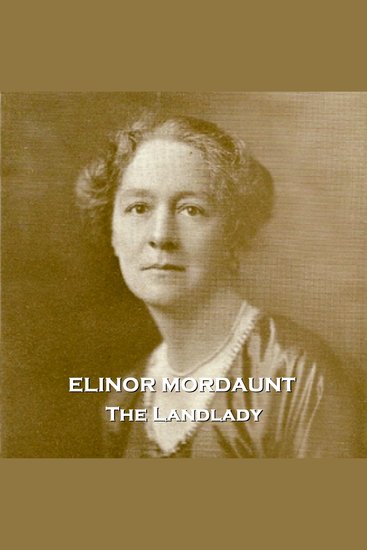
  • The Landlady - A rare benevolent ghost sighting in this story of a couple moving into a new home - cover

    The Landlady - A rare benevolent...

    Elinor Mordaunt

    • 0
    • 0
    • 0
    Evelyn May Clowes was born on 7th May 1872 in Cotgrave, Nottinghamshire.  
     
    Growing up in genteel circumstances, her early childhood was spent at Charlton Down House near Cheltenham, Gloucestershire, and her teenage years near Heythrop in the Cotswolds.  
     
    She was educated at home by governesses, excelling at German, Latin, Greek, shorthand, landscape painting, and fabric and wallpaper design. 
     
    In 1897 she went to Mauritius as companion to her cousin Caroline and in 1898 married Maurice Wilhemn Wiehe, the owner of a sugar plantation. She gave birth to two stillborn children. After a few years of marriage, she found life difficult and returned to England. Shortly afterwards she went by herself to Australia, arriving in June 1902 and gave birth to a son a few months later.   
     
    She lived in Melbourne for about eight years.  To earn a living she took on a wide and varied range of jobs; she edited a woman's fashion paper, wrote short stories and articles, made blouses, designed embroideries, tilled gardens, acted as a housekeeper, and did other artistic work. Her health was not strong, but she undertook any kind of work which would provide a living for herself and her infant son. This gained her an experience of life which was readily put to use in her literary works. 
     
    Her first book, ‘The Garden of Contentment’, was published in 1902 under her pen-name Elinor Mordaunt. It was the first of many works that covered fiction, short stories, travel and autobiography. 
     
    She changed her name by deed poll to Evelyn May Mordaunt on 1st July 1915 and gained a further reputation as a writer of short stories for magazines which display both her humour and sense of tragedy. Travel was always high on her priority and the experiences used not only for pleasure but in her writings and, as travel books, ideas in themselves.  
     
    On 27th January 1933 at Tenerife, in the Canary Islands, she married a retired barrister from Gloucestershire. In her own words, the marriage ‘ended in tragedy.’ 
     
    Elinor Mordaunt died on 25th June 1942 at the Radcliffe Infirmary, Oxford. She was 70.
    Ver libro
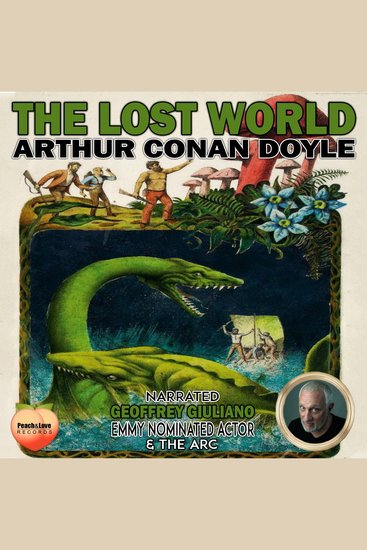
  • The Lost World - cover

    The Lost World

    Arthur Conan Doyle

    • 0
    • 0
    • 0
    "The Lost World" is a novel written by Sir Arthur Conan Doyle, the British author best known for creating the iconic detective Sherlock Holmes. Published in 1912, this adventure novel stands apart from Doyle's more famous detective fiction and is known for its exploration of the unknown and its contribution to the "lost world" literary genre. 
     
    The story is centered around the character of Professor Challenger, an eccentric and larger-than-life scientist who, like Sherlock Holmes, became one of Conan Doyle's memorable literary creations. Professor Challenger claims to have discovered evidence of prehistoric life in the Amazon rainforest and invites a group of individuals, including the narrator Edward Malone, to join him on an expedition to verify his findings. 
     
    The group embarks on a perilous journey into the uncharted and remote plateau in South America, where they encounter a world seemingly frozen in time. Dinosaurs and other prehistoric creatures roam the plateau, and the explorers must navigate not only the dangers of the natural world but also the challenges of their own personalities and relationships. 
     
    "The Lost World" is a pioneering work in the "lost world" subgenre of adventure fiction, which involves the discovery of isolated and prehistoric environments that time forgot. It predates other famous works in this genre, such as Edgar Rice Burroughs' "The Land That Time Forgot" and Sir Arthur Conan Doyle's contemporary H.G. Wells' "The Time Machine." 
     
    The novel combines elements of science fiction, adventure, and exploration with themes of human curiosity, bravery, and the clash between the modern world and the primeval past. It also touches on the ethical implications of encountering and documenting creatures thought to be extinct.
    Ver libro
  • The Tragedy of Macbeth - cover

    The Tragedy of Macbeth

    William Shakespeare

    • 0
    • 0
    • 0
    Macbeth and his wife show how bad the evil that can possess human souls is. But evil is not all powerful. On the one hand, Macbeth is the gloomiest of the great Shakespeare's tragedies; on the other hand, it's more encouraging than Hamlet, Othello or King Lear. In no other tragedy as in Macbeth the evil is confronted by so many people, and nowhere else they are so active.
    Shakespeare is the author of the world famous sonnets and plays: Romeo and Juliet, Hamlet, Macbeth and Othello, as well as comedies Twelfth Night, A Midsummer's Night Dream, Love's Labour's Lost, The Merry Wives of Windsor, The Two Gentlemen of Verona and As You Like It. William Shakespeare is the most performed playwright, the works of the great English poet have been on top of the world theatre stages for some centuries already.
    Ver libro
  • War and Peace - Book 8: 1811-12 (Unabridged) - cover

    War and Peace - Book 8: 1811-12...

    Leo Tolstoy

    • 0
    • 0
    • 0
    War and Peace is a literary work mixed with chapters on history and philosophy by the Russian author Leo Tolstoy. It was first published serially, then published in its entirety in 1869. It is regarded as one of Tolstoy's finest literary achievements and remains an internationally praised classic of world literature.
    Book 8: 1811-12: After Prince Andrew's engagement to Natásha, Pierre without any apparent cause suddenly felt it impossible to go on living as before. Firmly convinced as he was of the truths revealed to him by his benefactor, and happy as he had been in perfecting his inner man, to which he had devoted himself with such ardor-all the zest of such a life vanished after the engagement of Andrew and Natásha and the death of Joseph Alexéevich.
    Ver libro