¡Acompáñanos a viajar por el mundo de los libros!
Añadir este libro a la estantería
Grey
Escribe un nuevo comentario Default profile 50px
Grey
Suscríbete para leer el libro completo o lee las primeras páginas gratis.
All characters reduced
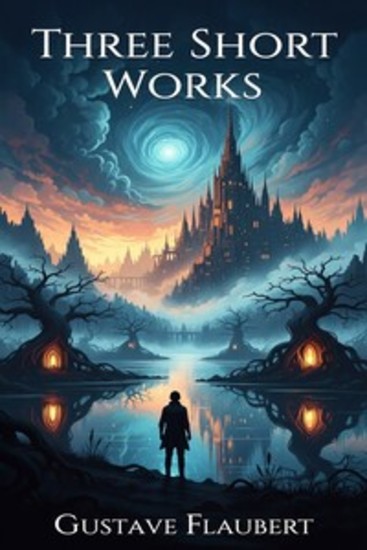
Three Short Works - cover

Three Short Works

Gustave Flaubert

Editorial: Bu Classics Books

  • 0
  • 0
  • 0

Sinopsis

This triad of stories showcases the breadth of human experience, from the sainthood of a medieval hunter to the tragedy of a servant. Each tale is a distinct jewel, polished to perfection, exploring themes of faith, obsession, and history. A compact demonstration of literary mastery that spans different eras and styles.
Disponible desde: 06/03/2026.
Longitud de impresión: 88 páginas.

Otros libros que te pueden interesar

  • The Bull - From their pens to your ears genius in every story - cover

    The Bull - From their pens to...

    Saki Saki

    • 0
    • 0
    • 0
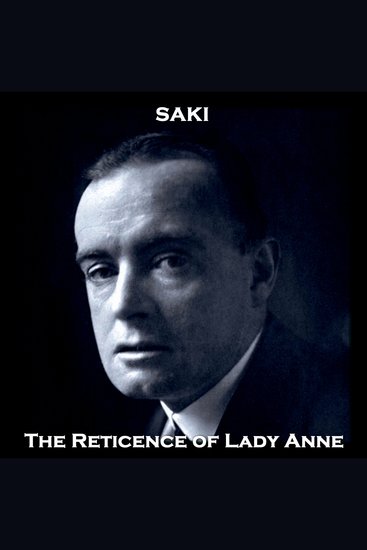
    Hector Hugh Munro, more familiarly known by his pen-name ‘Saki’ was born in what was then Akyab in British Burma on 18th December 1870. His father was an Inspector General for the Indian Imperial Police, and his mother the daughter of a Rear Admiral. 
    When he was 2 his mother died and he and his siblings were sent back to England to be raised by their grandmother and paternal maiden aunts in a strict, puritanical household near Barnstaple, Devon. Educated by governesses Saki used many of these women as character models for his later writing. 
    At 17 his father retried and returned to England and then embarked on a series of European travels with Saki and his siblings. 
    After a short stint working in Burma with the Indian Imperial Police Saki decided to move to London to make a living as a writer. Initially he wrote as a journalist for a number of newspapers and magazines before attempting an historical study, ‘The Rise of the Russian Empire’, whose real value lay in directing him to writing short stories instead, the first of which, ‘Dogged’, he published in 1899. 
    From here it was a short stab of the pen to writing political satire before in 1902 he became the foreign correspondent for The Morning Post, first in the Balkans, then Russia, Paris and back to London in 1908, where 'the agreeable life of a man of letters with a brilliant reputation awaited him.'  
    Collections of his short stories full of witty, mischievous and often macabre stories that satirized Edwardian society and two novels now appeared in the years up to the Great War.  At its’ outbreak he was 43 but managed to join as an ordinary trooper. More than once he returned to the battlefield when officially too sick or injured.  
    On 14th November 1916 Hector Hugh Munro was sheltering in crater during the Battle of the Ancre, when he was shot and killed by a German sniper. According to several sources, his last words were "Put that bloody cigarette out!"
    Ver libro
  • Two Tales From Herman Melville - The Lightning-Rod Man The Bell-Tower - cover

    Two Tales From Herman Melville -...

    Herman Melvillie

    • 0
    • 0
    • 0
    Two Tales From Herman Melville includes "The Lightning-Rod Man" and "The Bell-Tower." After spending the summer of 1853 in the Berkshire Mountains, where he supposedly had a real life encounter with a lightning-rod salesman, Melville published "The Lightning-Rod Man." At the end of this short story, the lightning-rod salesman is exposed for the fraud that he is. However, that will not keep his successors from fanning out to the Middle West, where lightning storms abound and farmers were gullible. On another level, the story can be interpreted as a confrontation between Good and Evil. Through description and diction, the narrator is understood as a follower of God, someone who believes in The Almighty watching over him. On the other hand, the lightning-rod man is seen as a negative character, someone who only has faith in the product he's peddling. "The Bell-Tower," published in 1856, is the story of an eccentric architect named Bannadonna and his quest to build a magnificent bell-tower. As building progresses, local townspeople begin to hear of mysterious occurrences in the tower, leading to a suspenseful conclusion.
    Ver libro
  • His Wife's Deceased Sister - From their pens to your ears genius in every story - cover

    His Wife's Deceased Sister -...

    Frank R. Stockton

    • 0
    • 0
    • 0
    Frank Richard Stockton was born in Philadelphia on 5th April 1834.  
    His father, a Methodist minister, discouraged Stockton’s literary career from an early age.  Feeling unable to go against those wishes it was for many years that Stockton’s income was maintained as a wood engraver.   
    His first work was published in 1867 and his first collection only appeared in 1870.  Despite this late arrival Stockton’s innovative and often far-fetched stories, with a gentle ‘poking fun’ humour were very popular.  Like his contemporary Mark Twain he avoided the scolding, hectoring and moral tones of many other authors and instead gently teased and cajoled his reader to open their eyes to the ills, the greed and the ambitions of the world around them.  His sci-fi stories in particular were far-seeing and inventive including a tale of negative gravity and a bloodless Anglo-US war won by technological feats.  
    Perhaps his most enduring tale though is ‘The Lady, or the Tiger?’ from 1882.  A condemned man is given a choice of being eaten alive or marrying his princess lover.  But he has to choose which door each is behind. 
    Frank R Stockton died in Washington, DC, on 20th April 1902, of a cerebral haemorrhage.  He is buried at The Woodlands in Philadelphia.
    Ver libro
  • Burning Bones - cover

    Burning Bones

    Miren Agur Meabe

    • 0
    • 0
    • 0
    WINNER OF THE TRANSLATION PRIZE LABORAL KUTXA – ETXEPARE 2023
    'Miren Agur Meabe's poetic language shades and heightens the pulse of her writing, [adding] sensuality to the wound she writes of. Her way of looking elevates her raw, sincere voice to higher ground...' – Harkaitz Cano
    'Miren Agur Meabe writes with about quiet worlds with tenderness and attention to detail, in a very sensual, almost synaesthetic way.' – Anna Blasiak, The Spanish Riveter
    'a riveting and immersive read.' – Rhianon Holley, Buzz
    In a series of short poetic narratives Burning Bones finds the writer on a remarkable journey of imagination, discovery and emotion.
    We watch the gardener gather kindling to prepare a bonfire. 'So many branches,' I tell Gwen. 'They look like a pile of bones... I have a feeling that's what I'm doing too, carrying a bundle of bones from place to place. And I don't just mean the bones in my body.'
    From a flooded river stranding a dolphin on a sandbank to a sailor afraid to venture onto land while a first kiss is cut tragically short Meabe plays with the expectations and form of stories while offering a rhapsody of reflection and reinvention.
    Expertly translated into English by Amaia Gabantxo – arguably the most prestigious contemporary Basque to English translator – Burning Bones is a companion piece to Miren Agur Meabe's A Glass Eye, a collection of short stories that complement the universe of Meabe's novel about absence as an engine for creation, about what we make out of the things we lose – her eye, in the author's case, or love, or the innocence of youth.
    Ver libro
  • A Middle-Sized Artist - From their pens to your ears genius in every story - cover

    A Middle-Sized Artist - From...

    Charlotte Perkins Gilman

    • 0
    • 0
    • 0
    Charlotte Perkins Gilman was born on 3rd July 1860 in Hartford, Connecticut, to an unaffectionate mother and a father who abandoned her and her older brother to a life of poverty. 
    Inevitably her schooling was limited and by 15 she had attended seven different schools but received only four years education.  However Charlotte was resourceful and did spend time with her father’s aunts – the suffragist Isabella Beecher Hooker and the ‘Uncle Tom Cabin’s’ author, Harriet Beecher Stowe as well as many hours at the public library studying ancient civilisations. 
    In 1878, she enrolled in classes at the Rhode Island School of Design where she met Martha Luther and they developed a close relationship until Luther married in 1881. Charlotte was devastated and detested romance and love until she met and married the artist Charles Walter Stetson.  
    Their only child, Katharine Beecher Stetson, was born in 1885 but left Charlotte with post-natal depression, then often dismissed as a case of hysteria or nerves.  Unsuited to domestic life she ruptured her life and moved to California with Katherine.  She divorced in 1894 and then sent Katharine east to live with her father and his second wife confirming that his paternal rights be acknowledged and that Katherine establish a relationship with her father. 
    After her mother died in 1893, Charlotte moved back east and became involved with her first cousin, Wall Street attorney, Houghton Gilman who she married in 1900. After his death she moved back to California, where Katherine now lived.   
    Her most popular story is ‘The Yellow Wallpaper’ which touched on her own post-partum depression and underlined the need for women to be responsible for their mental and physical well-being, as the narrator is ordered by her husband/doctor to take compete rest in her room where she is isolated and becomes obsessed with the revolting yellow wallpaper.   
    She wrote other notable short stories the best of which we also include.   
    Charlotte lectured widely for social reform, wrote important non-fiction works that questioned our patriarchal system and left a legacy as a leading and positive spokesperson for feminism.  
    She was diagnosed with incurable breast cancer in 1932 and, as she wrote in her suicide note and autobiography, she ‘chose chloroform over cancer’    
    Charlotte Perkins Gilman took her own life on 17th August 1935, aged 75, in Pasadena, California.
    Ver libro
  • Aunt Hettie on Matrimony - From their pens to your ears genius in every story - cover

    Aunt Hettie on Matrimony - From...

    Fanny Fern

    • 0
    • 0
    • 0
    The bookshelves of American literature are incredible collections that have gathered together centuries of very talented authors.  From this continent their fame spread and whilst among their number many are now forgotten or neglected their talents endure.  Among them is Fanny Fern.
    Ver libro