¡Acompáñanos a viajar por el mundo de los libros!
Añadir este libro a la estantería
Grey
Escribe un nuevo comentario Default profile 50px
Grey
Suscríbete para leer el libro completo o lee las primeras páginas gratis.
All characters reduced
The Collected Works - Enriched edition - cover

The Collected Works - Enriched edition

Gustave Flaubert

Traductor Eleanor Marx Aveling

Editorial: DigiCat

  • 0
  • 0
  • 0

Sinopsis

Gustave Flaubert's "The Collected Works" serves as a comprehensive anthology that encapsulates his literary genius, showcasing his pioneering contributions to the genre of realism in 19th-century literature. This collection features not only his famed novel "Madame Bovary," but also a variety of smaller works, essays, and correspondence that reveal Flaubert's meticulous attention to language, form, and character development. His narrative style often combines rich, vivid descriptions with incisive psychological insight, all while adhering to a rigorous pursuit of artistic perfection, famously encapsulated in his phrase, "Le mot juste"—the right word. This anthology invites readers into the complex moral landscapes Flaubert expertly navigated, reflecting both the societal constraints of his time and the inner turmoil of his characters. Flaubert, born in 1821 in Rouen, France, grew up in a time of great political and social upheaval, which deeply influenced his literary endeavors. His rigorous classical education and extensive travel experiences endowed him with a profound understanding of human nature and the nuances of social dynamics. Driven by a desire to elevate the novel as an art form, Flaubert typically sought to expose the contradictions of bourgeois society, embedding personal struggles within broader cultural critiques. Readers yearning for literary introspection and a profound exploration of the human condition will find "The Collected Works" to be an indispensable volume. Flaubert's unwavering commitment to the craft of writing, coupled with his incisive critique of 19th-century society, renders this anthology not merely an assembly of texts but a vital conversation with the past, urging modern audiences to reflect on the complexities of desire, identity, and societal norms.

In this enriched edition, we have carefully created added value for your reading experience:
- An Introduction draws the threads together, discussing why these diverse authors and texts belong in one collection.
- Historical Context explores the cultural and intellectual currents that shaped these works, offering insight into the shared (or contrasting) eras that influenced each writer.
- A combined Synopsis (Selection) briefly outlines the key plots or arguments of the included pieces, helping readers grasp the anthology's overall scope without giving away essential twists.
- A collective Analysis highlights common themes, stylistic variations, and significant crossovers in tone and technique, tying together writers from different backgrounds.
- Reflection questions encourage readers to compare the different voices and perspectives within the collection, fostering a richer understanding of the overarching conversation.
Disponible desde: 11/10/2022.
Longitud de impresión: 1320 páginas.

Otros libros que te pueden interesar

  • The call of Cthulhu - Unearth the dread of an ancient god global cults and a sanity-shattering mystery in this Cosmic Horror masterpiece about the monsters waiting beneath the waves - cover

    The call of Cthulhu - Unearth...

    H. P. Lovecraft

    • 0
    • 0
    • 0
    "The most merciful thing in the world, I think, is the inability of the human mind to correlate all its contents." 
    Following the mysterious death of his grand-uncle, Francis Wayland Thurston inherits a puzzling collection of research papers, unearthly clay sculptures, and frantic global news clippings. As he attempts to piece together these seemingly unrelated fragments, Thurston uncovers a terrifying reality: a shadowy, worldwide cult worshipping an ancient, slumbering entity hidden beneath the Pacific Ocean. From the fevered dreams of a young artist in Providence to the blood-curdling swamps of Louisiana and a doomed sea voyage in uncharted waters, Thurston's investigation draws him closer to an apocalyptic truth. The stars are aligning, and the Great Old Ones are waiting to reclaim the earth. 
    If you crave creeping tension, psychological dread, and mind-bending lore, you will be mesmerized by this definitive piece of Cosmic Horror. Blending detective fiction, dark fantasy, and eerie maritime adventure, this audiobook masterfully explores the fragility of human sanity against the vast, indifferent universe, delivering an atmosphere dripping with primordial terror and eldritch abominations. 
    About the Author: H. P. Lovecraft was an American writer whose groundbreaking blend of science fiction and gothic horror forever changed the literary landscape. Often regarded as the father of weird fiction, his mythos continues to inspire generations of writers, filmmakers, and artists.
    Ver libro
  • Cymbeline - cover

    Cymbeline

    Pierre Arthur Laure, Tom...

    • 0
    • 0
    • 0
    This strange, dark romance includes two songs composed by Shakespeare that are amongst the most beautiful in the English language. 
    Imogen, the daughter of King Cymbeline, is persecuted by her wicked stepmother, the Queen, and by Cloten, the Queen’s doltish son. Disguised as a boy, she sets out to find her husband, the banished Posthumus. On her journey, she unwittingly meets her two brothers, stolen from the court as infants. Posthumus, meanwhile, has been convinced by the villainous Iachimo that Imogen is unchaste and agrees to a test of her faithfulness. 
    Sophie Thompson is Imogen, and Ben Porter is Posthumus. Cymbeline is played by Jack Shepherd while Suzanne Bertish is the Queen. Stephen Mangan plays Cloten, and Ron Cook plays Iachimo. 
    ACT I Scene 1. Imogen, daughter of King Cymbeline of Britain, has angered father by marrying Posthumus. Cymbeline himself reared the orphaned Posthumus, his own two sons having been abducted in infancy. The wicked queen (whose son Cloten was Cymbeline’s preferred match for Imogen) pretends kindness to the young couple. Before Posthumus leaves for exile in Rome, Imogen gives him a ring, receiving in return a bracelet.Scene 2. Cloten’s attendants ridicule him.Scene 3. Pisanio, Posthumus’ servant, tells Imogen of his master’s departure.Scene 4. Posthumus meets Iachimo in Rome. When Posthumus extols Imogen’s virtue, Iachimo wagers him ten thousand ducats to his diamond ring that he can persuade her to commit adultery. Posthumus accepts the wager. Scene 5. The doctor, Cornelius, is suspicious when the queen gathers poisonous plants. He reveals privately that what she believes to be a fatal poison is in fact a sleeping draught. The queen tries unsuccessfully to turn Pisanio against Posthumus and gives him the poison, claiming that it is a life-saving remedy. Pisanio spurns the queen, disbelieving her.Scene 6. Iachimo comes to see Imogen, bringing a letter of introduction from Posthumus. Realizing that he can only win the wager by resorting to subterfuge, he claims that Posthumus has been unfaithful, suggesting that she avenge herself by becoming his lover. When she reacts with revulsion, he assures her that he was merely testing her devotion. She then agrees to his request to leave a trunk of valuables in her chamber overnight for safekeeping. 
    ACT IIScene 1. Cloten wants to meet Iachimo. Scene 2. While Imogen sleeps, Iachimo creeps from the trunk. He carefully notes details of her chamber and person and then eases Posthumus’s bracelet from her arm. Scene 3. When Cloten tries to woo Imogen she dismisses him impatiently. She asks Pisanio to find her missing bracelet.Scene 4. Iachimo uses his observations of Imogen, and her bracelet, to convince Posthumus that he has slept with her. Posthumus vows revenge. 
    ACT IIIScene 1. Cymbeline refuses to pay a tribute to Caesar, and Rome declares war on Britain. We learn that Cymbeline had fond associations with Rome and Caesar in his youth. Scene 2. Posthumus writes to Pisanio ordering to kill Imogen. Pisanio refuses to believe her unfaithful. In order to help Pisanio in his task, Posthumus tells Imogen to meet him at Milford Haven. Scene 3. Belarius, unjustly banished by Cymbeline, abducted his sons Guiderius and Arviragus, and lives with them in a remote Welsh cave. The young men, unaware of their provenance, are frustrated by their isolated life.Scene 4. As Imogen and Pisanio approach Milford he shows her Posthumus’ letter. She begs him “Do his bidding strike!” Pisanio convinces her that she should report her death to Posthumus; she meanwhile must dress as a man and seek the protection of Lucius, a noble Roman. Before they part, Pisanio gives Imogen the Queen’s potion, as a remedy for sickness.Scene 5. Imogen is missing from the court. The Queen privately hopes that she is either dead or exiled and that “She being down,/I have the placing of the British crown.” Believing Imogen well on her way to Rome, Pisanio tells Cloten tha
    Ver libro
  • Parmenides - cover

    Parmenides

    Plato

    • 0
    • 0
    • 0
    Parmenides recounts a meeting between Socrates, Zeno and Parmenides. Topics discussed include universals, plurality and the One. - Summary by Geoffrey Edwards
    Ver libro
  • Moll Flanders - cover

    Moll Flanders

    Daniel Defoe

    • 0
    • 0
    • 0
    Moll Flanders by Daniel Defoe is a gripping tale of survival, sin, and redemption in 17th-century England. Born in Newgate Prison, Moll narrates her tumultuous life as she strives for security and wealth in a harsh, unforgiving society. Through a series of marriages, thefts, and betrayals, Moll navigates poverty and prosperity, driven by desperation and ambition. Her journey takes her from London to Virginia and back, entangled in moral ambiguity and societal critique. Despite her crimes, Moll’s resilience and wit make her a compelling antiheroine. Ultimately, she seeks redemption after years of vice, reflecting on her choices with a mix of regret and pragmatism. Defoe’s vivid storytelling blends social commentary with an unflinching look at human frailty, making Moll Flanders a timeless exploration of identity, morality, and the pursuit of happiness.
    Ver libro
  • The Ebony Frame - cover

    The Ebony Frame

    Edith Nesbit

    • 0
    • 0
    • 0
    "I have waited for you for three hundred years."
    
    When a young man inherits a grand, ancient house from a distant relative, he discovers a striking portrait of a beautiful woman, encased in a magnificent, intricately carved ebony frame. Drawn to her haunting gaze, he soon realizes that the woman in the painting is more than mere oil and pigment. She is a soul from the past, bound by a dark pact and a love that refuses to stay buried. As the boundary between the present and the Elizabethan era begins to dissolve, he must decide if he is willing to sacrifice his reality for a phantom bride.
    
    A Masterpiece of Atmospheric Horror: Before she became a pioneer of children's fantasy, Edith Nesbit was a master of the "shilling shocker." The Ebony Frame is a quintessential example of the Fin de Siècle ghost story, blending the elegance of Victorian prose with a visceral sense of dread. It explores the dangerous allure of nostalgia and the terrifying possibility that our ancestors' lives are never truly finished.
    
    The Curse of the Unliving: Nesbit expertly weaves elements of the occult and the "femme fatale" archetype into this taut narrative. The ebony frame itself acts as a portal, a physical manifestation of the barrier between life and death. As the protagonist is pulled deeper into the lady's spell, the reader is left to wonder: is this a romantic reunion of soulmates, or a predatory haunting designed to steal a living soul?
    
    True love never dies—it waits. Purchase "The Ebony Frame" today and step into a world of spectral romance.
    Ver libro
  • The Scarlet Letter - cover

    The Scarlet Letter

    Nathaniel Hawthorne

    • 0
    • 0
    • 0
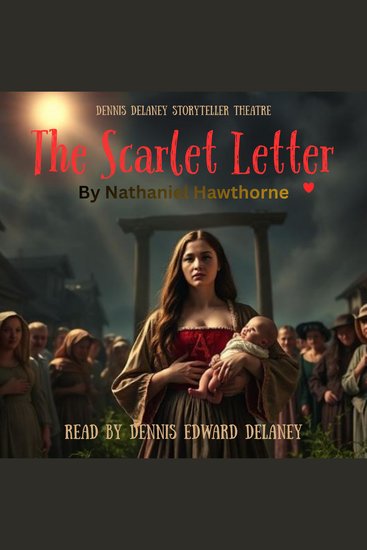
    "On the breast of her gown, in fine red cloth, surrounded with an elaborate embroidery... appeared the letter A."
    
    When Hester Prynne emerges from a dark prison cell with an illegitimate infant in her arms and a scarlet "A" stitched to her chest, she becomes the living symbol of sin in her community. Yet, as she bears her public shame with quiet dignity, the true villains of the story remain hidden in the shadows. The Scarlet Letter follows the intertwined fates of three people: Hester, who finds strength in her isolation; Arthur Dimmesdale, the revered minister dying under the weight of his secret guilt; and Roger Chillingworth, the vengeful husband whose soul withers as he seeks to destroy them. Hawthorne's "Romance" is a lush, atmospheric journey into a world where the laws of man and the laws of the heart are in a constant, tragic collision.
    
    The letter "A" itself is one of the most famous symbols in literature. Initially intended to represent "Adultery," it evolves throughout the novel to mean "Able," "Angel," and even "Awe," as Hester's character transforms her punishment into a badge of resilience. Even her daughter, Pearl, serves as a "living hieroglyphic" of her mother's passion and pain.
    
    Hawthorne goes beyond a simple morality tale to explore the physical effects of spiritual distress. He vividly depicts Dimmesdale's deteriorating health as his conscience eats away at him, contrasting it with the "black man" of the forest—the symbol of the devilish temptation to abandon one's humanity for the sake of hidden impulses.
    
    The Scarlet Letter was one of the first mass-produced books in America and remains a staple of the literary canon. Its themes of social hypocrisy, the nature of evil, and the possibility of redemption are as relevant today as they were in the mid-19th century. It is a story that proves that while society may brand the body, only the individual can define the soul.
    
    Uncover the secret behind the letter. Purchase "The Scarlet Letter" today.
    Ver libro