

Join us on a literary world trip!
Add this book to bookshelf
Grey
Write a new comment Default profile 50px
Grey
Subscribe to read the full book or read the first pages for free!
All characters reduced
Salammbô - Enriched edition - cover

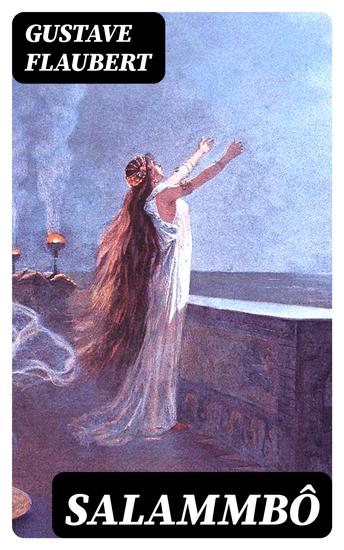
Salammbô - Enriched edition

Gustave Flaubert

Publisher: DigiCat

  • 0
  • 0
  • 0

Summary

Gustave Flaubert's "Salammbô" is a captivating historical novel set in ancient Carthage during the tumultuous aftermath of the Mercenary War (241 BC). Richly imbued with the author's hallmark meticulousness, the narrative is characterized by lush descriptive passages and a vivid portrayal of the cultural and political dynamics of a society on the brink of collapse. Flaubert masterfully intertwines the personal and the political as it chronicles the tale of the priestess Salammbô and her tragic entanglements with the mercenary leader Matho, framed within grand themes of love, power, and religious fervor, effectively immersing the reader in the sensibilities of an entirely different epoch. Flaubert, a pioneer of literary realism, was influenced by his extensive studies of ancient civilizations and his travels throughout North Africa. This exposure allowed him to create a vivid tableau that transcends mere historical fiction; it becomes a profound exploration of human emotion and ambition. The meticulous research that Flaubert employed reflects his desire to depict not just the history, but the essence of a lost world, underlining his belief in the importance of artistic accuracy and depth. "Salammbô" is highly recommended for readers interested in rich historical narratives interwoven with psychological complexity. Flaubert's novel is not merely a reflection of ancient times but an exploration of universal human experiences. It challenges the reader to ponder the intersections of fate and free will, making it an essential reading for anyone seeking a deeper understanding of literary history and the enduring power of storytelling.

In this enriched edition, we have carefully created added value for your reading experience:
- A succinct Introduction situates the work's timeless appeal and themes.
- The Synopsis outlines the central plot, highlighting key developments without spoiling critical twists.
- A detailed Historical Context immerses you in the era's events and influences that shaped the writing.
- An Author Biography reveals milestones in the author's life, illuminating the personal insights behind the text.
- A thorough Analysis dissects symbols, motifs, and character arcs to unearth underlying meanings.
- Reflection questions prompt you to engage personally with the work's messages, connecting them to modern life.
- Hand‐picked Memorable Quotes shine a spotlight on moments of literary brilliance.
- Interactive footnotes clarify unusual references, historical allusions, and archaic phrases for an effortless, more informed read.
Available since: 11/13/2022.
Print length: 544 pages.


Other books that might interest you

  • Misery - cover

    Misery

    Anton Chekhov

    • 0
    • 0
    • 0
    "Misery" by Anton Chekhov is a short story that explores the working-class, human despair, and suffering in Tsarist Russia. Chekhov's brief portrait of working-class life follows a sledge driver named Iona as he attempts to process his grief about his son's untimely death.
    Show book
  • Pelle the Conqueror - cover

    Pelle the Conqueror

    Martin Andersen Nexø

    • 0
    • 0
    • 0
    When the first part of "Pelle Erobreren" (Pelle the Conqueror) appeared in 1906, its author, Martin Andersen Nexo, was practically unknown even in his native country, save to a few literary people who knew that he had written some volumes of stories and a book full of sunshiny reminiscences from Spain. And even now, after his great success with "Pelle," very little is known about the writer. He was born in 1869 in one of the poorest quarters of Copenhagen, but spent his boyhood in his beloved island Bornholm, in the Baltic, in or near the town, Nexo, from which his final name is derived. There, too, he was a shoemaker's apprentice, like Pelle in the second part of the book, which resembles many great novels in being largely autobiographical. Later, he gained his livelihood as a bricklayer, until he somehow managed to get to one of the most renowned of our "people's high-schools," where he studied so effectually that he was enabled to become a teacher, first at a provincial school, and later in Copenhagen.
    Show book
  • Candide - cover

    Candide

    Voltaire

    • 0
    • 0
    • 0
    Embark on a satirical adventure through the absurdities of life with "Candide" by Voltaire, now available as an engaging audiobook. In this timeless classic, listeners will journey alongside the young and naive Candide as he navigates a series of misadventures and philosophical encounters in his pursuit of happiness and understanding. 
    As the story unfolds, listeners will be swept away by Voltaire's sharp wit and biting commentary on the injustices and follies of the world. From the frivolous optimism of Pangloss to the harsh realities of war, natural disasters, and human folly, "Candide" offers a humorous yet thought-provoking exploration of the human condition. 
    Perfect for listeners seeking both entertainment and enlightenment, this audiobook delivers a compelling performance that will leave you laughing, reflecting, and questioning the absurdities of life. Whether you're a fan of classic literature or new to Voltaire's work, "Candide" promises to entertain and inspire. 
    So, if you're ready to embark on a journey filled with laughter, satire, and profound insight, start listening to "Candide" today and immerse yourself in a literary masterpiece that continues to resonate with readers of all ages. Start Listening to "Candide" today!
    Show book
  • The Lie - From their pens to your ears genius in every story - cover

    The Lie - From their pens to...

    Leonid Andreyev

    • 0
    • 0
    • 0
    Leonid Nikolaievich Andreyev was born on 21st August in Oryol, Russia to a middle-class family of Polish, Ukranian and Finnish ancestry. 
    He studied law in Moscow before working as a police-court reporter for a daily newspaper.  His literary efforts at this time were confined to poetry and those he did try to get published were all rejected.  
    In 1898 his first short story ‘Bargamot and Garaska’, published in the ‘Kurier’ newspaper caught the attention and friendship of Maxim Gorky.  Andreyev now discarded any other career path apart from that of author. 
    His first collection of short stories appeared in 1901 and sold over a quarter of a million copies.  He was a sensation. Using his interest in psychology and psychiatry gave him an almost unrivalled ability to delve into the human psyche and create astonishing characters. 
    During the first Russian revolution Andreyev was a staunch defender of democratic ideals and many of his stories reflected the heated mood of the times. With the 1905 Revolution’s failure his work became pessimistic and despairing. By the beginning of the following decade he began losing his audience to new literary movements such as the Futurists. 
    He published little after 1914 except political writings, instead working as the literary editor of the ‘Russian Will’ newspaper.  When the Bolsheviks took power he sensed catastrophe was coming and moved to Finland where he spent his last years in poverty distraught at the outcome of the Revolution. 
    Leonid Andreyev died of heart failure on 12th September 1919 at the age of 48 in Mustamäki, Finland. 
    His classic story ‘Lazarus’ brilliantly tells the story of Christ’s disciple, forced to wander the earth for all time is both chilling and heart-breaking in its Russian setting.
    Show book
  • The Voyage Out - cover

    The Voyage Out

    Virginia Woolf

    • 0
    • 0
    • 0
    The Voyage Out is the first novel by Virginia Woolf, published in 1915 by Duckworth.
    Woolf began work on The Voyage Out by 1910 (perhaps as early as 1907) and had finished an early draft by 1912. The novel had a long and difficult gestation; it was not published until 1915, as it was written during a period in which Woolf was especially psychologically vulnerable. She suffered from periods of depression and at one point attempted suicide. The resultant work contained the seeds of all that would blossom in her later work: the innovative narrative style, the focus on feminine consciousness, sexuality and death.
    Show book
  • The White Maiden - From their pens to your ears genius in every story - cover

    The White Maiden - From their...

    Hanns Heinz Ewers

    • 0
    • 0
    • 0
    Hanns Heinz Ewers was born on 3rd November 1871 in Düsseldorf, Germany. 
    His first published poem was at 17 on the death, after a reign of only 99 days, of the German Emperor Frederick III. 
    A stint in the German military was cut short after only 44 days because of his myopia.  Writing was to be the way forward for him with a book of satiric verse published in 1901. At the same time he co-founded a literary vaudeville troupe that toured central and eastern Europe before censors and expenses forced its closure.  An inveterate traveller he was in South America when the Great War enveloped Europe and he relocated to New York. 
    From here his story darkens. Although by now a successful and admired author he was arrested in the U S in 1918 as a German Agent on the pretext of his travels and a falsified Swiss passport. Interned, he was released in 1921 and returned to Germany.  He claimed only to be raising money for the German Red Cross. 
    His literary fame is decidedly easier to clarify. His novels beginning with ‘The Sorcerer’s Apprentice’ in 1910 are dark, they bristle with evil intent and are littered with characters who have a dubious moral compass and yet, along with his short stories, are brazen, brilliant feats of literary narrative. 
    He also wrote and published plays, fairy tales, opera librettos, critical essays and lectured for many years on ‘The Religion of Satan’ and was one of the first to write scripts for the cinema, which he considered a legitimate art form. 
    As the Weimar republic began its chaotic death throes Ewers became attracted to the rising Nazi Party.  At first he was warmly received despite disagreeing with its anti-semitism (his most famed literary character had a Jewish mistress) and he was even commissioned by Hitler to write a biography of the Nazi martyr Horst Wessel.  This together with his own homosexuality culminated with his works being banned in 1934 and his assets and property seized.  It took him many years to have the ban lifted.  This association rightfully clouds his personal reputation but has meant his literary contributions are also overlooked and neglected. 
    Hanns Heinz Ewers died of tuberculosis on 12th June 1943 in his Berlin apartment.
    Show book
