Junte-se a nós em uma viagem ao mundo dos livros!
Adicionar este livro à prateleira
Grey
Deixe um novo comentário Default profile 50px
Grey
Assine para ler o livro completo ou leia as primeiras páginas de graça!
All characters reduced
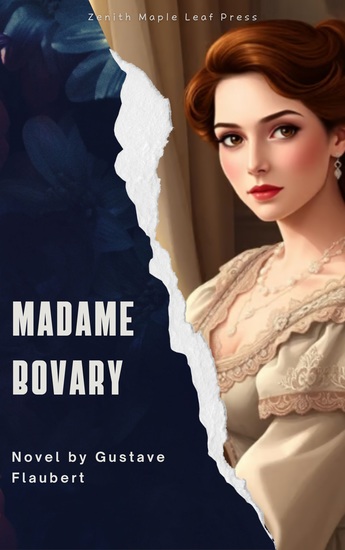
Madame Bovary - The Masterpiece of Desire Disillusionment and the Search for Happiness - cover
LER

Madame Bovary - The Masterpiece of Desire Disillusionment and the Search for Happiness

Gustave Flaubert, Zenith Maple Leaf Press

Editora: Zenith Maple Leaf Press

  • 0
  • 0
  • 0

Sinopse

A woman's dream for romance and excitement becomes her greatest undoing.
In the quiet French countryside, Emma Bovary, the beautiful young wife of a kind but dull country doctor, longs for a life of passion, luxury, and adventure. Trapped in the monotony of provincial life, she seeks fulfillment through romantic affairs and extravagant spending—only to find herself spiraling toward heartbreak and ruin.

First published in 1857, Madame Bovary scandalized 19th-century France with its candid portrayal of desire, discontent, and moral transgression. Today, it stands as Gustave Flaubert's most celebrated work, admired for its groundbreaking realism, exquisite prose, and unflinching psychological insight.

"One of the most perfectly written novels ever crafted."
– The New York Times

"Flaubert's prose is pure art—precise, elegant, and unforgettable."
– The Guardian

✅ Why Readers Love It:
💔 A poignant portrait of longing and self-deception

🇫🇷 A cornerstone of French literary realism

📚 Renowned for its artistry and psychological depth

🎯 Click 'Buy Now' to experience Flaubert's timeless masterpiece of love, illusion, and the cost of chasing impossible dreams.
Disponível desde: 12/08/2025.
Comprimento de impressão: 397 páginas.

Outros livros que poderiam interessá-lo

  • New Machiavelli The (Unabridged) - cover

    New Machiavelli The (Unabridged)

    H. G. Wells

    • 0
    • 0
    • 0
    This work has been selected by scholars as being culturally important, and is part of the knowledge base of civilization as we know it. This work was reproduced from the original artifact, and remains as true to the original work as possible. Therefore, you will see the original copyright references, library stamps (as most of these works have been housed in our most important libraries around the world), and other notations in the work. This work is in the public domain in the United States of America, and possibly other nations. Within the United States, you may freely copy and distribute this work, as no entity (individual or corporate) has a copyright on the body of the work.As a reproduction of a historical artifact, this work may contain missing or blurred pages, poor pictures, errant marks, etc. Scholars believe, and we concur, that this work is important enough to be preserved, reproduced, and made generally available to the public. We appreciate your support of the preservation process, and thank you for being an important part of keeping this knowledge alive and relevant.
    Ver livro
  • The Rainbow Trail - cover

    The Rainbow Trail

    Zane Grey

    • 0
    • 1
    • 0
    A disillusioned minister searches the Utah desert for a girl who went missing years ago in this sequel to western classic Riders of the Purple Sage.With Riders of the Purple Sage, Zane Grey invented the western literary form. His timeless novel tells the tale of a mysterious gunman named Lassiter and a Mormon woman named Jane Withersteen, who risk everything to escape the tyranny of a polygamist Mormon minister. Together with a little girl named Fay Larkin, they trap themselves behind a boulder in the lush but secluded Surprise Valley. Ten years later, a disillusioned minister named John Shefford comes looking for Surprise Valley—and Fay. Though his faith in God is shaken, he refuses to lose hope that she can be saved. But as the trail leads Shefford to a secret Mormon village, he begins to wonder—even if he does find her—who she has become.
    Ver livro
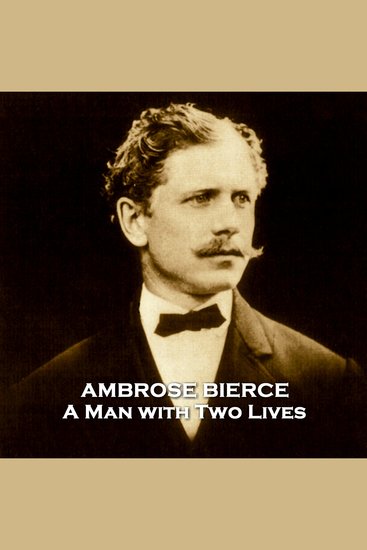
  • A Man with Two Lives - From their pens to your ears genius in every story - cover

    A Man with Two Lives - From...

    Ambrose Bierce

    • 0
    • 0
    • 0
    Ambrose Gwinnett Bierce was born on 24th June 1842 at Horse Cave Creek in Meigs County, Ohio. His parents were poor but they introduced him to literature at an early age, instilling in him a deep appreciation of books, the written word and the elegance of language.  
    Growing up in Koscuisko County, Indiana poverty and religion were defining features of his childhood, and he would later describe his parents as “unwashed savages” and fanatically religious, showing him little affection but always quick to punish. He came to resent religion, and his introduction to literature appears to be their only positive effect. 
    At age 15 Bierce left home to become a printer’s devil, mixing ink and fetching type at The Northern Indian, a small Ohio paper. Falsely accused of theft he returned to his farm and spent time sending out work in the hopes of being published. 
    His Uncle Lucius advised he be sent to the Kentucky Military Institute. A year later he was commissioned as an Officer.  As the Civil War started Bierce enlisted in the 9th Indiana Infantry Regiment.  
    In April 1862 Bierce fought at the Battle of Shiloh, an experience which, though terrifying, became the source of several short stories. Two years later he sustained a serious head wound and was off duty for several months. He was discharged in early 1865.  
    A later expedition to inspect military outposts across the Great Plains took him all the way to San Francisco. He remained there to become involved with publishing and editing and to marry, Mary Ellen on Christmas Day 1871.  They had a child, Day, the following year.  
    In 1872 the family moved to England for 3 years where he wrote for Fun magazine. His son, Leigh, was born, and first book, ‘The Fiend’s Delight’, was published.  
    They returned to San Francisco and to work for a number of papers where he gained admiration for his crime reporting. In 1887 he began a column at the William Randolph Hearst’s San Francisco Examiner.  
    Bierce’s marriage fell apart when he discovered compromising letters to his wife from a secret admirer. The following year, 1889 his son Day committed suicide, depressed by romantic rejection. 
    In 1891 Bierce wrote and published the collection of 26 short stories which included ‘An Occurrence at Owl Creek Bridge’.  Success and further works including poetry followed.  
    Bierce with Hearst’s resources helped uncover a financial plot by a railroad to turn 130 million dollars of loans into a handout. Confronted by the railroad and asked to name his price Bierce answered “my price is $130 million dollars. If, when you are ready to pay, I happen to be out of town, you may hand it over to my friend, the Treasurer of the United States”.  
    He now began his first foray as a fabulist, publishing ‘Fantastic Fables’ in 1899.  But tragedy again struck two years later when his second son Leigh died of pneumonia relating to his alcoholism.  
    He continued to write short stories and poetry and also published ‘The Devil’s Dictionary’.  
    At the age of 71, in 1913 Bierce departed from Washington, D.C., for a tour of the battlefields where he had fought during the civil war. At the city of Chihuahua he wrote his last known communication, a letter to a friend. It’s closing words were “as to me, I leave here tomorrow for an unknown destination,” Ambrose Bierce then vanished without trace.
    Ver livro

  • The Invisible Man - cover

    The Invisible Man

    H. G. Wells

    • 0
    • 0
    • 0
    The Invisible Man is a science fiction novel by H. G. Wells. Originally serialized in Pearson's Weekly in 1897, it was published as a novel the same year. The Invisible Man of the title is Griffin, a scientist who has devoted himself to research into optics and invents a way to change a body's refractive index to that of air so that it neither absorbs nor reflects light and thus becomes invisible. He successfully carries out this procedure on himself, but fails in his attempt to reverse it. An enthusiast of random and irresponsible violence, Griffin has become an iconic character in horror fiction.
    A mysterious man, Griffin, arrives at the local inn owned by Mr. and Mrs. Hall of the English village of Iping, West Sussex, during a snowstorm. The stranger wears a long-sleeved, thick coat and gloves; his face is hidden entirely by bandages except for a fake pink nose; and he wears a wide-brimmed hat. He is excessively reclusive, irascible, unfriendly, and an introvert. He demands to be left alone and spends most of his time in his rooms working with a set of chemicals and laboratory apparatus, only venturing out at night. While Griffin is staying at the inn, hundreds of strange glass bottles (that he calls his luggage) arrive. Many local townspeople believe this to be very odd. He becomes the talk of the village with many theorizing as to his origins.
    Famous works of the author Herbert Wells: "The Time Machine", "The War of the Worlds", "The War in the Air", "The Island of Dr. Moreau", "The Complete Science Fiction Treasury of H.G. Wells", "The Invisible Man", "When the Sleeper Wakes", "The First Men in the Moon", "The Food of the Gods", "The Magic Shop".
    Ver livro
  • The House of the Seven Gables - cover

    The House of the Seven Gables

    Nathaniel Hawthorne

    • 0
    • 0
    • 0
    The House of the Seven Gables: A Romance is a Gothic novel written beginning in mid-1850 by American author Nathaniel Hawthorne and published in April 1851 by Ticknor and Fields of Boston. The novel follows a New England family and their ancestral home. In the book, Hawthorne explores themes of guilt, retribution, and atonement, and colors the tale with suggestions of the supernatural and witchcraft. 
    Ver livro
  • Queen Bee The - Story Time Episode 44 (Unabridged) - cover

    Queen Bee The - Story Time...

    Brothers Grimm

    • 0
    • 0
    • 0
    Two sons of a king went out to seek their fortunes, but fell into disorderly ways. The third and youngest son, Simpleton, went out to find them, but they mocked him. They traveled on, and Simpleton prevented his brothers from destroying an ant hill, killing some ducks, and suffocating a bee hive with smoke.
    Ver livro