Junte-se a nós em uma viagem ao mundo dos livros!
Adicionar este livro à prateleira
Grey
Deixe um novo comentário Default profile 50px
Grey
Assine para ler o livro completo ou leia as primeiras páginas de graça!
All characters reduced
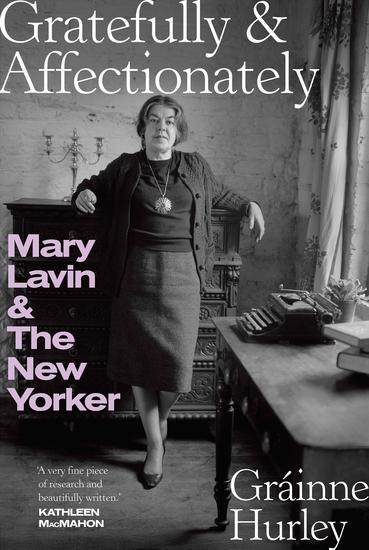
Gratefully & affectionately - mary lavin & the new yorker - cover
LER

Gratefully & affectionately - mary lavin & the new yorker

Gráinne Hurley

Editora: New Island

  • 0
  • 0
  • 0

Sinopse

Between 1958 and 1976, the Irish American writer Mary Lavin had sixteen stories published in The New Yorker, after J. D. Salinger introduced her to the magazine. It was a prolific time for Lavin, helped in no small part by her close working relationship with her chief editor there, Rachel MacKenzie. They wrote nearly four-hundred letters to each other, the topics of which ranged from story edits to holiday plans, windfalls and legal troubles, mutual literary friends and their love of gardening, promotions and health emergencies. Within a year of working together, they were ending their letters with 'love', 'gratefully' and 'affectionately'. Lavin was soon offered the magazine's highly coveted first-reading agreement.

Gráinne Hurley's impressive debut, Gratefully & Affectionately: Mary Lavin & The New Yorker, draws extensively from Lavin and MacKenzie's letters as well as other material related to the revered magazine. It explores the collaborative relationship between this writer and her editor, Lavin's own writing process, the inner workings and editing procedures of The New Yorker and the process of publishing a story from manuscript to print during its heyday. The book also reveals Lavin's professional dealings with agents and publishers and her friendships with prominent literary figures including Eudora Welty, Frank O'Connor, William Maxwell and John McGahern.

Gratefully & Affectionately offers fascinating insight into the lives and careers of two mid-20th-century women, working on either side of the Atlantic and inhabiting the small but hallowed world of literary publishing. It reveals how their fortunate union and combined love for the written word produced some of Lavin's finest work.
Disponível desde: 13/06/2025.
Comprimento de impressão: 304 páginas.


Outros livros que poderiam interessá-lo

  • Leading the Dillinger Gang - cover

    Leading the Dillinger Gang

    Editors Charles River

    • 0
    • 0
    • 0
    America has always preferred heroes who weren’t clean cut, an informal ode to the rugged individualism and pioneering spirit that defined the nation in previous centuries. The early 19th century saw the glorification of frontier folk heroes like Davy Crockett and Daniel Boone. After the Civil War, the outlaws of the West were more popular than the marshals, with Jesse James and Billy the Kid finding their way into dime novels. And at the height of the Great Depression in the 1930s, there were the “public enemies”, common criminals and cold blooded murderers elevated to the level of folk heroes by a public frustrated with their own inability to make a living honestly. 
    	Two months after Franklin D. Roosevelt’s inauguration in 1933, a petty thief who had spent almost a decade behind bars for attempted theft and aggravated assault was released from jail. By the end of the year, that man, John Dillinger, would be America’s most famous outlaw: Public Enemy Number One. From the time of his first documented heist in early July 1933, until his dramatic death in late July of the following year, he would capture the nation’s attention and imagination as had no other outlaw since Jesse James. 
    	The man who became Public Enemy Number One after the deaths of John Dillinger and Pretty Boy Floyd was Lester Joseph Gillis, whose alias “George Nelson” eventually gave way to the nickname “Baby Face Nelson”. Despite the almost playfully innocent nickname, and the fact that he was not as notorious as two of his partners in crime, Dillinger and Floyd, Baby Face Nelson was the worst of them all. In an era where the outlaws were glorified as Robin Hood types, Baby Face was a merciless outlier who pulled triggers almost as fast as he lost his temper. He was believed to have been responsible for the deaths of more FBI agents than anybody else in American history.
    Ver livro
  • Book summary & analysis of Source Code by Bill Gates - cover

    Book summary & analysis of...

    Briefly Summaries

    • 0
    • 0
    • 0
    This is a concise summary and analysis of Source Code, by Bill Gates. It is not the original book and is not affiliated with or endorsed by Bill Gates. Ideal for those seeking a quick and insightful overview.
     
    Source Code is a compelling exploration of the foundational ideas, personal experiences, and pivotal choices that shaped one of the most influential figures in modern technology. Through a collection of letters, reflections, and anecdotes, the book delves into themes of curiosity, innovation, responsibility, and the ever-evolving relationship between humanity and technology. From early programming days to global health and climate change, it charts a journey of transformation—both personal and societal—offering a window into the thinking behind some of the world’s most impactful decisions.
    Ver livro
  • Charlie Watts Rolling Stone - The Power Behind The Music - cover

    Charlie Watts Rolling Stone -...

    Geoffrey Giuliano

    • 0
    • 0
    • 0
    Charlie Watts June 2, 1941- August 24, 2021 
     
     
    A TRIBUTE FROM THE AUTHOR OF 'PAINT IT BLACK THE MURDER OF BRIAN JONES' 
    AND 'THE ROLLING STONES ALBUM', SQUID GAME STAR GEOFFREY GIULIANO 
     
    "I wanted to play drums because I fell in love with the glitter and the lights, but it wasn't about adulation. It was being up there playing." 
     
    "I hate leaving home. I love what I do, but I'd love to go home every night." 
     
    "It's been years and years and years I've been playing the drums, and they're still a challenge." 
     
    "I never had lessons. Used to try to play to records, which I hated doing. Still can't play to them." 
    Charlie Watts 
     
    Charlie Watts provided the foundation that underpinned the music of the Rolling Stones. The band became a by-word for rock 'n' roll excess but for Watts, playing with the Stones did not become the ego trip that drove Mick Jagger and Keith Richards. A jazz aficionado, Watts vied with Bill Wyman for the title of least charismatic member of the band; he eschewed the limelight and rarely gave interviews. And he famously described life with the Stones as five years of playing, 20 years of hanging around. 
     
    Charles Robert Watts was born on 2 June 1941 at the University College Hospital in London and was raised in Kingsbury, now part of the London Borough of Brent. His father was a lorry driver and Watts was brought up in a prefabricated house to which the family had moved after German bombs destroyed hundreds of houses in the area. A childhood friend once described how Watts had an early interest in jazz and recalled listening to 78s in Charlie's bedroom by artists such as Jelly Roll Morton and Charlie Parker.
    Ver livro
  • Joan of Arc - The Maid of Orleans - cover

    Joan of Arc - The Maid of Orleans

    Harris Ropes

    • 0
    • 0
    • 0
    Joan of Arc was born around January 6, 1412, in the small village of Domrémy, located in northeastern France. She came from a modest family of farmers, with her father, Jacques d’Arc, being a well-respected member of the community. Her mother, Isabelle Romée, was known for her devout religious beliefs, which would greatly influence Joan's early life. Joan was one of five children, and although she lived in relative poverty, her family provided her with a stable and loving environment. 
    Growing up in Domrémy, Joan was surrounded by the rural landscape of Lorraine, a region that was politically unstable at the time. The Hundred Years’ War, which pitted France against England, had caused widespread hardship for many French families. Domrémy, being on the border of French and Burgundian territories, was caught in the middle of this conflict. Joan witnessed firsthand the suffering of the French people, including raids and the destruction of villages, which left a lasting impact on her. 
    Joan was a deeply religious child, often spending time in the local church. It is said that she learned about the lives of saints and felt a special connection to them. Her strong faith became a central part of her identity. By the age of 13, Joan began to experience mystical visions. These visions, which she later described as coming from saints such as Saint Michael, Saint Catherine, and Saint Margaret, were significant in shaping her future. The voices instructed her to help the French crown, specifically to assist Charles VII, the Dauphin, in reclaiming his throne and driving out the English forces from France. Joan took these visions seriously, believing they were divine instructions, and they set her on a path that would change the course of history.
    Ver livro
  • First Thing on the Road: Ballads of a New Mexican Outlaw Poet - cover

    First Thing on the Road: Ballads...

    Jimmy Cost

    • 0
    • 0
    • 0
    It is fitting that the debut of Jimmy Cost – the New Mexican outlaw poet, singer and songwriter – is a memoir. A book of spontaneously fine-tuned ballads that reflect the many relationships of the multi-racial, multi-cultural and multi-ethnic artist. First Thing on the Road is rooted in the connection of energies through lost love, the acceptance of unrequited love and realizing the truth in “true” love.
    Ver livro
  • The Witch of New York - The Trials of Polly Bodine and the Creation of Tabloid Justice in America - cover

    The Witch of New York - The...

    Alex Hortis

    • 0
    • 0
    • 0
    Before the sensational cases of Amanda Knox and Casey Anthony—before even Lizzie Borden—there was Polly Bodine, the first American woman put on trial for capital murder in our nation’s debut media circus. 
    On Christmas night, December 25, 1843, in a serene village on Staten Island, shocked neighbors discovered the burnt remains of twenty-four-year-old mother Emeline Houseman and her infant daughter, Ann Eliza. In a perverse nativity, someone bludgeoned to death a mother and child in their home—and then covered up the crime with hellfire. 
    When an ambitious district attorney charges Polly Bodine (Emelin’s sister-in-law) with a double homicide, the new “penny press” explodes. Polly is a perfect media villain: she’s a separated wife who drinks gin, commits adultery, and has had multiple abortions. Between June 1844 and April 1846, the nation was enthralled by her three trials—in Staten Island, Manhattan, and Newburgh—for the “Christmas murders.” 
    After Polly’s legal dream team entered the fray, the press and the public debated not only her guilt, but her character and fate as a fallen woman in society. Public opinion split into different camps over her case. Edgar Allen Poe and Walt Whitman covered her case as young newsmen. P. T. Barnum made a circus out of it. James Fenimore Cooper’s last novel was inspired by her trials. 
    The Witch of New York is the first narrative history about the dueling trial lawyers, ruthless newsmen, and shameless hucksters who turned the Polly Bodine case into America’s formative tabloid trial. An origin story of how America became addicted to sensationalized reporting of criminal trials, The Witch of New York vividly reconstructs an epic mystery from Old New York—and uses the Bodine case to challenge our system of tabloid justice of today.
    Ver livro