¡Acompáñanos a viajar por el mundo de los libros!
Añadir este libro a la estantería
Grey
Escribe un nuevo comentario Default profile 50px
Grey
Suscríbete para leer el libro completo o lee las primeras páginas gratis.
All characters reduced
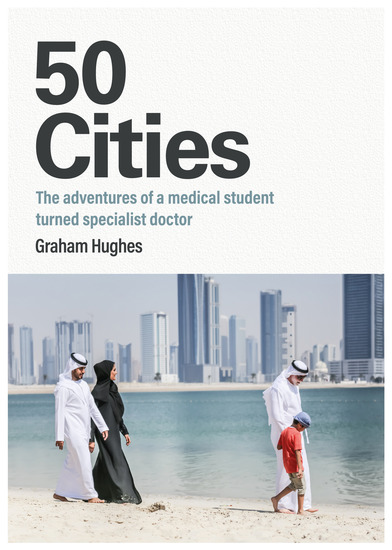
50 Cities - The adventures of a medical student turned specialist doctor - cover

50 Cities - The adventures of a medical student turned specialist doctor

Graham Hughes

Editorial: Brown Dog Books

  • 0
  • 0
  • 0

Sinopsis

50 Cities is a travel book with a difference. It follows the travels of Graham Hughes, professor of medicine and renowned expert in rheumatic diseases, notably Lupus. It shines a light not only on the cities (and some towns) visited by Professor Hughes, but also by some of the friends and medical colleagues encountered on his medical travels.Following on from his acclaimed biographyTales of a Flying Doctor, 50 Citiesis a wide-ranging collection of, often hilarious, travel anecdotes for those interested in medical history. This short volume provides a portrait of rheumatology over the past 50 years or so.
Disponible desde: 15/05/2024.
Otros libros que te pueden interesar

  • Winter Notes on Summer Impressions - cover

    Winter Notes on Summer Impressions

    Fyodor Dostoyevsky

    • 0
    • 0
    • 0
    In June 1862, Dostoevsky left St. Petersburg on his first excursion to Western Europe. Ostensibly making the trip to consult Western specialists about his epilepsy, he also wished to see the source of the Western ideas he believed were corrupting Russia.
    
    Over the course of his journey he visited a number of major cities, including Berlin, Paris, London, Florence, Milan, and Vienna. His impressions on what he saw, Winter Notes on Summer Impressions, were first published in the February 1863 issue of "Vremya" (Time), the periodical he edited, and are collected here.
    
    Fyodor Dostoyevsky was a Russian novelist, journalist, and short-story writer who had an immense influence on 20th-century fiction. He is commonly regarded as one of the finest novelists who ever lived, penning classics that include: Crime and Punishment, The Idiot, Demons, and The Brothers Karamazov. His ideas profoundly shaped literary modernism, existentialism, and various schools of psychology, theology, and literary criticism.
    Ver libro
  • Why You Should Go to Milan - cover

    Why You Should Go to Milan

    Mark Ferdinand

    • 0
    • 0
    • 0
    Milan isn’t just Italy’s fashion capital—it’s a city where style meets substance. From the awe-inspiring spires of the Duomo to the quiet beauty of hidden courtyards, Milan blends centuries of history with modern vibrancy. This book takes you beyond the catwalks and shopping streets to uncover its world-class art, unforgettable food culture, and buzzing neighborhoods that locals love. 
    Whether you’re drawn to Leonardo da Vinci’s Last Supper, the glamour of La Scala, or simply the joy of an aperitivo at sunset, Milan offers experiences you won’t find anywhere else. Mark Ferdinand invites you to see why Milan should be on your travel list—and how to savor it like a true insider.
    Ver libro
  • Ming Dynasty - Exploration Great Walls and Forbidden Cities - cover

    Ming Dynasty - Exploration Great...

    Rolf Hedger

    • 0
    • 0
    • 0
    The Ming Dynasty emerged from the ashes of the Yuan Dynasty, a Mongol-led empire that had ruled China for nearly a century. By the late 14th century, the Yuan government had become weak and corrupt, plagued by heavy taxation, famines, and widespread unrest. The Chinese population, weary of foreign rule, began to rise in rebellion. Among the many insurgent leaders, one man would rise to power and change the course of Chinese history—Zhu Yuanzhang. 
    Born into a poor peasant family, Zhu Yuanzhang experienced hardship early in life. Orphaned as a child, he spent years in a Buddhist monastery before joining the Red Turban Rebellion, a movement dedicated to overthrowing the Yuan. His military prowess and strategic mind quickly elevated him through the ranks. As he consolidated power, he systematically eliminated rival factions, eventually establishing himself as the dominant leader of the rebellion. In 1368, Zhu marched his forces into Beijing, forcing the last Yuan emperor to flee northward. Declaring the end of Mongol rule, he proclaimed himself emperor and founded the Ming Dynasty, choosing the name "Ming," meaning "brilliant" or "bright," to symbolize a new era of Chinese rule. 
    As the first Ming emperor, Zhu Yuanzhang, now known as the Hongwu Emperor, sought to restore Chinese traditions and repair the damage caused by Mongol rule. He reestablished Confucian principles as the foundation of government, reinstating the civil service examination system to ensure that officials were selected based on merit rather than birthright. He also implemented strict laws to reduce corruption, often resorting to harsh punishments to maintain order. His administration worked to rebuild agriculture, improve irrigation systems, and distribute land to farmers, strengthening the economy and ensuring food security.
    Ver libro
  • Five Seasons in Seoul - cover

    Five Seasons in Seoul

    Christine Newell

    • 0
    • 0
    • 0
    A life-changing year in South Korea. 
     
    Christine thought a year in South Korea would hit the pause button on her messy life. Her dad's death had left her anxious and depressed, and her career in musical theatre had reached a new low of shopping-centre kids' shows. When she found herself pulled over by the side of the road, dressed as a dinosaur and sobbing uncontrollably, it was clear something had to change. 
     
    A role with an experimental theatre company based in Seoul seemed the perfect way to put off dealing with her problems, at least for a year. But she soon found there's no running away from yourself. Travelling through South Korea, immersing herself in its culture and shifting her mindset along with the seasons, Christine discovered that sometimes the place you go to escape your life can hold the answers for how to heal it. 
     
    A heartfelt, sumptuous journey through one of the most fascinating cultures and landscapes on the planet, Five Seasons in Seoul is for armchair travellers and memoir lovers alike.
    Ver libro
  • Edo Period - Tokugawa Rule Isolation and the Samurai Code - cover

    Edo Period - Tokugawa Rule...

    Rolf Hedger

    • 0
    • 0
    • 0
    The Edo period in Japan began with the dramatic rise of Tokugawa Ieyasu and the establishment of the Tokugawa Shogunate, which would bring over two centuries of relative peace and stability to the country. This transformation was not immediate but was set into motion by the pivotal Battle of Sekigahara in 1600. Ieyasu, a powerful daimyo and skilled strategist, emerged victorious in this decisive conflict, defeating rival factions and securing his dominance over the fractured Japanese landscape. This battle marked the end of the Warring States period, a time of nearly constant civil war, and laid the foundation for a new era of centralized feudal rule. 
    In 1603, Ieyasu was granted the title of shogun by the emperor, officially establishing the Tokugawa Shogunate. Although the emperor remained a symbolic figurehead, true political power rested with the shogun. Ieyasu’s government was based in Edo, a small fishing village that quickly developed into a sprawling political and economic center—modern-day Tokyo. From here, the Tokugawa clan implemented a system of governance that emphasized strict control, social hierarchy, and regional oversight. The shogunate devised a complex administrative structure that allowed it to maintain authority over hundreds of semi-autonomous domains ruled by daimyo, while ensuring loyalty through a combination of military strength, economic policy, and social regulation. 
    One of the key strategies used by Tokugawa Ieyasu to solidify his power was the creation of the han system. Under this arrangement, each daimyo governed a specific territory but was subject to strict oversight from the shogunate. The policy of sankin-kotai, or alternate attendance, required daimyo to spend alternating years in Edo, effectively draining their resources and keeping them under close surveillance. Their families were often kept in Edo as virtual hostages, ensuring obedience and discouraging rebellion.
    Ver libro
  • Tex-Mex Takeout Recipes - Homemade Tex-Mex Recipes You Should Try (2022 Cookbook for Beginners) - cover

    Tex-Mex Takeout Recipes -...

    Darren Ray

    • 0
    • 0
    • 0
    Make the Best Tex-Mex Takeout Recipes at home and enjoy the authentic tastes of Tex-Mex cuisine. 
    The classic dishes of Tex-Mex cuisine include chili con carne, fajitas, tacos, and nachos. 
    These are well-known foods that many people regard to be comfort food. 
    Tex-Mex, short for Texan-Mexican, is an exciting blend of tastes and spices from Mexican, Spanish, Native American, and Berber influences handed down via tradition over many centuries, similar to other cuisines integrated into American society. 
    It is a dynamic cuisine that constantly grows and adds new flavors, gracefully adapting to changing preferences and demands. 
    This book has the following contents: An introduction to Tex-Mex takeaway cuisineTex-Mex cooking ingredientsCooking techniques and instruments required to produce authentic Tex-Mex meals 
    50 delicious Tex-Mex takeaway meals, including: Delicious appetizers, snacks, and dips like the Queso Dip, Bean & Cheese Nachos, and Chili Cheese FriesQuick sandwiches and wraps like the Beef Quesadilla, Shredded Chicken Burrito, and Santa Fe WrapHeartwarming soup dishes like the Caldo de Res or the Tortilla SoupSatisfying rice, salad, and bowl meals like the Chili Bowl or the Avocado Chicken Salad Classic taco dishes such as Carne Asada Tacos and Fish Tacos Favorite main dish dishes such as Picadillo or Tex-Mex Pizza 
    And Much More!.... 
    Are you hungry right now? 
    Let's get started! Scroll back up and click purchase to get your book right now!
    Ver libro