Junte-se a nós em uma viagem ao mundo dos livros!
Adicionar este livro à prateleira
Grey
Deixe um novo comentário Default profile 50px
Grey
Assine para ler o livro completo ou leia as primeiras páginas de graça!
All characters reduced
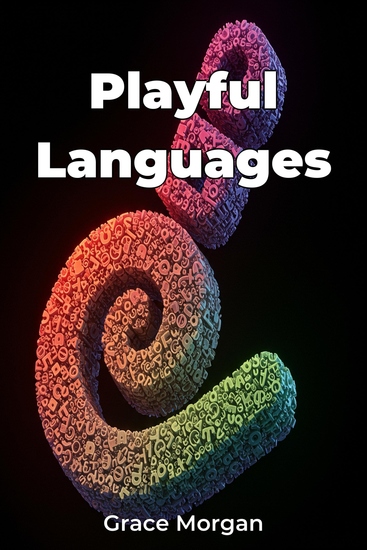
Playful Languages - cover
LER

Playful Languages

Grace Morgan

Tradutor A Ai

Editora: Publifye

  • 0
  • 0
  • 0

Sinopse

Playful Languages explores the fascinating intersection of language and humor, revealing how jokes, puns, and wordplay vary across cultures. The book demonstrates that humor is not universal but shaped by linguistic nuances and cultural values. For example, tongue twisters, seemingly simple, present unique phonetic challenges that tickle our funny bone, while tricky words create opportunities for comedic misunderstandings. Understanding linguistic humor enriches our appreciation for the flexibility of language and the complexities of intercultural communication.

 
The book systematically explores linguistic humor. It begins with the basics of phonetics and semantics, then examines tongue twisters, tricky words, and culturally unique jokes. By analyzing comedic expressions, the book illuminates how humor reflects societal norms and cognitive processes. The research draws from linguistic analyses, comparative studies, and experimental data. It connects to cognitive science, cultural studies, and translation studies, offering insights for language learning and bridging cultural gaps.

 
Ultimately, Playful Languages argues that studying linguistic humor enhances language acquisition and intercultural understanding. The book adopts a conversational yet informative tone, making it accessible to students of linguistics, foreign languages, and anyone intrigued by the interplay of language, humor, and culture. It shows how linguistic humor offers a playful yet profound way to explore the world.
Disponível desde: 06/03/2025.
Comprimento de impressão: 74 páginas.
Outros livros que poderiam interessá-lo

  • Lessons for a Billionaire - cover

    Lessons for a Billionaire

    Ben Lindsey

    • 0
    • 0
    • 0
    Lessons for a Billionaire is not your normal business English book. This one-of-a-kind collection of 25 psychology-backed lessons will transform how you use English in business. 
    You will learn how the words you choose can build trust, strengthen relationships, and inspire action. 
    Learn how to:Disagree respectfully.Speak assertively.Promote collaboration.Handle tense conversations.Speak more confidently.… and more. 
    Written by Ben Lindsey, a seasoned coach for leaders at top organizations like Deutsche Bundesbank, DDB, and Pfizer, Lessons for a Billionaire shares strategies developed through years of teaching at the highest levels of business and government. 
    Take your English to the next level. This book is your unfair advantage in the global business world. 
    Don’t just learn English. Learn the skills leaders use to drive their success. Learn the same language strategies Ben’s billionaire student used to navigate multi-million dollar deals. 
    These are the very same lessons he got. 
    Get your copy today – because no one else is teaching English like this.
    Ver livro
  • The Sunk Cost Fallacy - Continuing a Venture Due to Past Investments - cover

    The Sunk Cost Fallacy -...

    William Rands

    • 0
    • 0
    • 0
    The sunk cost fallacy is a psychological phenomenon that influences how people make decisions. At its core, this fallacy occurs when individuals continue investing time, money, or effort into a venture simply because they have already made prior investments, even when it becomes clear that continuing is not the best course of action. The irrational commitment to these past investments often overrides logic, leading to suboptimal outcomes. 
    The term "sunk cost" refers to resources that have already been expended and cannot be recovered. Examples include the money spent on a non-refundable ticket, the hours devoted to a project that’s unlikely to succeed, or the emotional energy invested in an unhealthy relationship. Once these resources are gone, they should not factor into future decision-making. However, human nature frequently drives people to consider these costs as if they can be salvaged, causing them to persist in unproductive pursuits. 
    The roots of the sunk cost fallacy are deeply tied to human psychology. Loss aversion, a key principle in behavioral economics, plays a significant role. People have a natural tendency to avoid losses, often valuing what they’ve already invested more than the potential benefits of walking away. Cognitive dissonance further complicates matters, as individuals may find it uncomfortable to admit that their previous choices were mistakes. This discomfort often leads to doubling down on those choices in an attempt to justify them.
    Ver livro
  • Italian Made Easy - Lower beginner - Volume 1 of 3 - cover

    Italian Made Easy - Lower...

    Lingo Wave

    • 0
    • 0
    • 0
    We broke our new series on learning Italian down into different learning stages. Start with the “Lower Beginner” books followed by the “Beginner” and “Upper Beginner” books. Next, progress to the “Intermediate” series, then test and reinforce your knowledge with the “Conversations” series. This audiobook is divided into units. While it provides different learning patterns and accommodates various needs, this audiobook focuses on helping you improve your ability to understand, speak, and memorise Italian. The sample will give you a taste of what you can look forward to.  
    In Unit 1 you will hear Italian decoded with each syllable spoken very slowly and clearly with repetition. Immediately before each sentence is spoken, you will hear the translation, so you will always understand what is being said. Unit 2 focuses solely on increasing your listening ability, which will improve your abilities to engage in dialogue with a native Italian speaker. This chapter requires you to listen very carefully to nuances in the language.  
    By Unit 3 you will already notice progress in your abilities to speak and understand Italian. The spoken translation is followed by two repetitions in Italian at a completely natural speed. While you are learning to process naturally spoken Italian, Units 3 and 4 will help you memorise new vocabulary and full sentences. In Unit 5 you can test yourself on how much you have learned. If you are having difficulties, we suggest you revisit the listening, speaking, or memorisation section of Units 1, 2 3 or 4, according to what you need more help with. 
    Topics covered in this book: 
    - Greeting 
    - Asking personal information 
    - Asking about people or things 
    - Talking about the current time and date 
    - Talking about the location of things 
    - Describing things  
    - Likes and dislikes 
    - Talking about abilities 
    - Talking about appearance 
    - Talking about personality 
    - Talking about the weather 
    - Talking about food 
    - Talking about the house
    Ver livro
  • The Correlation-Causation Fallacy - Assuming Correlation Implies Causation - cover

    The Correlation-Causation...

    William Rands

    • 0
    • 0
    • 0
    The correlation-causation fallacy is a common error in reasoning where people mistakenly believe that because two events or variables are correlated, one must have caused the other. This fallacy is not only widespread but can have significant consequences in various aspects of life, including science, policy-making, and everyday decision-making. It stems from the human tendency to look for patterns and explanations, often leading us to draw conclusions from observed associations without carefully analyzing the underlying mechanisms at play. 
    At its core, the fallacy occurs when a correlation—meaning two variables move together in some way—is confused with a causal relationship, where one variable directly influences or causes changes in the other. Correlation does not imply causation, a principle that is fundamental to sound scientific reasoning and critical thinking. For example, if there is a correlation between the number of hours spent watching TV and the number of people eating unhealthy food, it would be erroneous to conclude that watching TV causes people to eat poorly. Other factors, such as time spent sitting idle or lifestyle choices, could be influencing both variables. The danger of assuming causation based on correlation is that it leads to misguided conclusions, decisions, and actions. 
    This fallacy can often be found in media reports, advertising, and even scientific studies. Headlines like "Studies show that eating chocolate improves memory!" or "Increased spending on education leads to higher student performance" may imply a direct causal relationship based on observed correlations, but they neglect to account for potential confounding variables or the possibility of coincidence. In more complex situations, the misinterpretation of correlations can lead to flawed public policies, ineffective interventions, and misplaced public fear or optimism.
    Ver livro
  • Today's Authors Series: A Discussion between Katherine Kellgren and LA Meyer - Today's Authors Series - cover

    Today's Authors Series: A...

    L. A. Meyer

    • 0
    • 0
    • 0
    Enjoy this fascinating twenty-four minute-long discussion between two artists at the top of their craft—LA Meyer, author and creator of the Bloody Jack series of novels, and narrator extraordinaire Katherine Kellgren, who voices the entire audiobook series. At last count, the Bloody Jack audiobooks have won three Odyssey Honor awards, four Audie Awards, and have made numerous 'Best of' lists.
    Ver livro
  • Learn Afrikaans With Music - cover

    Learn Afrikaans With Music

    Innovative Language Learning, ...

    • 0
    • 0
    • 0
    Can learning Afrikaans be as simple as listening to music?


    And as easy as remembering song lyrics?


    Just think. You remember song lyrics because lyrics are catchy, repeated throughout the song, and go with the music, right? Now, if you stuck in Afrikaans, you'd easily learn Afrikaans words and phrases the same way!


    So, yes, learning Afrikaans is as easy as listening to music' with the Learn Afrikaans With Music Audiobook.


    Just press play, and you'll hear Afrikaans words and phrases repeated to the beat of upbeat and cheerful music. And' follow along!


    You'll learn 180+ most common Afrikaans words and phrases' while relaxing at home, or while driving to work.


    Learn Afrikaans With Music is the easiest way to start learning Afrikaans.. without getting overwhelmed by complicated explanations. Perfect for new learners with little to no language learning experience.


    What will you learn?
     
    180+ Words & Phrases Including...
     
    - Basic Greetings
     
    - Numbers
     
    - Common Questions and Answers
     
    - Parts of the Body & Talking About Your Wellbeing
     
    - Common Hobbies
     
    - And much more


    Learn Afrikaans With Music includes...
     
    - 15 Songs/Lessons Inside (Each is about 7 minutes long)
     
    - Fast-Paced Review Section at the End of Each Lesson
     
    - 1 Hour 50 Minutes in Total
     
    - Accompanying PDF eBook with the Words, Phrases and Translations


    Download the PDF and read along
    Ver livro