
Junte-se a nós em uma viagem ao mundo dos livros!
Adicionar este livro à prateleira
Grey
Deixe um novo comentário Default profile 50px
Grey
Assine para ler o livro completo ou leia as primeiras páginas de graça!
All characters reduced
Summary of The Underworld by Susan Casey: Journeys to the Depths of the Ocean - cover
LER

Summary of The Underworld by Susan Casey: Journeys to the Depths of the Ocean

GP SUMMARY

Editora: BookRix

  • 0
  • 0
  • 0

Sinopse

DISCLAIMER
 
This book does not in any capacity mean to replace the original book but to serve as a vast summary of the original book.
 
Summary of The Underworld by Susan Casey: Journeys to the Depths of the Ocean
 
IN THIS SUMMARIZED BOOK, YOU WILL GET:

- Chapter astute outline of the main contents.
- Fast & simple understanding of the content analysis.
- Exceptionally summarized content that you may skip in the original book 
The Underworld is a captivating book by Susan Casey, a bestselling author of The Soul of an Octopus. The book explores the mysterious world beneath the waves and the men and women who seek to uncover its secrets. The deep ocean has been a source of wonder and terror for centuries, but cutting-edge technologies have allowed scientists and explorers to dive miles beneath the surface. The underwater world is home to pink gelatinous predators, shimmering creatures, ancient animals with glass skeletons, and sharks that live for half a millennium. Casey's journey takes readers on a fascinating journey through the history of deep-sea exploration, from myths and legends to storied shipwrecks and the first intrepid bathysphere pilots. The book emphasizes the importance of understanding the deep ocean's complexity and ecological importance in a time of increasing threats from climate change, industrial fishing, pollution, and mining companies.
Disponível desde: 13/08/2023.
Comprimento de impressão: 73 páginas.

Outros livros que poderiam interessá-lo

  • Advent of Early Modern Warfare The: The History of the Transition from Medieval Military Tactics to the Age of Gunpowder - cover

    Advent of Early Modern Warfare...

    Editors Charles River

    • 0
    • 0
    • 0
    In the time period between the fall of Rome and the spread of the Renaissance across the European continent, many of today’s European nations were formed, the Catholic Church rose to great prominence, some of history’s most famous wars occurred, and a social class system was instituted that lasted over 1,000 years. A lot of activity took place during a period frequently labeled derogatively as the “Dark Ages,” and while that period of time is mostly referred to as the “Middle Ages” instead of the Dark Ages today, it has still retained the stigma of being a sort of lost period of time in which Western civilization made no worthwhile progress.  
    	If anything, the one aspect of the Middle Ages that has been romanticized is medieval warfare. Indeed, the Middle Ages have long sparked people’s imaginations thanks to imagery of armored knights battling on horseback and armies of men trying to breach the walls of formidable castles. What is generally forgotten is that medieval warfare was constantly adapting to the times as leaders adopted new techniques and technology, and common infantry became increasingly important throughout the period. Starting around 1000 CE, there was a gradual consolidation of power in the region after the fragmentation of the Early Middle Ages, and it brought about the rise of more centralized states that could field large armies. The Normans, one of the first groups to do this, were notable for their discipline and organization, and it’s little surprise that they were the last foreigners to successfully invade Britain under William the Conqueror in the mid 11th century.  
    	Meanwhile, political and technological progress led to continuous change of tactics and equipment. Cavalry became ascendant, only to be later replaced by infantry as their weapons improved. By the end of the period, warfare was radically changing thanks to the rise of gunpowder weapons such as the handgun and the bombard. 
    Ver livro
  • Gateway for Kids: Say Hello! Greetings from Africa and Europe - cover

    Gateway for Kids: Say Hello!...

    Ken Lou

    • 0
    • 0
    • 0
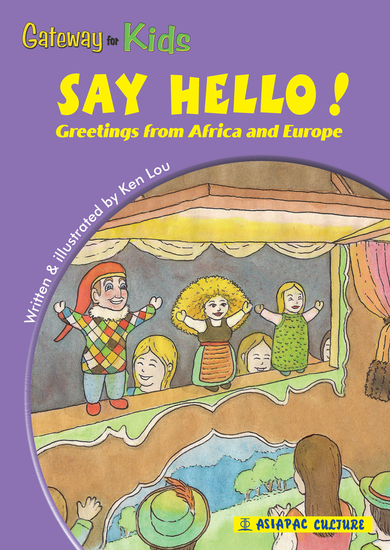
    Say 'hello" and meet your international friends from 21 cultures across Africa and Europe! 
     
    Know how your friends greet and dress, and learn about their favorite festivals, costumes, food, music, dance, arts, folktales and traditional houses. As you take steps to appreciate and respect one another's way of life, you will become a well-loved friend. and grow as an ambassador of peace. 
     
    Don't put this book away until you know how to say thank you and 'I love you' in their languages. Then count the smiles that greet you when you say those nice words.  
     
    After all, friendship begins when you say 'hello'!
    Ver livro
  • This Southern Metropolis - Life in Antebellum Mobile - cover

    This Southern Metropolis - Life...

    Mike Bunn

    • 0
    • 0
    • 0
    This book is based on visitor descriptions of antebellum Mobile, Alabama's physical and social environment. Mobile's foundational era is a period in which the city transformed from a struggling colonial outpost into one of the nation's most significant economic powerhouses, largely owing to the cotton trade and the labor of enslaved people. On the eve of the Civil War, the Mobile ranked as the fourth most populous community in what would soon become the Confederacy, and within the Gulf Coast region, it stood second only to New Orleans in population, wealth, and influence. 


    The city's remarkable architecture, beautiful natural setting, and abundance of entertainment options made it one of the South's most distinctive communities. Its cultural diversity added to its uniqueness. In addition to being home to the largest white population of any community in Alabama, the city also claimed the state's largest free Black, foreign-born, and Creole communities. Mobile was the slave-trading center of the state until the 1850s and remained intertwined with the institution of slavery throughout the antebellum period. By 1860 Mobile's population stood at nearly thirty thousand people, making it the twenty-seventh-largest city in the US. Although numerous histories of Mobile have been published, none have focused on firsthand accounts published by antebellum-era visitors.
    Ver livro
  • Love Partitioned - cover

    Love Partitioned

    Manjula Waldron

    • 0
    • 0
    • 0
    Set during India’s Independence struggles leading to the Partition of India and Pakistan, this compelling novel tells the inspiring story of Mangla, her interactions with her mother Ammaji, her best friend Basanthi, and her husband Anand as they navigate their own conflicts of religion, sexuality, social privilege. 
    Raised on Gandhi ideals of peace and unity, Mangla strives to become the social change in women's education, advancement, and social freedom she wishes to see, allowing her daughter Mina to dream of a better future for herself and other Indian children. 
    Mangla’s personal triumph over betrayal, loss, and incredible odds is sure to instill hope and compassion in readers both young and old. 
    Love Partitioned is informed by the author’s own historical journey as a refugee during this turbulent time in India.
    Ver livro
  • Willem Jansz: A short biography - 5 Minutes: Short on time – long on info! - cover

    Willem Jansz: A short biography...

    5 Minutes, 5 Minute Biographies,...

    • 0
    • 0
    • 0
    Willem Jansz, Dutch explorer and discoverer of Australia: Life and work in a short biography! Everything you need to know, brief and concise. Infotainment, education and entertainment at its best!
    Ver livro
  • Summary: 12 Rules for Life - An Antidote to Chaos by Jordan B Peterson & Norman Doidge MD: Key Takeaways Summary & Analysis - cover

    Summary: 12 Rules for Life - An...

    Brooks Bryant

    • 0
    • 0
    • 0
    DISCLAIMER: THIS IS NOT THE OFFICIAL BOOK. 
    This is a summary & it does not accompany the official. 
    In "12 Rules for Life" by Jordan B. Peterson and Norman Doidge MD, readers are treated to a blend of humor, surprising insights, and valuable information. Dr. Peterson offers guidance on various aspects of life, including why it's important to let skateboarding kids be, the perils of overly harsh criticism, and the simple joy of petting a cat on the street. 
    The book explores intriguing questions such as what the nervous system of a lobster can teach us about adopting a confident posture and achieving success, why ancient Egyptians revered the ability to pay attention, and the destructive paths individuals can take when consumed by resentment, arrogance, and vengeance. Dr. Peterson's journey covers topics like discipline, freedom, adventure, and responsibility, distilling the collective wisdom of the world into 12 practical and profound rules for living a meaningful life. "12 Rules for Life" challenges conventional beliefs about science, faith, and human nature, ultimately enriching the minds and spirits of its readers.
    Ver livro