Junte-se a nós em uma viagem ao mundo dos livros!
Adicionar este livro à prateleira
Grey
Deixe um novo comentário Default profile 50px
Grey
Assine para ler o livro completo ou leia as primeiras páginas de graça!
All characters reduced
Why I Write - 150 Inspiring Quotes from Famous Authors - cover
LER

Why I Write - 150 Inspiring Quotes from Famous Authors

Goethe

Editora: WIM

  • 0
  • 0
  • 0

Sinopse

"Why do I write?" is a question we ask ourselves every time we sit down at our desks, often without a clear answer. The author of this book confesses that he first picked up a pen simply because he loved the act of writing. He couldn't quite tell if what he was scribbling on the blank page was a diary, a novel, or a poem, but he admits that writing those unidentifiable words brought him a sense of peace.

Over time, writing became a necessity - whether it was reports for school projects, theses for degrees, or articles for academic journals. But what about now? At his core, he writes because he wants to, but also because he feels compelled to. Essentially, he writes for himself, though he doesn't mind writing for others. 

One day he asked himself, "Why do I write?" This question soon evolved into a broader curiosity: "Why do writers write?" To find answers, he searched his collection of more than 7,000 books for insights on writing. He collected 150 quotes about why writers write and compiled them into this book. 

This book doesn't just try to answer why we write-it encourages deeper introspection. Why Do Writers Write reveals the many motivations that drive writers: some write purely for pleasure, others for financial gain, and still others for recognition. The book presents 38 reasons shared by 112 writers, accompanied by 150 aphorisms on the craft of writing.

In many ways, this book functions like a conversation with ChatGPT. It offers 38 perspectives on why people write, along with 150 thought-provoking quotes. None of these are definitive answers, however, because the reasons vary depending on the reader's perspective. Even the same writer may have different motivations at different times. "Why am I writing?" is a question you should ask yourself before you begin. As you turn the pages of this book, you may discover, much like a yogi in meditation, that the question itself becomes a journey to deeper self-knowledge.
Disponível desde: 19/11/2024.
Comprimento de impressão: 163 páginas.
Outros livros que poderiam interessá-lo

  • The Yamato Period - The Dawn of Japan's Imperial Line and Cultural Foundations - cover

    The Yamato Period - The Dawn of...

    Rolf Hedger

    • 0
    • 0
    • 0
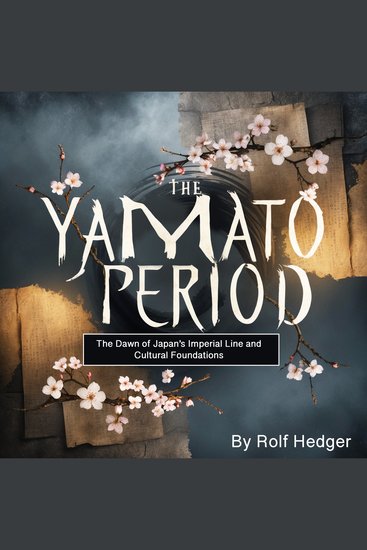
    The Yamato period, spanning from roughly the 3rd to the 7th century, marks the emergence of Japan’s first centralized political power. At the heart of this transformation was the Yamato clan, a dominant force that laid the foundation for Japan’s imperial lineage. While early Japan was fragmented into numerous rival clans, the Yamato rulers gradually asserted their dominance, forging alliances, engaging in warfare, and adopting foreign influences to solidify their authority. 
    One of the key factors behind the Yamato clan’s rise was its strategic control over fertile land in the Kinki region, an area well-suited for agriculture. This economic advantage allowed them to amass resources necessary to support a growing military force. By subjugating neighboring clans or bringing them under their influence through political marriages and alliances, the Yamato rulers expanded their reach across central and western Japan. The development of a hierarchical system of governance helped them maintain order, as powerful regional chieftains were brought into a centralized network of control under the Yamato court. 
    Military strength played a significant role in the Yamato clan’s dominance. Archaeological evidence from kofun, or large burial mounds, reveals that these early rulers possessed advanced weaponry, including iron swords and armor, likely influenced by interactions with Korea and China. These military advantages enabled them to assert control over rival clans and protect their growing territory from external threats. The construction of these elaborate burial sites also served as a demonstration of power and legitimacy, reinforcing the Yamato rulers’ status as semi-divine figures.
    Ver livro
  • Being a Boy - cover

    Being a Boy

    Charles Dudley Warner

    • 0
    • 0
    • 0
    "A Childhood Humor Classic by the author Charles Dudley Warner.  Being a Boy by American author Charles Dudley Warner is a classic book of childhood humor first published in 1877.    A celebrated childhood humor classic, filled with delightful and amusing stories of the life and adventures of a young farm-boy in Charlemont, Massachusetts. The book portrays the joys and troubles, the fun and work, the discoveries and wonders, that a boy experiences in the countryside."
    Ver livro
  • Revealing Secrets: How the Fall of the Republic Shaped Our Future - "Unlock the secrets of our future! Dive into insights shaped by the Republic's fall with this powerful audiobook" - cover

    Revealing Secrets: How the Fall...

    Gideon Merrick

    • 0
    • 0
    • 0
    "Revealing Secrets: How the Fall of the Republic Shaped Our Future" 
    Are you eager to advance in your career while deepening your knowledge of the transformative events that have shaped our future? 
    Searching for a comprehensive guide that encapsulates everything needed to navigate these pivotal topics? 
    Your quest ends here! 
    This audiobook serves as your essential companion for enhancing your understanding, applying learned concepts, and engaging in practical exercises. With this resource, you’re equipped for success. 
    Updated to reflect the latest insights and structures, this guide covers profound truths about the pivotal events that have influenced our collective future. 
    Key features of this insightful guide include: 
    - In-depth insights into the significant transformations that shape our world 
    - Thorough explanations of crucial historical contexts 
    - Effective strategies for preparing and interpreting essential themes 
    Our guide stands out due to its expansive coverage, which is critical for grasping the complexities of these historical shifts. We're not just skimming the surface; we dive deep into the significant themes with accuracy. 
    Please note, this guide operates independently and is not affiliated with any official institutions. 
    Crafted with a clear structure and easy-to-understand language, our audiobook ensures fluid transitions between ideas. Say farewell to convoluted jargon and embrace clear, accurate content. 
    So, why hesitate? Click the BUY NOW button, secure your audiobook, and embark on your journey to understanding the transformative insights that shape our collective future!
    Ver livro
  • The Insanity of the Artist - Creating at the Edge of the Abyss - cover

    The Insanity of the Artist -...

    Thierry Delcourt

    • 0
    • 0
    • 0
    Salvador Dalí sublimated his madness without ever falling into it. Antonin Artaud, confronted with the traumas of childhood, oscillated all his life between an overflowing creation and accesses of madness. Niki de Saint Phalle, thanks to artistic expression, cured herself of a deep depression linked to the trauma of incest. Vincent van Gogh, in order to reach the summit of his art, put himself in danger to the point of committing suicide. Camille Claudel exhausted herself in her creation and ended up being interned and never creating again.
    Based on the life and work of a dozen artists of genius, Thierry Delcourt tries to understand these artists’ transition from the summits of creation and the artistic abyss. Why do some people fall into madness while others go through life without a hitch? Why do some sick people find healing through creation? Why do many artists have an obsessive need to create relentlessly?
    To these fascinating questions, this book offers striking answers about creation on the brink of the abyss.
    Ver livro
  • How We Fish: The Love Life and Joy of the Riverbank - cover

    How We Fish: The Love Life and...

    Paul Whitehouse, John Bailey,...

    • 0
    • 0
    • 0
    Paul Whitehouse and fishing expert John Bailey celebrate the timeless joy of fishing. 
    Paul Whitehouse and John Bailey have been devout fishermen for longer than they care to remember. A hobby, past time or sport – call it what you want – they have felt the pull of the water ever since they were kids and have never missed the chance to set up on the bank and try their luck. 
    In this wonderful book, the two fishermen collaborate to celebrate the rich tapestry that is fishing – from mentors to memories; from philosophy to modern jargon; from watercraft to becoming self-styled ‘Fishing Detectives’. Punctuated by brilliant stories, beautiful illustrations by Carys Reilly-Whitehouse, and recollections from fishing day trips past, How We Fish is the perfect tome for the veteran fisherman or the budding angler – warm, funny and rich in the wonders of the riverbank. 
    Paul Whitehouse's How We Fish is a top-rated non-fiction book that combines elements of autobiography, travel, and comedy. The authors love for nature and their experiences as environmentalists make this book a must-read for anyone interested in fishing or the great outdoors. 
    For fans of John Gierach (All Fishermen Are Liars), Richard Blackburn (Float Fishing), Howell Raines (Fly Fishing Through the Midlife Crisis), Bob Mortimer (Mortimer & Whitehouse), and John Moorwood (The Magic of Fishing). 
    HarperCollins 2023
    Ver livro
  • Kingdom of Mapungubwe - The Precursor to Great Zimbabwe and Southern Africa's First Kingdom - cover

    Kingdom of Mapungubwe - The...

    Rolf Hedger

    • 0
    • 0
    • 0
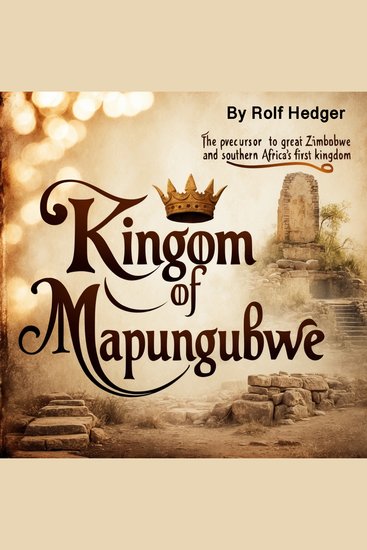
    The discovery of Mapungubwe in the early 20th century marked a turning point in the understanding of Southern Africa’s ancient civilizations. Hidden for centuries, this once-thriving kingdom remained unknown to the modern world until 1933, when a group of researchers stumbled upon its ruins on Mapungubwe Hill in present-day South Africa. What they uncovered would challenge colonial-era narratives and reshape the history of African state formation. 
    Archaeological excavations at the site revealed an advanced society that flourished between the 11th and 13th centuries. The remains of elaborate stone structures, pottery, and intricate gold artifacts painted a picture of a powerful kingdom with a sophisticated political and economic system. Among the most significant discoveries was the famous Golden Rhino, a small yet exquisitely crafted artifact that symbolized the wealth and status of Mapungubwe’s elite. Made from delicate sheets of gold carefully shaped around a wooden core, the rhino became an enduring emblem of the kingdom’s prosperity. 
    The site also yielded evidence of a complex social hierarchy. The ruling class resided atop Mapungubwe Hill, separated from the common people who lived in the surrounding lowlands. This physical division suggested a structured society where power was centralized, a departure from earlier African settlements where leadership was more communal. The arrangement of dwellings, burial sites, and ceremonial areas further confirmed that Mapungubwe had developed into a true kingdom with a distinct ruling elite.
    Ver livro