¡Acompáñanos a viajar por el mundo de los libros!
Añadir este libro a la estantería
Grey
Escribe un nuevo comentario Default profile 50px
Grey
Suscríbete para leer el libro completo o lee las primeras páginas gratis.
All characters reduced
Globo arte April 2022 - helping artist in their art carrer - cover

Globo arte April 2022 - helping artist in their art carrer

globo arte

Editorial: ar

  • 0
  • 0
  • 0

Sinopsis

Contents
Interview with Anna Paula Chaveiro
Art events/conference
Social media updates
Question of the month
Money making strategy of the month
Step of the month
30 days motivation challenge to get you back on track
Fun corner
Art features

Along with fun corner to make your art journey more fun.
Art Curatorial
Niva aljor Jovi Jose Kie RN Ryan Vivian Sakura Jezreel Elsy Carlos Oscar Natsume Rosalina Buni Celestine
 
Disponible desde: 03/04/2022.

Otros libros que te pueden interesar

  • Bold Ventures - Thirteen Tales of Architectural Tragedy - cover

    Bold Ventures - Thirteen Tales...

    Charlotte Van den Broeck

    • 0
    • 0
    • 0
    A prize-winning Belgian poet explores the nature of creative endeavor—the godlike ambition, the crushing defeat of failure—through the stories of thirteen tragic architects. 


    In thirteen fascinating chapters, Charlotte Van den Broeck goes in search of buildings that were fatal to their architects—architects who either killed themselves or are rumored to have done so. They range across time and space from a church with a twisted spire in seventeenth-century France to a theater that collapsed mid-performance in 1920s Washington, DC, and an eerily sinking swimming pool in the author's hometown. Drawing on a vast range of material, from Hegel and Darwin to art history, stories from her own life, and popular culture, Van den Broeck brings patterns into focus as she asks, What is that strange, life-or-death connection between a creation and its creator? 


    Threaded through each story is the author's meditation on the question of suicide—what Albert Camus called the "one truly serious philosophical problem"—in relation to creativity and public disgrace. The result is a profoundly idiosyncratic book, breaking ground in literary nonfiction, as well as providing solace and consolation to anyone who has ever attempted a creative act.
    Ver libro
  • Edo Period - Tokugawa Rule Isolation and the Samurai Code - cover

    Edo Period - Tokugawa Rule...

    Rolf Hedger

    • 0
    • 0
    • 0
    The Edo period in Japan began with the dramatic rise of Tokugawa Ieyasu and the establishment of the Tokugawa Shogunate, which would bring over two centuries of relative peace and stability to the country. This transformation was not immediate but was set into motion by the pivotal Battle of Sekigahara in 1600. Ieyasu, a powerful daimyo and skilled strategist, emerged victorious in this decisive conflict, defeating rival factions and securing his dominance over the fractured Japanese landscape. This battle marked the end of the Warring States period, a time of nearly constant civil war, and laid the foundation for a new era of centralized feudal rule. 
    In 1603, Ieyasu was granted the title of shogun by the emperor, officially establishing the Tokugawa Shogunate. Although the emperor remained a symbolic figurehead, true political power rested with the shogun. Ieyasu’s government was based in Edo, a small fishing village that quickly developed into a sprawling political and economic center—modern-day Tokyo. From here, the Tokugawa clan implemented a system of governance that emphasized strict control, social hierarchy, and regional oversight. The shogunate devised a complex administrative structure that allowed it to maintain authority over hundreds of semi-autonomous domains ruled by daimyo, while ensuring loyalty through a combination of military strength, economic policy, and social regulation. 
    One of the key strategies used by Tokugawa Ieyasu to solidify his power was the creation of the han system. Under this arrangement, each daimyo governed a specific territory but was subject to strict oversight from the shogunate. The policy of sankin-kotai, or alternate attendance, required daimyo to spend alternating years in Edo, effectively draining their resources and keeping them under close surveillance. Their families were often kept in Edo as virtual hostages, ensuring obedience and discouraging rebellion.
    Ver libro
  • The Rise and Rise of Chappell Roan - The Stories Behind the Songs Tours and Birth of an Icon - cover

    The Rise and Rise of Chappell...

    Katherine St. Asaph, Hamza Jahanzeb

    • 0
    • 0
    • 0
    Filled with lush photography and behind-the-scenes detail on Chappell Roan’s entire career from a small-town singer to queer icon and music superstar, this is the definitive look at an era-defining artist.   Uncover the untold full story behind the songs, looks, and noteworthy live performances by Chappell Roan in this definitive guide. Covering everything from her raw demos to her dazzling recent albums and featuring exclusive insight into her debut Midwest Princess tour, this book offers an in-depth exploration of Chappell Roan’s artistic evolution over the past ten years.   Complete with stunning images of her outfits, instruments, and mementos, the book delves into the origins, inspiration, and production of Chappell Roan’s iconic look and sound. For fans and music enthusiasts alike, this is a comprehensive and inspiring portrait of an artist who fearlessly pushes boundaries and continues to shape the future of pop music.
    Ver libro
  • The Civic Brand - The Power & Responsibility of Place - cover

    The Civic Brand - The Power &...

    Ryan Short

    • 0
    • 0
    • 0
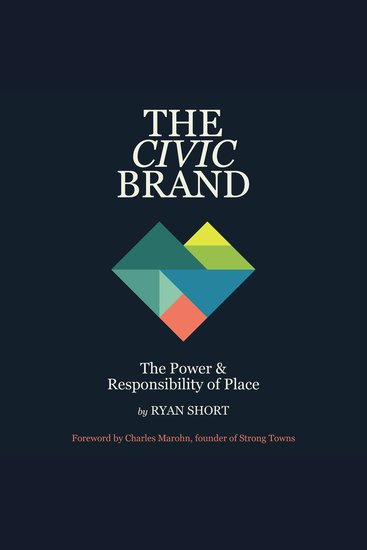
    The Civic Brand: The Power & Responsibility of Place is a bold and practical book that challenges conventional thinking about city-building, tourism, economic development, and community engagement. Author Ryan Short introduces a new framework for shaping more resilient, equitable, and loveable places that is rooted in identity, values, and a triple bottom line. 
    Drawing from years of experience working with cities, counties, and regions across the country, Ryan Short shows how fragmented efforts, siloed departments, and surface-level branding have left communities struggling to grow with intention or preserve what makes them special. The Civic Brand reveals how place branding, when done right, isn’t just logos or slogans, but about uniting people, guiding policy, and building shared civic pride. Blending strategic insight with vivid, often entertaining stories from the field, this book brings to life the challenges and triumphs of real places navigating growth, decline, and identity. 
    Whether facing overtourism or decline, rapid growth or disinvestment, division or disengagement, this book offers a bold path forward. It’s a call to city leaders, planners, business owners, developers, and residents alike to recognize their role in shaping place and to do so with purpose. 
    The Civic Brand is more than a book, it’s a movement to reimagine how we care for the places we call home.
    Ver libro

  • The Portraitist - Frans Hals and His World - cover

    The Portraitist - Frans Hals and...

    Steven M. Nadler

    • 0
    • 0
    • 0
    A biography of the great portraitist Frans Hals that takes the listener into the turbulent world of the Dutch Golden Age. 


    Frans Hals was one of the greatest portrait painters in history, and his style transformed ideas and expectations about what portraiture can do and what a painting should look like. 


    Hals was a member of the great trifecta of Dutch Baroque painters alongside Rembrandt and Vermeer, and he was the portraitist of choice for entrepreneurs, merchants, professionals, theologians, intellectuals, militiamen, and even his fellow artists in the Dutch Golden Age. His works, with their visible brush strokes and bold execution, lacked the fine detail and smooth finish common among his peers, and some dismissed his works as sloppy. But for others, they were fresh and exciting, filled with a sense of the sitter's animated presence captured with energy and immediacy. 


    Steven Nadler gives us the first full-length biography of Hals in many years and offers a view into seventeenth-century Haarlem and this culturally rich era of the Dutch Republic. He tells the story not only of Hals's life, but also of the artistic, social, political, and religious worlds in which he lived and worked.
    Ver libro
  • Can You Swing Your Arms? - cover

    Can You Swing Your Arms?

    Kim Mitzo Thompson, Karen Mitzo...

    • 0
    • 0
    • 0
    “Can You Swing Your Arms?” is an entertaining story/song combination perfect to get kids moving, exercising, and having fun. From swinging their arms around and around, to touching the ground and marching in place, young children will feel energized and happy. This adorable book will reinforce early literacy skills, too! Children and parents alike will enjoy reading and singing along to “Can You Swing Your Arms?” over and over again!
    Ver libro