Unisciti a noi in un viaggio nel mondo dei libri!
Aggiungi questo libro allo scaffale
Grey
Scrivi un nuovo commento Default profile 50px
Grey
Iscriviti per leggere l'intero libro o leggi le prime pagine gratuitamente!
All characters reduced
Don Quixote - cover

Don Quixote

Giovanni Papini

Casa editrice: Edizioni Aurora Boreale

  • 0
  • 0
  • 0

Sinossi

Giovanni Papini, journalist, essayist, novelist, writer, poet, literary critic and philosopher, was a controversial literary figure of the early and mid-twentieth century and the earliest and most enthusiastic representative and promoter of Italian pragmatism.Due to his ideological choices, Papini’s work was almost forgotten after his death, although it was later re-evaluated and appreciated again: in 1975, Jorge Luis Borges called him an “undeservedly forgotten” author.In 1913 he published his essay Ventiquattro cervelli (“Four and Twenty Minds”), in which he reviewed, with a critical slant and with great philosophical scrutiny, the life and works of great personalities of history and literature such as Dante Alighieri, Leonardo Da Vinci, George Berkeley, Herbert Spencer, Friedrich Nietzsche, and, finally, himself!From Four and Twenty Minds, translated into English in 1922 by Ernest Hatch Wilkins, we have drawn the study Don Quixote, which today we propose to modern readers, a short essay dedicated to the adventurous and epic literary protagonist of the most famous novel by Miguel de Cervantes, widely regarded as the greatest Spanish writer.According to Papini, «Don Quixote is not mad. He does not go mad in spite of himself. He belongs to the common type of the Brutuses and the Hamlets: he pretends that he is mad. He fashions an extravagant career for himself in order that he may escape the deadly monotony of Argamasilla. In the invention of his difficulties and misfortunes he is quite without fear, because he knows that he is the moving agent, conscious of what he is doing, and ready at any time to put on the brake or turn aside. That is why he is neither tragic nor desperate. His whole adventure is a deliberate amusement. He may well be serene, for he alone knows the truth of the game, and his soul has no room for veritable anguish. Don Quixote is not in earnest».
Disponibile da: 07/01/2024.

Altri libri che potrebbero interessarti

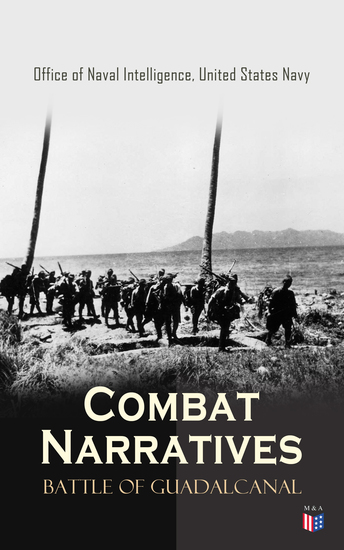
  • Combat Narratives: Battle of Guadalcanal - 11-15 November 1942 - cover

    Combat Narratives: Battle of...

    United States Navy, Office of...

    • 0
    • 0
    • 0
    "Combat Narratives: Battle of Guadalcanal 11-15 November, 1942," published by the Office of Naval Intelligence, is an in-depth account of one of the critical engagements of World War II in the Pacific Theater. The book focuses on the events of the naval battles around Guadalcanal from 11th to 15th November 1942, a period marked by intense and decisive engagements that were pivotal in the Guadalcanal Campaign. Throughout the narrative, the book emphasizes the bravery and endurance of the sailors and aviators involved in these fierce battles. It also addresses the difficulties of command and decision-making in the heat of combat, providing insights into the complexities of naval warfare. "Combat Narratives: Battle of Guadalcanal" is not only a detailed historical document but also a tribute to the valor of the men who fought in one of the most challenging and consequential theatres of World War II. It serves as an essential resource for historians, military strategists, and anyone interested in the intricacies and impacts of naval warfare.
    Mostra libro
  • Greatest Criminals in the History - cover

    Greatest Criminals in the History

    Introbooks Team

    • 0
    • 0
    • 0
    In ordinary language, crime is referred to as an unlawful act that is punishable by law. In the modern scenario, the term criminal law has been universally accepted to be the proper definition of the crime. However, there are various statutory definitions that have been provided for various specific purposes. Amongst all of the accepted views and beliefs, the most popular belief with respect to crime is that it is a category created by law. In other words, any act is considered to be a crime if it is declared as such by any applicable or relevant body of law. Another proposed definition of a crime or criminal offense is referred to as an act of harmful activity or deed that is harmful not only to the human beings but it could also be harmful to some community, society or even animals. The criminal acts, in general, are prohibited by the act of law and are also punishable under the act of law. 
    The various notions such as murder, theft, rape and several others are considered to be prohibited as these exist worldwide. The precise definition of the criminal offense as defined by the criminal law of each country states that with several criminal catalogs that are referred to as the criminal code, there is no comprehensive existence of any statute. 
    The government has the ultimate power to restrict the liberty for the commitment of a crime in a severe manner of any person. In the modern scenario, there are several procedures that might lead to investigations and trials that must be adhered to by the individuals. If an offender is found guilty, then he or she might be subjected or sentenced to several forms of reparations like a community sentence. The severity of the punishment might depend on the nature of the offense and might range from life imprisonment, execution and several forms of jurisdictions. 
    A crime can be anything that can be classified as an act of doing something criminal or offensive with certain motives that could be accompanied with the intention of harming someone or something. As every crime is associated with the violation of the law, they must be properly implemented and given punishment under the acts of law. 
    The human civilization has observed several cases of crime in its history. We aim to enlighten you about the same through the article. You can gain an insight into some of the most deadly and notorious criminals the world has ever observed in history.
    Mostra libro
  • The Mystical Hymns Of Orpheus - cover

    The Mystical Hymns Of Orpheus

    Thomas Taylor

    • 0
    • 0
    • 0
    Brought to you by Altrusian Grace Media and narrated by Matthew Schmitz
     
    TANSLATED FROM THE GREEK,AND DEMONSTRATED TO BE THE Invocations which were used in the Eleusinian Mysteries.BY THOMAS TAYLOR. Taylor frames the Orphic hymns as fragments of a primordial theology in which the gods are not personalities but cosmic powers, each hymn functioning as a precise invocation of a universal principle. His translation exposes an initiatory system built on purification, cosmic sympathy, and ascent through successive layers of divine order. The work presents the hymns as operative formulas rather than poetry—concise ritual utterances designed to attune the soul to the intelligible world, reveal the structure of the cosmos, and draw the intellect away from material delusion.
    Mostra libro
  • Founding Fathers The: Biographies of George Washington Alexander Hamilton Thomas Jefferson and Benjamin Franklin - cover

    Founding Fathers The:...

    Shane Costello

    • 0
    • 0
    • 0
    This audiobook includes biographies on the following men: George Washington, Alexander Hamilton, Thomas Jefferson, and Benjamin Franklin. 
    The Founding Fathers of the United States led the American Revolution against the Kingdom of Great Britain. Most were descendants of colonists settled in the Thirteen Colonies in North America. 
    Historian Richard B. Morris in 1973 identified the following seven figures as the key Founding Fathers: John Adams, Benjamin Franklin, Alexander Hamilton, John Jay, Thomas Jefferson, James Madison, and George Washington. Adams, Jefferson, and Franklin were members of the Committee of Five that drafted the Declaration of Independence. Hamilton, Madison, and Jay were authors of The Federalist Papers, advocating ratification of the Constitution. The constitutions drafted by Jay and Adams for their respective states of New York (1777) and Massachusetts (1780) were heavily relied upon when creating language for the US Constitution. Jay, Adams and Franklin negotiated the Treaty of Paris (1783) that would end the American Revolutionary War. Washington was Commander-in-Chief of the Continental Army and was President of the Constitutional Convention. All held additional important roles in the early government of the United States, with Washington, Adams, Jefferson, and Madison serving as President. Jay was the nation's first Chief Justice, Hamilton was the first Secretary of the Treasury, and Franklin was America's most senior diplomat, and later the governmental leader of Pennsylvania. 
    The term Founding Fathers is sometimes used to refer to the Signers of the embossed version of the Declaration of Independence in 1776. Signers should not be confused with the term Framers; the Framers are defined by the National Archives as those 55 individuals who were appointed to be delegates to the 1787 Constitutional Convention and took part in drafting the proposed Constitution of the United States.
    Mostra libro
  • Swami chinmayananda - cover

    Swami chinmayananda

    Vinitha R, Amol Raikar

    • 0
    • 0
    • 0
    "More important than what is behind you and what is ahead of you is what is In you. Seek it. Centered in it, act and live."
    
    Swami Chinmayananda reintroduced the world to Adi Shankaracharya's work, an Indian philosopher born in 700 AD who strengthened the roots of Advaita Vedanta in Hinduism. In his 42 years of work in this space, Swami Chinmayananda left a permanent mark in the hearts of people and his service inspired millions of people all over the world.
    Mostra libro
  • The Eighteenth Brumaire of Louis Bonaparte - cover

    The Eighteenth Brumaire of Louis...

    Karl Marx

    • 0
    • 0
    • 0
    "The Eighteenth Brumaire of Louis Bonaparte" is a book written by Karl Marx, a German philosopher and economist, in 1852. The book analyzes the political situation in France during the mid-19th century and provides a critique of the bourgeois republicanism that had taken hold there. 
    The title of the book refers to the date of the coup d'état in which Louis Bonaparte, the nephew of Napoleon Bonaparte, seized power in France. Marx used this event as a lens through which to examine the larger historical forces that had led to the rise of Louis Bonaparte and the decline of the bourgeois republic. 
    In the book, Marx argues that the bourgeois republic had failed to address the fundamental economic and social problems facing France, and that this failure had paved the way for the rise of a new form of authoritarian rule. He believed that the only way to truly address these problems was through a proletarian revolution that would overthrow the capitalist system. 
    "The Eighteenth Brumaire of Louis Bonaparte" is considered to be one of Marx's most important works, and it has had a significant impact on the field of political theory. The book's analysis of the relationship between economic and political power has influenced generations of scholars and activists, and it continues to be studied and debated to this day.
    Mostra libro