¡Acompáñanos a viajar por el mundo de los libros!
Añadir este libro a la estantería
Grey
Escribe un nuevo comentario Default profile 50px
Grey
Suscríbete para leer el libro completo o lee las primeras páginas gratis.
All characters reduced
A History of Ancient Greek Literature - Complete Edition - cover

A History of Ancient Greek Literature - Complete Edition

Gilbert Murray

Editorial: DigiCat

  • 0
  • 0
  • 0

Sinopsis

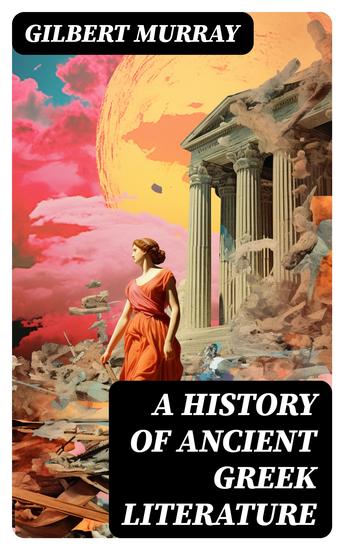
In "A History of Ancient Greek Literature," Gilbert Murray offers a comprehensive examination of the literary achievements of ancient Greece, weaving together an account that is both rich in historical detail and insightful literary criticism. Spanning from the Homeric epics to the works of tragedians like Aeschylus, Sophocles, and Euripides, as well as the philosophers and comic playwrights, Murray paints a vivid portrait of the societal and cultural contexts that shaped these timeless texts. His engaging prose style and thoughtful analysis not only illuminate the aesthetic qualities of the literature but also delve into its philosophical and political implications, situating these works within the broader tapestry of Western literature's origins. Gilbert Murray, a prominent classical scholar and translator, was deeply influenced by his academic background and his passion for Greek culture and philosophy. His tenure as a professor of Greek at Oxford and his involvement in various literary circles likely fueled his interest in cataloguing and interpreting the nuances of ancient texts. Murray's scholarly pursuits also extended to the world of theatre, where he endeavored to revive Greek drama, reflecting his commitment to bringing ancient wisdom into contemporary discourse. This book is an essential read for anyone interested in the foundations of Western literature and thought. Murray's eloquent exploration not only serves as an introduction for newcomers to Greek literature but also presents seasoned scholars with enlightening perspectives that resonate beyond the texts themselves. Readers are encouraged to immerse themselves in this scholarly endeavor to appreciate the intricate legacy of ancient Greek authors and their enduring impact on modern storytelling.
Disponible desde: 20/11/2023.
Longitud de impresión: 339 páginas.
Otros libros que te pueden interesar

  • My Blue Book of Grammar for Class 6 - cover

    My Blue Book of Grammar for Class 6

    Meigha Rawat

    • 0
    • 0
    • 0
    A Grammar Series That Uses the Functional Approach 
    
    KEY FEATURES 
    - Functional approach to grammar teaching, using exemplars to illustrate the usage before defining the structure and rules 
    - Vocabulary taught through language-in-use to build the learners’ vocabulary through use rather than memorisation of rules 
    - Contemporary topics to inculcate 21-century skills amongst learners 
    - Use of literature to help learners understand how grammar is used in text 
    - A comprehension section comprising texts from different genres so that learners may relate grammar to different types of works produced in English 
    - Phonics in Grades 1 and 2 to teach the very basis of language 
    - Uniquely stylised illustrations 
    - Activities such as puzzles, crosswords, word grids and games to aid the facilitator in using the concept of ‘flipped classroom’ 
    - Periodic tests to help the learners self-assess the acquisition of concepts 
    - Digital component to cater to a technology-driven classroom 
    
    DESCRIPTION: 
    My Blue Book of Grammar is a course that has been conceptualized and designed keeping in mind the increasingly dynamic role of the English language in today’s world. Especially in our country, where English serves as the lingua franca, a grammar course has to offer not only an exposition of the pedagogy but also the exhibition of the utility of that pedagogy. The aim of a grammar series should be to encourage the development of competency amongst learners, even though their proficiency levels may vary. While the level of exposure to English of all learners may be different, a grammar series should aid in the development of a certain level of confidence amongst the learners, with the end result being that they are able to converse without hesitation in English. 
    
    WHAT WILL YOU LEARN 
    - Understand grammar concepts 
    - Learn how to use different vocabulary concepts taught through language-in-use 
    - Learn 21-century skills 
    - Develop deeper understanding of and appreciation for literature 
    - Have clearer pronunciation through a better understanding of phonics 
    
    WHO THIS BOOK IS FOR: 
    School students of Grades 6 
    
    TABLE OF CONTENTS 
    GRAMMAR 
    1. Types of Clauses – Let’s Recall 
    2. Simple, Compound and Complex Sentences 
    3. Pronoun–Antecedent Agreement 
    4. Reflexive and Intensive Pronouns 
    5. Auxiliaries and Modals – Revision 
    6. Transitive and Intransitive Verbs 
    8. Future Continuous Form 
    9. Future Perfect Form 
    10. Future Perfect Continuous Form 
    11. Types of Adjectives 
    12. Hyphens in Compound Adjectives 
    13. Adjectives vs Adverbs 
    14. Colon 
    15. Punctuating Addresses 
    Test Paper 1 
    VOCABULARY 
    16. Noun–Noun Collocations 
    17. Prefix: sub–, non– 
    18. Latin and Greek Roots of Words 
    19. Analogies 
    20. Idioms and Adages 
    21. Formal and Informal Language 
    22. Words with Multiple Meanings 
    23. Clichés 
    24. Shades of Meaning 
    25. Figures of Speech 
    Test Paper 2 
    WRITING 
    26. Formal Letter Writing 
    27. Informal Letter Writing 
    28. Writing a Formal Email 
    29. Writing an Informal Email 
    30. Interview Transcription 
    31. Writing a Story 
    32. Writing an Itinerary 
    33. Writing a Poem 
    34. Using Imagery in Poems 
    35. Avoiding Clichés When Writing a Poem 
    Test Paper 3 
    COMPREHENSION 
    36. Message to the Grassroots 
    37. Mallakhamb 
    38. Luka 
    39. The Solitude of Latin America 
    Orange Global Olympiad – English Sample Paper
    Ver libro
  • Exploring Shakespeare - A Director's Notes from the Rehearsal Room - cover

    Exploring Shakespeare - A...

    Bill Alexander

    • 0
    • 0
    • 0
    'Theatre is the greatest of collaborative art forms, and Shakespeare its greatest exponent: he used the form better than anyone else ever has to speak truth about the world.'
    In Exploring Shakespeare, acclaimed theatre director Bill Alexander takes us inside the rehearsal room to reveal – in unprecedented and captivating detail – exactly what happens there. He examines the key relationship between the actors and the director, how they work together to bring Shakespeare's vision to life, and how choices are made that will shape every aspect of the play in production.
    Full of acute observations and perceptions drawn from a long and brilliant career, the book covers the essential aspects of any Shakespeare production, from understanding the world of the play, to preparing and cutting the text, deciding on costumes and set design, handling soliloquies, and considering character and backstory.
    There are detailed studies of eight plays spanning the full length and breadth of the Shakespearean canon, from Titus Andronicus and The Shrew to The Tempest, via Othello, Hamlet, Lear, The Merchant of Venice and Twelfth Night. Alexander also provides first-hand case studies of three of his own productions, including his famous Richard III starring Antony Sher.
    Personal, forthright, and full of pragmatic advice, Exploring Shakespeare is a masterclass for directors and actors, and a fascinating insight for anyone interested in Shakespeare.
    Bill Alexander was an Associate Director of the Royal Shakespeare Company, and then Artistic Director of Birmingham Rep. His landmark productions include Richard III and The Merry Wives of Windsor (both Olivier Award-winners), The Merchant of Venice, The Taming of the Shrew, Titus Andronicus and King Lear with Corin Redgrave.
    'Bill Alexander is a brilliant director, whose work has powerfully shaped my understanding of Shakespeare's plays, Richard III most of all' James Shapiro, author of 1599: A Year in the Life of William Shakespeare
    Ver libro
  • Femdom Sexy Surprises - 6 Erotic Stories - cover

    Femdom Sexy Surprises - 6 Erotic...

    Giselle Renarde

    • 0
    • 0
    • 0
    Step into a world where women take charge in Femdom Sexy Surprises, a collection of six scorching stories exploring the power exchange inherent in dominance and submission. From the boardroom to the bedroom, diverse characters push boundaries and challenge expectations as they indulge in thrilling power dynamics. Whether it's a confident executive commanding her sweet secretary's every move, or a wife discovering her inner Domme, these tales invite you to witness what happens when desire meets control. 
    Each story sizzles with the heat of undeniable chemistry as powerful women take the reins and lead their partners into new realms of pleasure and surrender. With every tantalizing encounter, these characters explore their deepest fantasies, embracing the raw, intoxicating allure of power exchange. No matter their background or situation, each woman finds her own way to dominate, seduce, and captivate the one at her feet. 
    Ready to submit to temptation? Grab Femdom Sexy Surprises now and let these fierce women guide you into a world of seductive power plays and unforgettable passion! 
    Narrated by the author
    Ver libro
  • Drawing Lines - Why Conservatives Must Begin to Battle Fiercely in the Arena of Ideas - cover

    Drawing Lines - Why...

    Kira Davis

    • 0
    • 0
    • 0
    It is time to draw our lines in the sand as Christians and Conservatives by engaging in public conversations with truth and conviction. 


    Kira Davis has built a brand on reaching out to the other side, on giving people space to be wrong, the space to discuss, the space to tolerate. Unfortunately, the people controlling the public conversations right now will have none of it. We're seeing the lengths they will go to and the lies they let stand in service of crushing 50 percent of this nation. They seek unity through complete elimination of the other side. There are times for compromise and times to draw a line in the sand; the latter has arrived. It is time to draw our lines as Christians and Conservatives.
    Ver libro
  • Ukraine in Central and Eastern Europe - Kyiv's Foreign Affairs and the International Relations of the Post-Communist Region - cover

    Ukraine in Central and Eastern...

    Sebastian Schäffer

    • 0
    • 0
    • 0
    This volume examines which interests and motivations some select countries in East-Central Europe and the Caucasus have towards Ukraine.
    Ver libro
  • Roman Religion and Mythology - Gods Rituals and Beliefs - cover

    Roman Religion and Mythology -...

    Rogan Fish

    • 0
    • 0
    • 0
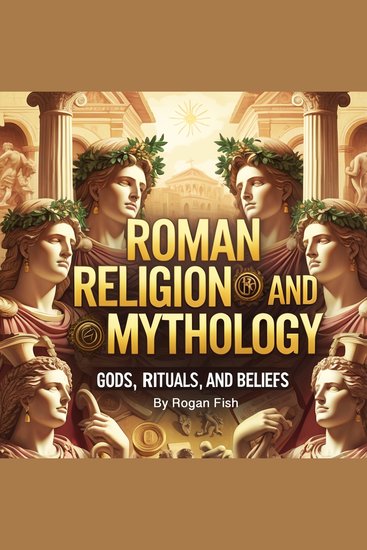
    Roman religion was deeply intertwined with the culture, politics, and daily life of its people. Unlike many other ancient religions, it was not based on a single sacred text or central doctrine but was instead a complex system of beliefs, rituals, and traditions that evolved over time. The foundations of Roman religion can be traced back to early influences, the societal role of religious practices, and the establishment of a structured priesthood. 
    The origins of Roman religion were shaped by various influences, including the Etruscans and Greeks. The Etruscans, who inhabited central Italy before the rise of Rome, contributed many religious customs, such as the practice of interpreting omens and the organization of priestly colleges. Greek influence introduced a pantheon of gods with human-like qualities, which Romans later adopted and adapted to fit their own cultural identity. This blending of traditions resulted in a unique religious system that emphasized duty, order, and reciprocity between humans and the divine. 
    Religion played a crucial role in Roman society, guiding both private and public life. Every household maintained a sacred space for worshiping domestic deities, such as the Lares and Penates, who were believed to protect the home and family. On a larger scale, the state religion was intertwined with governance, and public rituals were performed to secure divine favor for Rome’s prosperity. The performance of religious ceremonies was not merely a matter of personal faith but was considered essential for the stability of the state. Romans believed that their success as a civilization depended on maintaining good relations with the gods through proper observance of rituals and sacrifices.
    Ver libro