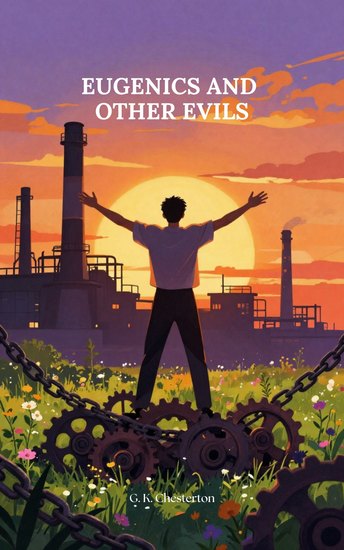
Eugenics and Other Evils
Gilbert Keith Chesterton
Editora: CLXBX
Sinopse
Eugenics and Other Evils by Gilbert Keith Chesterton is a powerful and influential critique of the eugenics movement and the social theories that gained prominence in the early twentieth century. Written at a time when eugenic ideas were widely discussed among politicians, academics, and social reformers, Chesterton offers a passionate defense of human dignity, personal liberty, and the inherent value of every individual.

Drawing upon his sharp intellect, wit, and gift for persuasive argument, Chesterton challenges proposals that sought to regulate human reproduction and reshape society through selective breeding. He argues that such policies risk undermining fundamental freedoms and granting excessive authority to institutions and experts. Throughout the book, he examines the ethical, social, and political implications of these ideas, questioning the assumptions that underlie them and warning of their potential consequences.

More than a critique of a specific movement, the work explores broader themes of power, responsibility, and the relationship between individuals and society. Chesterton's analysis encourages readers to consider how scientific theories can influence public policy and how moral principles should guide decisions that affect human lives.

Written in a lively and engaging style, Eugenics and Other Evils combines philosophical reflection, social criticism, and political commentary. It remains an important historical document and a significant contribution to debates about ethics, human rights, and the limits of governmental and institutional control. Readers interested in intellectual history, social thought, and classic works of public discourse will find this book both thought-provoking and historically significant.
Disponível desde: 17/06/2026.
Comprimento de impressão: 163 páginas.