Junte-se a nós em uma viagem ao mundo dos livros!
Adicionar este livro à prateleira
Grey
Deixe um novo comentário Default profile 50px
Grey
Assine para ler o livro completo ou leia as primeiras páginas de graça!
All characters reduced
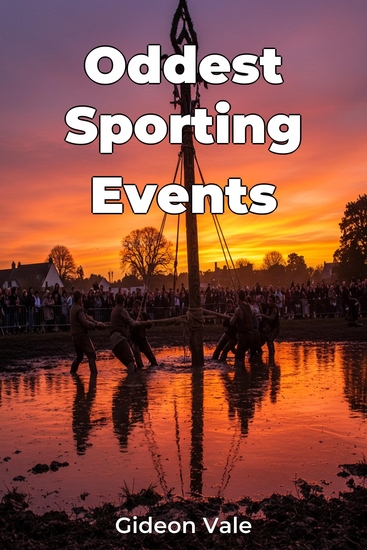
Oddest Sporting Events - cover
LER

Oddest Sporting Events

Gideon Vale

Tradutor A AI

Editora: Publifye

  • 0
  • 0
  • 0

Sinopse

Oddest Sporting Events explores the captivating realm of unusual athletic endeavors, revealing a hidden side of sports history. It's more than just a collection of quirky facts; it's an examination of how culture and history intertwine with the games we play. Discover forgotten extreme competitions and bizarre sports that redefine our understanding of athleticism. Did you know that some historical sporting events were actually practical skills competitions, or that regional team sports with peculiar rules served as cultural rituals? The book journeys through unconventional sports, antiquated team competitions, and obscure historical events. It uses documented accounts, archival materials, and ethnographic studies to showcase these unique athletic endeavors. By examining these oddities, the book argues that the diversity of sporting activities reflects the multifaceted nature of human culture. Beginning with an introduction that defines "odd sports," the book progresses through various categories, highlighting geographical, cultural, and historical dimensions. It analyzes how these events reflect societal values and norms, concluding with a discussion on their legacy and relevance to contemporary sporting culture. This holistic approach treats these sports as cultural artifacts, offering insights into the human condition and the evolving definition of what constitutes a "sport."
Disponível desde: 31/03/2025.
Comprimento de impressão: 60 páginas.


Outros livros que poderiam interessá-lo

  • The Ward - The Life and Loss of Toronto’s First Immigrant Neighbourhood - cover

    The Ward - The Life and Loss of...

    John Lorinc, Michael McClelland,...

    • 0
    • 0
    • 0
    The story of the growth and destruction of Toronto's first 'priority neighbourhood.'
       
    From the 1840s until the Second World War, waves of newcomers who migrated to Toronto – Irish, Jewish, Italian, African American and Chinese, among others – landed in 'The Ward.' Crammed with rundown housing and immigrant-owned businesses, this area, bordered by College and Queen, University and Yonge streets, was home to bootleggers, Chinese bachelors, workers from the nearby Eaton';s garment factories and hard-working peddlers. But the City considered it a slum, and bulldozed the area in the late 1950s to make way for a new civic square.
       
    The Ward finally tells the diverse stories of this extraordinary and resilient neighbourhood through archival photos and contributions from a wide array of voices, including historians, politicians, architects, story-tellers, journalists and descendants of Ward residents. Their perspectives on playgrounds, tuberculosis, sex workers, newsies and even bathing bring The Ward to life and, in the process, raise important questions about how contemporary cities handle immigration, poverty and the geography of difference.
       
    ‘The Ward shines a light on one of Toronto's most historically significant and most forgotten neighbourhoods. Instead of a straight history, the book's editors opted to present the Ward through multiple short essays, each with its own unique point of view. The result is a fascinating and varied look at an area that once concurrently defined the city and acted as its biggest shame. As a result of the Ward's eventual razing, there are few artifacts left to teach newer generations about this important part of Toronto's history. This book helps correct that.’
       
    – 2016 Toronto Book Awards Jury Citation
       
    '[The Ward] should be of interest to Canadians anywhere, reminding us that we all came from some place else.'
       
    – Michael Enright, CBC Sunday Edition
       
    Contents & Contributors
       
    Introduction – John Lorinc
       
    Searching for the Old Ward – Shawn Micallef
       
    No Place Like Home – Howard Akler
       
    Beforethe Ward: Macauleytown – Stephen A. Otto
       
    My Grandmother the Bootlegger – Howard Moscoe
       
    Against All Odds: The Chinese Laundry – Arlene Chan
       
    VJ Day – Arlene Chan
       
    Merle Foster's Studio: 'A Spot Of Enchantment' – Terry Murray
       
    Missionary Work: The Fight for Jewish Souls – Ellen Scheinberg
       
    King of the Ward – Myer Siemiatycki
       
    Where the Rich Went for Vice – Michael Redhill
       
    A Fresh Start: Black Toronto in the 19th Century – Karolyn Smardz Frost
       
    Policing the Lord’s Day – Mariana Valverde
       
    'The Maniac Chinaman' – Edward Keenan
       
    Elsie's Story – Patte Roseban
       
    Lawren Harris's Ward Period – Jim Burant
       
    'Fool's Paradise': Hastings' Anti-Slum Crusade – John Lorinc
       
    Strange Brew: The Underground Economy of Blind Pigs – Ellen Scheinberg
       
    The Consulate, the Padroni and the Labourers – Andrea Addario
       
    Excerpt: The Italians in Toronto – Emily P. Weaver
       
    Arthur Goss: Documenting Hardship– Stephen Bulger
       
    Fresh Air: The Fight Against TB – Cathy Crowe
       
    The Stone Yard – Gaetan Heroux
       
    William James: Toronto's First Photojournalist – Vincenzo Pietropaolo
       
    The Avenue Not Taken – Michael McClelland
       
    Timothy Eaton’s Stern Fortifications – Michael Valpy
       
    Settling In: Central Neighbourhood House – Ratna Omidvar & Ranjit Bhaskar
       
    Toronto’s Girl with the Curls – Ellen Scheinberg
       
    Chinese Cafés: Survival and Danger – Ellen Scheinberg & Paul Yee
       
    Defiance and Divisions: The Great Eaton's Strike – Ruth A. Frager
       
    Elizabeth Street: What the City Directories Reveal – Denise Balkissoon
       
    Growing Up on Walton Street – Cynthia MacDougall
       
    Revitalizing George Street: The Ward's Lessons – Alina Chatterjee & Derek Ballantyne
       
    Taking Care of Business in the Ward &ndash Ellen Scheinberg
       
    'A Magnificent Dome': The Great University Avenue Synagogue – Jack Lipinsky
       
    Reading the Ward: The Inevitability of Loss – Kim Storey & James Brown
       
    Toronto’s First Little Italy – John Lorinc
       
    The Elizabeth Street Playground, Revisited – Bruce Kidd
       
    Divided Loyalties – Sandra Shaul
       
    Crowded by Any Measure – John Lorinc
       
    A Peddler and His Cart: TheWard’s Rag Trade – Deena Nathanson
       
    Toronto's Original Tenement: Wineberg Apartments – Richard Dennis
       
    Excerpt: Tom Thomson's Diary – Tom Thomson
       
    An Untimely Death – Brian Banks
       
    Paper Pushers – Ellen Scheinberg 
       
    The BMR's Wake-Up Call – Laurie Monsebraaten
       
    Excerpt: Report of the Medical Health Officer … – Charles J. Hastings
       
    Dr. Clarke's Clinic – Thelma Wheatley
       
    Slum-Free: The Suburban Ideal – Richard Harris
       
    The Glionna Clan and Toronto's First Little Italy – John E. Zucchi
       
    'The Hipp' – Michael Posner
       
    Before Yorkville– John Lorinc
       
    Sex Work and the Ward’s Bachelor Society – Elise Chenier
       
    Public Baths: Schvitzing on Centre Avenue – Ellen Scheinberg
       
    The Health Advocates: McKeown on Hastings – John Lorinc
       
    Remembering Toronto's First Chinatown – Kristyn Wong-Tam
       
    Tabula Rasa – Mark Kingwell
       
    Unrealized Renewal  – J. David Hulchanski
       
    A Short History of the 'Civic Square' Expropriation – John Lorinc
       
    Storytelling is Part of the Story – Tatum Taylor
       
    How We Think About What (Little) Survives – Patrick Cummins
       
    Institutional Memory – Scott James & Victor Russell
       
    Alternative Histories – MichaelMcClelland
    Ver livro
  • Reclaim - understanding complex trauma and those who abuse - cover

    Reclaim - understanding complex...

    Dr. Ahona Guha

    • 0
    • 0
    • 0
    The relationship between trauma and mental health is becoming better recognized, but survivors and professionals alike remain confused about how best to understand and treat it. In Reclaim, through a series of case studies and expert analysis, Dr. Ahona Guha explores complex traumas, how survivors can recover and heal, and the nature of those who abuse. She shines a light on the "difficult" trauma victims that society often ignores, and tackles vital questions such as, "Why are psychological abuse and coercive control so difficult to spot?" and "Why do some people harm others, and how do we protect ourselves from them?" 


    As a clinical and forensic psychologist, Dr. Guha has had extensive experience in working with those who perpetrate harm—including stalkers, sex offenders, violent offenders, and those who threaten, bully, and harass—and she has a deep understanding of the psychological and social factors that cause people to abuse others. In turn, her clinical work in the trauma treatment field has led her to recognize the enormous impacts of complex trauma, and the failures of systems when working with those who have been victimized. 


    By emphasizing compassion above all, Dr. Guha calls for us to become better informed about perpetrators and the needs of victims, so we might reclaim a safer, healthier society for everyone.
    Ver livro
  • Jewish Revolts in Antiquity The: The History of the Jews’ Uprisings against the Seleucids and Romans in Ancient Judea - cover

    Jewish Revolts in Antiquity The:...

    Editors Charles River

    • 0
    • 0
    • 0
    Judea is one of the most important regions in the modern world. It is the center of two of the world’s great religions and extremely important to a 3rd. Politically, the whole area is the focus of conflict between Jews and Arabs, as well as different Muslim sects. Its history is littered with wars, insurrections, and religious revolutions. To say that it has had a turbulent past is to understate the case in the extreme.  
    	The history of Judea is, of course, inextricably linked to the history of the Jewish people, their dispersal throughout the Mediterranean world, and their reestablishment of the modern state of Israel in the wake of the horrors of the Holocaust. And among all the tumultuous events associated with Jewish history, few can rival the period of Roman rule during the 1st century CE, when Roman attempts to suppress Jewish nationalism met with violent resistance. Ultimately, the Romans forcibly removed much of the Jewish population from the region, setting the scene for later events that have impacted so directly on world history. Events in the region during the 1st century CE also brought about the birth of Christianity, a religious movement that has been at the forefront of European history ever since.  
    This whole period relating to the United Monarchy, and the events leading up to the Assyrian invasion, has been the subject of fierce debate between religious scholars and what might be termed more dispassionate academics. The issue of the “Historicity of the Bible” is a massive field of study in its own right but for the purposes of this paper the words of T.L Thompson sums up the position of those who refuse to consider any possibility that the Bible may contain historical facts in relation to the original origins of the Kingdoms centered on Judea.
    Ver livro
  • UFOs - Myths Conspiracies and Realities - cover

    UFOs - Myths Conspiracies and...

    John B. Alexander

    • 0
    • 0
    • 0
    A never-before-heard firsthand account of a government insider's experience on the cutting edge of UFO exploration; includes a new afterword"Forget everything you think you know about UFOs - this insider's account exposes the reality... Packed with top grade information, insightful analysis and fascinating anecdotes, Alexander's interesting and controversial book sets the gold standard for titles on this subject." –Nick Pope, author of Open Skies, Closed Minds"Changes the playing field for both true believers and skeptics alike. Alexander strongly warns, be careful what you wish for when asking for presidential intervention.  Success could set the field of ufology back decades." --George Noory, host of Coast to Coast AMWhile still on active duty in the U.S. Army during the 1980s, Colonel John B. Alexander, Ph.D. created an interagency group to explore the controversial topic of UFOs. All members held Top Secret clearance. What they discovered was not at all what was expected. UFOs covers the numerous cases they saw, and answers questions like:• What was really in Hanger 18? • Did a UFO land at Holloman Air Force Base? • What happened at Roswell? • What is Majestic 12? • What is the Aviary? • What does the government know about UFOs? • What has happened with disclosure in other countries? • Has the U.S. reverse engineered a UFO? • Why don't presidents get access to UFO info? UFOs is at once a complete account of Alexander's findings, and a call to action. There are no conspiracy theories here—only hard facts—but they are merely the beginning. Foreword by Jacques F. ValleeIntroduction by Burt RutanCommentary by Tom Clancy
    Ver livro
  • Fifth Avenue 5 AM - Audrey Hepburn Breakfast at Tiffany's and the Dawn of the Modern Woman - cover

    Fifth Avenue 5 AM - Audrey...

    Anônimo

    • 0
    • 0
    • 0
    Audrey Hepburn is an icon like no other, yet the image many of us have of Audrey—dainty, immaculate—is anything but true to life. Here, for the first time, Sam Wasson presents the woman behind the little black dress that rocked the nation in 1961. The first complete account of the making of Breakfast at Tiffany's, Fifth Avenue, 5 A.M. reveals little-known facts about the cinema classic: Truman Capote desperately wanted Marilyn Monroe for the leading role; director Blake Edwards filmed multiple endings; Hepburn herself felt very conflicted about balancing the roles of mother and movie star. With a colorful cast of characters including Truman Capote, Edith Head, Givenchy, ""Moon River"" composer Henry Mancini, and, of course, Hepburn herself, Wasson immerses us in the America of the late fifties before Woodstock and birth control, when a not-so-virginal girl by the name of Holly Golightly raised eyebrows across the country, changing fashion, film, and sex for good. Indeed, cultural touchstones like Sex and the City owe a debt of gratitude to Breakfast at Tiffany's.  
    In this meticulously researched gem of a book, Wasson delivers us from the penthouses of the Upper East Side to the pools of Beverly Hills, presenting Breakfast at Tiffany's as we have never seen it before—through the eyes of those who made it. Written with delicious prose and considerable wit, Fifth Avenue, 5 A.M. shines new light on a beloved film and its incomparable star.
    Ver livro
  • Mapuche Empire - The Defenders of Chile and Unconquered Warriors of South America - cover

    Mapuche Empire - The Defenders...

    Rolf Hedger

    • 0
    • 0
    • 0
    The origins of the Mapuche people trace back thousands of years, long before the arrival of Europeans in South America. They are one of the most resilient and enduring indigenous groups in the region, with a deep-rooted history in present-day Chile and Argentina. Archaeological evidence suggests that their ancestors inhabited these lands for at least 2,000 years, developing a distinct culture shaped by the diverse landscapes of the Andean foothills, valleys, and coastal regions. 
    The name "Mapuche" itself reflects their strong connection to the land, as it derives from "mapu" (earth) and "che" (people), meaning "people of the land." This bond influenced their way of life, from agriculture to spiritual beliefs. They cultivated maize, potatoes, quinoa, and beans while also engaging in hunting, fishing, and gathering. Unlike some of the great civilizations of South America, such as the Inca or the Maya, the Mapuche did not build massive stone cities. Instead, they lived in small, scattered settlements made up of rucas, traditional thatched-roof houses constructed from wood and straw, designed to withstand the varied climate of their territories. 
    Language played a crucial role in shaping the Mapuche identity. They spoke Mapudungun, a unique language that remains central to their culture today. Unlike the Quechua language of the Andes, which spread widely due to the influence of the Inca Empire, Mapudungun remained relatively isolated, preserving its distinct linguistic structure. Oral tradition was the primary means of passing down knowledge, with elders recounting stories, myths, and historical events that shaped the collective memory of the Mapuche people.
    Ver livro