¡Acompáñanos a viajar por el mundo de los libros!
Añadir este libro a la estantería
Grey
Escribe un nuevo comentario Default profile 50px
Grey
Suscríbete para leer el libro completo o lee las primeras páginas gratis.
All characters reduced
Hidden History Revealed - cover

Hidden History Revealed

Gideon Harris

Editorial: Publifye AS

  • 0
  • 0
  • 0

Sinopsis

"Hidden History Revealed" offers a captivating exploration of overlooked events, forgotten innovators, and unsung heroes that have silently shaped our world. This groundbreaking book challenges readers to reconsider their understanding of historical cause and effect by delving into the shadows of the past. Through three main sections—"Unsung Heroes," "Pivotal Moments in the Shadows," and "Cross-Cultural Catalysts"—the author uncovers hidden historical elements that provide a more nuanced and comprehensive view of human civilization.

 
What sets this book apart is its innovative approach to historical analysis, combining traditional historiography with big data analytics and network theory. By drawing upon recently declassified documents, oral histories from marginalized communities, and cutting-edge archaeological findings, the author presents a fresh perspective on world history. The book challenges Eurocentric views and offers a more balanced, inclusive narrative that spans cultures and regions throughout time.

 
"Hidden History Revealed" balances academic rigor with accessibility, making it valuable for history enthusiasts, students, educators, and policymakers alike. By illuminating the hidden forces that have profoundly influenced our world, this book not only transforms our understanding of the past but also offers insights into addressing contemporary global challenges and fostering a more inclusive worldview.
Disponible desde: 06/10/2024.
Longitud de impresión: 151 páginas.

Otros libros que te pueden interesar

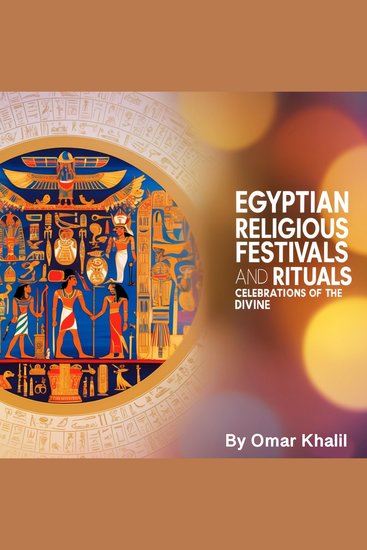
  • Egyptian Religious Festivals and Rituals - Celebrations of the Divine - cover

    Egyptian Religious Festivals and...

    Omar Khalil

    • 0
    • 0
    • 0
    Religious festivals in ancient Egypt were not just moments of worship but essential aspects of social, political, and spiritual life. These celebrations brought communities together, reaffirmed the divine authority of the pharaoh, and ensured the continued favor of the gods. Through elaborate ceremonies, processions, and offerings, Egyptians demonstrated their devotion while reinforcing the cosmic order, known as Ma’at. 
    Religion was deeply woven into the fabric of daily life, and festivals provided opportunities for the people to express their reverence for the gods beyond routine temple rituals. Many celebrations coincided with agricultural cycles, aligning the will of the gods with the prosperity of the land. The inundation of the Nile, for example, was both a natural and a divine event, prompting rituals to honor deities like Hapi, the god of the flood. The timing of major festivals was often determined by celestial events, linking human activities with the movement of the stars and planets. 
    The pharaoh played a crucial role in these religious festivities, acting as both a political leader and a divine intermediary. He was believed to be the earthly representative of the gods, ensuring the stability of Egypt by maintaining a strong connection with the divine realm. Many ceremonies included the pharaoh making offerings to the gods, participating in processions, or performing symbolic acts to renew his legitimacy and strength. One of the most significant of these was the Sed Festival, a grand event that reaffirmed the ruler’s divine right to govern. Through public participation in such festivals, the people reaffirmed their trust in the pharaoh’s ability to maintain cosmic balance.
    Ver libro
  • The Leading Ladies at The School - cover

    The Leading Ladies at The School

    Andi Sulistiadi

    • 0
    • 0
    • 0
    The characteristics of school leaders who are appointed merely on the instructions of their superiors differ significantly from those of principals who enter the profession out of a deep sense of calling. Leaders appointed by directive often carry out their responsibilities as an obligation or administrative duty, focusing primarily on compliance and fulfilling external expectations. Their authority is derived from positional power rather than intrinsic motivation. In contrast, school principals who assume their role on the basis of personal calling demonstrate a greater sense of commitment, passion, and responsibility for the growth of both students and teachers. Their leadership is not confined to administrative functions but extends to fostering a vision, building a positive culture, and inspiring others. The difference becomes evident in the way they make decisions, manage challenges, and build relationships within the school community. Ultimately, this divergence can be traced back to their initial motivations: while one group enters education out of necessity or appointment, the other chooses the path because of a genuine dedication to the educational mission. The women in this book remind us that leadership is not about power, it is not about status,  it is about service, it is about the courage to balance logic with compassion. Through their vision, education is transformed.
    Ver libro
  • The Korean Famine of 1950-1953 - War and Starvation in the Korean Peninsula - cover

    The Korean Famine of 1950-1953 -...

    Sarah Willards

    • 0
    • 0
    • 0
    Before the Korean War and the subsequent famine that gripped the Korean Peninsula from 1950 to 1953, Korea was a land marked by centuries of history, cultural development, and foreign influence. In the early 20th century, the Korean people were under the harsh rule of Japanese colonialism, which lasted from 1910 to 1945. During this period, the Japanese occupation had devastating effects on the Korean economy, agriculture, and society. The Japanese implemented policies that restructured the land distribution system, forced farmers to increase rice production for export, and destroyed much of the local economy in the process. This left the Korean Peninsula struggling with a weakened agricultural system and an economy dependent on Japan. 
    After Japan’s defeat in World War II, Korea was liberated in 1945. However, this newfound freedom came with its own set of challenges. The peninsula was divided along the 38th parallel into two zones of occupation, with the Soviet Union controlling the north and the United States occupying the south. This division set the stage for the creation of two separate Korean states: the Democratic People's Republic of Korea (North Korea) in the north, and the Republic of Korea (South Korea) in the south. Both nations had vastly different political systems, economies, and ideologies, leading to a growing tension between the two that would ultimately culminate in the outbreak of the Korean War in 1950. 
    In the years leading up to the war, both North and South Korea were in a fragile state. The land was still reeling from the effects of the Japanese occupation, and the infrastructure was damaged and underdeveloped. The North, under the leadership of Kim Il-sung, began implementing communist policies and land reforms that were intended to restructure the economy. Meanwhile, the South, under the leadership of Syngman Rhee, leaned toward a more capitalist and democratic system.
    Ver libro
  • From Dropout to Doctorate - Breaking the Chains of Educational Injustice - cover

    From Dropout to Doctorate -...

    Terence Lester, Jemar Tisby

    • 0
    • 0
    • 0
    "The author's message is potent and timely... this is a vital call to reform a broken system." – Publishers Weekly Review, June 2025
    "Dr. Lester has gifted us this book for this moment and for our posterity. He shares searing personal stories of tragedy and hardship that moves the crisis in our educational system beyond statistics and into the realm of human impact. . . . He adds academic ballast to his intimate narrative, so we come to understand not simply his individual story, but the historic and systemic forces at work that affect millions today." – Jemar Tisby, from the foreword
    Inspiring the Next Generation to Advocate for Educational Equity
    Terence Lester was born into a two-parent household that later separated due to family conflict. In search of safety and stability, his mother moved him and his sister from place to place. Carrying the weight of that early trauma, Lester turned to gangs, became a juvenile delinquent, experienced homelessness, and at one point lived out of his car. He dropped out of high school.
    But Lester's story doesn't end there. He eventually returned to school, graduated as a fifth-year senior, and defied the odds by earning five degrees, including a PhD in public policy. What made the difference?
    In From Dropout to Doctorate, Lester unveils the realities of educational injustice and the profound impact of unjust policies and systems on Black communities. He shows how poverty disrupts the lives of Black families, leading to homelessness and perpetuating the school-to-prison pipeline.
    A Powerful Personal Story
    Drawing from his own personal narrative and scholarly research, Lester names the complex challenges faced by Black children in underresourced and socially dense environments. As a public scholar and nonprofit leader, he advocates for equitable access to advanced education and addresses the systemic barriers that limit opportunities for Black people.
    An Advocate's Voice for Change
    Through his personal experiences, Lester calls on educators, nonprofit leaders, and community influencers to confront educational inequity and inspire systemic change. His advocacy encourages readers to envision a world rooted in justice and inclusivity. Offering remedies of community involvement and mentorship, Lester marks out a hopeful pathway that cultivates potential and provides opportunities for Black youth to thrive.
    For Those Who Believe in a Just Future
    This book speaks to those who are ready to champion change and reimagine what is possible for marginalized communities. From Dropout to Doctorate will challenge you to question the status quo and equip you to make a difference in your community.
    If you're ready to join the fight for educational equity and inspire the next generation, pick up your copy today. Will you be the next one to make an impact?
     Please refer to the supplemental PDF for any accompanying materials.
    Ver libro
  • Whistling Dixie - Ronald Reagan the White South and the Transformation of the Republican Party - cover

    Whistling Dixie - Ronald Reagan...

    Jonathan Bartho

    • 0
    • 0
    • 0
    Jonathan Bartho's Whistling Dixie explores the interdependent political relationship between Ronald Reagan and the white conservative South—a relationship that had a profound impact on Reagan's own career, on the political landscape of the South and the entire United States, and on the identity of the modern Republican Party. Millions of southerners were attracted to the GOP by Reagan's anti-statist ideology and their affection for the man himself—an affection that had been built over decades of appearances in the region. The support of these white southern conservatives was crucial to Reagan's political success, ultimately propelling him to the White House in 1980. Conversely, by supporting Reagan's presidential campaigns, southern conservatives were able to influence the direction of the Republican Party and begin restoring their region to a position of power in Washington. 


    Bartho deftly provides a new perspective on Reagan's political career and the Republican Party of the Reagan era while detailing the often-rancorous philosophical differences between Reaganism and southern conservatism and the resulting political conflicts. Whistling Dixie highlights a divide in the Republican Party and in American conservatism that has often been overlooked—a divide that laid the foundations for the GOP's southernization and ultimately led to the rise of Donald Trump.
    Ver libro
  • Empire of Orgasm - Sex Power and the Downfall of a Wellness Cult - cover

    Empire of Orgasm - Sex Power and...

    Ellen Huet

    • 0
    • 0
    • 0
    A cautionary tale of sex and salvation for the wellness generation: how orgasmic meditation turned into a cult.
    OneTaste hoped orgasm would change the world. Emerging in the midst of the late-aughts for-profit wellness boom, the company was unwavering in its faith in orgasmic meditation, or OM, a fifteen-minute practice featuring a woman being clitorally stimulated by a clothed, usually male partner. Nicole Daedone, the group’s magnetic and cunning founder, envisioned a world where OM was as widespread as yoga. But Daedone’s vision came with a price: behind the militant loyalty she inspired and her millions of dollars of sales was what former members describe as a cult of manipulation, abuse, and coercion driven by a relentless quest for control. And by the time the FBI showed up at her door in 2023 with an indictment alleging she conspired to commit forced labor, even Daedone herself was no longer safe.
    Building on the viral Bloomberg article that exposed the dark side of OneTaste and Daedone, Ellen Huet’s Empire of Orgasm is a deeply reported and cinematic chronicle of how a boundary-pushing wellness program became a cult that, according to dozens of witnesses, ruthlessly exploited its members. Huet, the undeniable authority on the group, reveals how, in demanding absolute fealty to Daedone as a path to enlightenment and healing, OneTaste pushed its followers past their limits―sexually, emotionally, financially―and left many of their lives in shambles.
    A riveting saga and a nuanced exploration of the mechanics of manipulation, Empire of Orgasm is an extraordinary account of wellness gone wrong.
    Ver libro