
¡Acompáñanos a viajar por el mundo de los libros!
Añadir este libro a la estantería
Grey
Escribe un nuevo comentario Default profile 50px
Grey
Suscríbete para leer el libro completo o lee las primeras páginas gratis.
All characters reduced
Traffic Crisis Facts - cover

Traffic Crisis Facts

Gideon Fairchild

Traductor A AI

Editorial: Publifye

  • 0
  • 0
  • 0

Sinopsis

"Traffic Crisis Facts" investigates the growing problem of urban congestion, examining its causes, consequences, and potential solutions. The book highlights that traffic is more than an inconvenience; it significantly impacts the economy and hinders sustainable urban development. Did you know that congestion leads to wasted fuel, lost productivity, and increased environmental pollution? The book uses traffic studies and economic models to assess the scope of the problem.

 
The book progresses by first establishing the scope of the problem. Then, it examines causes, such as daily commutes and accidents, using global case studies. Later chapters detail the economic impacts, including direct, indirect, and social costs. Finally, it evaluates potential solutions, such as infrastructure investments, demand management strategies, and technological innovations like intelligent transportation systems and autonomous vehicles.

 
This book is valuable because it integrates economic analysis with traffic engineering principles, offering a holistic understanding. It connects directly to urban planning, environmental science, and public policy, informing strategies for sustainable cities and highlighting transportation's impact on air quality. This approach provides actionable insights for policymakers, urban planners, and anyone interested in understanding and addressing the challenges related to transportation and economics.
Disponible desde: 22/02/2025.
Longitud de impresión: 80 páginas.
Otros libros que te pueden interesar

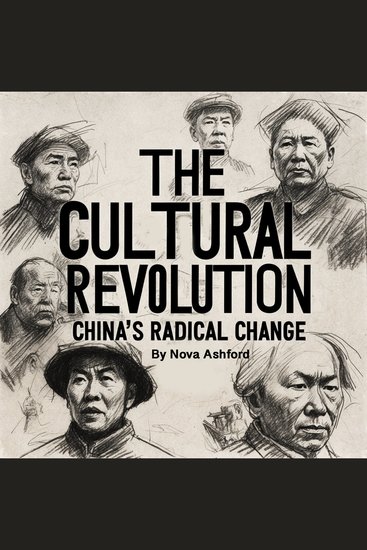
  • The Cultural Revolution - China's Radical Change - cover

    The Cultural Revolution -...

    Nova Ashford

    • 0
    • 0
    • 0
    The Cultural Revolution, which took place in China from 1966 to 1976, was one of the most tumultuous and transformative periods in the country’s history. Initiated by Mao Zedong, the founding father of the People’s Republic of China, the movement sought to preserve Chinese communism by removing capitalist, traditional, and cultural elements from Chinese society. At its core, the Cultural Revolution aimed to enforce Maoist ideology, reaffirm his leadership, and transform the cultural, social, and political fabric of China. It was a radical attempt to reshape Chinese society by addressing perceived corruption and ideological impurity within the Communist Party and broader society. 
    Mao’s motivations for launching the Cultural Revolution were multifaceted. After the failure of the Great Leap Forward (1958-1962), which had resulted in widespread famine and economic chaos, Mao’s position within the Communist Party had been weakened. The Cultural Revolution provided Mao with an opportunity to reassert his control over the party and eliminate rivals, many of whom were seen as too moderate or resistant to his vision of a truly communist society. It also reflected Mao’s concern that China was veering away from the revolutionary ideals that had initially driven the Communist Party. 
    The movement was largely propelled by the Red Guards, a youth-based movement that encouraged the younger generation to challenge authority and remove perceived counter-revolutionary influences. Under the banner of Maoism, the Red Guards sought to destroy the "Four Olds"—old customs, old culture, old habits, and old ideas. This led to widespread destruction of cultural heritage, including temples, books, and artworks. Intellectuals, teachers, and perceived enemies of the revolution were subjected to violent persecution, public humiliation, and forced labor, with many being sent to the countryside for "re-education."
    Ver libro
  • Democratic Socialism Defined - Balancing Democracy and Social Welfare in Modern Societies - cover

    Democratic Socialism Defined -...

    Arlo Holders

    • 0
    • 0
    • 0
    Democratic socialism is a political and economic ideology that seeks to combine the principles of democracy with the goals of social welfare and economic equality. Rooted in the broader tradition of socialism, democratic socialism differentiates itself by advocating for the implementation of socialist policies through democratic means rather than authoritarian or revolutionary approaches. It envisions a society where wealth and resources are more equitably distributed, ensuring that essential services such as healthcare, education, and housing are accessible to all, regardless of socioeconomic status. 
    The historical development of democratic socialism can be traced back to the 19th and early 20th centuries when socialist thinkers began to grapple with the failures and excesses of unregulated capitalism. Influenced by Karl Marx, Eduard Bernstein, and later democratic theorists, the movement sought to address economic inequality while maintaining democratic governance. This ideological blend resonated strongly in Europe, where parties such as the British Labour Party and the Social Democratic Party of Germany championed policies that merged socialist ideals with democratic frameworks. 
    At its core, democratic socialism emphasizes that democracy should extend beyond the political sphere to include economic decision-making. This principle advocates for increased worker participation in corporate governance, fair labor practices, and the regulation of industries to prevent exploitation and ensure public benefit. Rather than abolishing private enterprise, democratic socialism often supports a mixed economy, combining elements of both private and public ownership to balance innovation with social responsibility.
    Ver libro
  • Where To from Here - A Path to Canadian Prosperity - cover

    Where To from Here - A Path to...

    Bill Morneau

    • 0
    • 0
    • 0
    Bill Morneau’s experience as Canada’s finance minister crystalized his vision for the country’s potential for growth and prosperity. Where To from Here looks backward with coolness and candor and forward with a fresh vision of all that Canada can — and must — become.
    		 
    Much of the world reacted with surprise and admiration to the results of the 2015 Canadian federal election and the makeup of the government it produced. Led by a young charismatic leader with a storied family legacy on Parliament Hill, the Liberal government scored a historic victory, rising from third-party status to substantial majority. With a gender-equal cabinet and an ambitious agenda, it heralded a new approach to the country’s federal politics. 
    		 
    After an exciting and productive five years spent focused on domestic and global issues, Finance Minister Bill Morneau decided to take his leave from the same government. What prompted him to abandon one of the most powerful political offices in the country? How much of his decision was based on the often brutal give-and-take of politics? When did the penny drop, persuading one of Trudeau’s brightest lights to shift his talents and energies elsewhere? 
    		 
    In his own persuasive voice, Bill Morneau paints a positive picture, tracing his widely lauded entry into the political arena, the arc of his career in politics, major accomplishments and missed opportunities, his surprising exit, and a host of revealing episodes between the events. Told with measures of both pride and regret, he explores personalities, achievements, and failures with candor. 
    		 
    Morneau’s experience crystalized his vision for Canada and its potential for growth and prosperity. He shares a vision clearly and provocatively expressed, drafting a blueprint for the country’s future. Where To from Here looks backward with coolness and candor and forward with a fresh vision of all that Canada can — and must — become.
    Ver libro
  • On the Cannibals - cover

    On the Cannibals

    Michel de Montagrie

    • 0
    • 0
    • 0
    'I am not sorry we note the barbarous horror of cannibalism, but grieved that, prying so narrowly into their faults, we are so blinded in ours.'
    
    First translated into English in 1603, 'On the Cannibals' is an essay reflecting on a remarkable trip to Brazil which Michel de Montaigne undertook at the end of the sixteenth century.
    
    A study into the customs and practices of indigenous peoples in the Americas, Montaigne delves into the concept of 'civilisation', contrasting the behaviour of so-called 'barbarians' with Western society. He challenges the idea that European values are superior, understanding the practices of the Tupinambá people and arguing that the horrors inflicted by the soldiers of Portugal on their enemies at the time are – in many ways – far worse. It remains a persuasive and compelling argument for cultural relativism. This audiobook edition is expertly narrated by Malk Williams.
    Michael de Montaigne (1533 – 1592) was a French philosopher and writer, and a significant figure in the French Renaissance. He is widely known for popularising the essay, amalgamating anecdotes with memoir and intellect. He has been a huge influence on several Western writers, including William Shakespeare.
    Ver libro
  • Neurosultan Volume 1 - 50 Sonnets of Naskar - cover

    Neurosultan Volume 1 - 50...

    Abhijit Naskar

    • 0
    • 0
    • 0
    An offering of 50 sonnets to the brave and conscientious, from Abhijit Naskar's vast ocean of over 1200 sonnets, in the voice of the humanitarian scientist himself. 
    The volume contains selected sonnets from: 
    1. Rowdy Scientist: Handbook of Humanitarian Science, 2023 
    2. Tum Dunya Tek Millet: Greatest Country on Earth is Earth, 2023 
    3. Insan Himalayanoğlu: It's Time to Defect, 2023 
    4. Visvavictor: Kanima Akiyor Kainat, 2023 
    5. Aşk Mafia: Armor of The World, 2023 
    6. The Centurion Sermon: Mental Por El Mundo, 2023 
    7. Yarasistan: My Wounds, My Crown, 2023 
    8. Mukemmel Musalman: Kafir Biraz, Peygamber Biraz, 2022
    Ver libro
  • Europe and Russia on the Balkan Front - Geopolitics and Diplomacy in the EU's Backyard - cover

    Europe and Russia on the Balkan...

    Giorgio Fruscione

    • 0
    • 0
    • 0
    The war in Ukraine has taken its toll on the stability of the Balkans by reshuffling regional geopolitics and reviving diplomatic competition between the West and Russia. Since the summer of 2022, growing tensions between Kosovo and Serbia have raised concerns about a possible Russian involvement and pushed the European Union to react promptly. By brokering a new normalisation agreement, the West seeks to prevent new hotbeds in Europe and push Russia one step back from the Balkans. Meanwhile, the Russian invasion of Ukraine has given new momentum to the integration process of candidate states, making EU membership a tangible goal rather than an unattainable dream.
    Will the EU be able to stabilise the Balkans? Will Russia continue to exert its influence in the region? Are Belgrade and Pristina on the eve of a new phase in the normalisation process?
    Ver libro