Join us on a literary world trip!
Add this book to bookshelf
Grey
Write a new comment Default profile 50px
Grey
Subscribe to read the full book or read the first pages for free!
All characters reduced
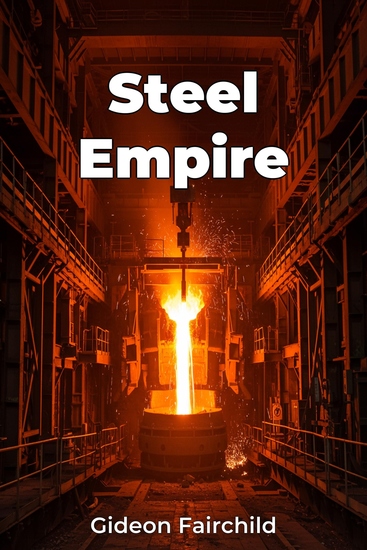
Steel Empire - cover

Steel Empire

Gideon Fairchild

Translator A AI

Publisher: Publifye

  • 0
  • 0
  • 0

Summary

Steel Empire explores the dramatic transformation of the United States into an industrial powerhouse through the lens of the American steel industry. During the Gilded Age, innovations like the Bessemer process enabled mass production, forever changing the economic and urban landscape. The book uniquely examines how figures like Andrew Carnegie, representing entrepreneurial vision, intersected with the often harsh realities faced by steelworkers, offering a balanced view of the era's unprecedented growth and social inequality. The book argues that the steel industry's success resulted from abundant resources, favorable government policies, and a relentless pursuit of efficiency. Early chapters detail the technological breakthroughs that facilitated mass production, followed by an analysis of industrial leaders and a dedicated examination of the lives and struggles of steelworkers. By connecting industrial history with economics, sociology, and urban planning, Steel Empire provides a comprehensive and accessible understanding of the forces that shaped modern America.
Available since: 03/21/2025.
Print length: 66 pages.

Other books that might interest you

  • How to Choose Children’s Toys Wisely - …and Empower Your Child Through Play! - cover

    How to Choose Children’s Toys...

    Owen Jones

    • 0
    • 0
    • 0
    This comprehensive manual is designed to assist parents, guardians, and caregivers to tackle the often overwhelming task of selecting toys for children. With an array of options available, ranging from traditional favourites to the latest trends, it can be challenging to make informed decisions that prioritise both fun and developmental benefits.  
    This guide aims to demystify the toy-buying process by offering practical advice and insights. From understanding age-appropriate choices to considering safety, educational value, and durability, each aspect of toy selection is explored in detail.  
    By equipping adults with the knowledge and tools necessary to make thoughtful choices, we hope to enhance children’s play experiences and support their overall development.  
    Come with us as we explore the world of children’s toys and empower caregivers to create enriching play environments that foster creativity, learning, and joy.
    Show book
  • The Fantasy of JRR Tolkien - Mythopoeia and the Recovery of Creation - cover

    The Fantasy of JRR Tolkien -...

    Robert J. Dobie, Bradley J. Birzer

    • 0
    • 0
    • 0
    At the heart of Tolkienian fantasy is "recovery," a "cleaning of the windows" of our perception that we may learn to see the world again in all its strange beauty. And, for Tolkien, to recover the world anew is to recover a sense of the world as a meaningful act of creation by a living and loving Creator. How does Tolkien accomplish this? Through "sub-creation" or mythopoeia, the "fashioning of myth." For it is in creating an imaginary world ourselves through poetry, fairy-story, and myth that we come to "see" our "primary world" as itself an act of creation. In short, mythopoetic creation, far from being "lies breathed through silver," uncovers for us the truth of our world as a story of creation. 


    This book demonstrates not only the centrality of recovery to Tolkien's fantasy but the way in which his fantasy affects that primal recovery in every reader. It reveals the marvelous philosophical and theological riches that underlie Tolkien's fantasy and shows how his mythopoetic fiction allows the recovery and enactment of these riches in our own lives. The book shows how for Tolkien fantasy has within itself a healing power through which intellectual, moral, and existential paradoxes are resolved and our intellectual and perceptual faculties are made whole again so that they may participate with renewed vigor in the life-giving work of creation of every sort.
    Show book
  • The Paradox of a Smart Atomic Bomb - A Deep Dive Into Consequences of Merging AI And Nuclear Weapons - cover

    The Paradox of a Smart Atomic...

    Davis Truman

    • 0
    • 0
    • 0
    The risk of nuclear conflict today is at its highest point in decades. Geopolitical tensions are on the rise, and we are witnessing an unsettling increase in reckless nuclear threats and the use of nuclear blackmail. This has made the long-standing taboo against the use of nuclear weapons appear more fragile than ever before. In 2022, the famous Doomsday Clock was set to a chilling 90 seconds to midnight, marking the closest it has ever been since its inception in 1947. This unsettling moment in history underscores just how vulnerable the world has become to the catastrophic consequences of nuclear war. 
    In this fragile and precarious situation, it becomes even more crucial for the global community to fully grasp the profound humanitarian impact that any use of nuclear weapons would have. Whether in the case of a limited strike or a full-scale nuclear conflict, the consequences would be devastating not just for the immediate areas affected but for all of humanity and the environment. The environmental destruction, the loss of life, and the lasting psychological and societal trauma would ripple across borders, affecting every nation. 
    Greater awareness and a deeper understanding of these consequences are vital for mobilizing the global community to take decisive, collective action. Only through a heightened sense of urgency and responsibility can we work together to prevent the use of nuclear weapons. This awareness is also the key to advancing the cause of nuclear disarmament. Moving away from a security model based on the dangerous idea of mutually assured destruction and toward one focused on cooperation, diplomacy, and peace is not just desirable—it’s essential for ensuring the survival of humanity and the planet for future generations. 
     
    Show book
  • Pandemonium - Power Politics and Ireland's Pandemic - cover

    Pandemonium - Power Politics and...

    Jack Horgan-Jones, Hugh O'Connell

    • 0
    • 0
    • 0
    The Inside Story of Ireland's Pandemic: Every Decision, Every Player, Every Text, Every Leak
    Ireland's lockdowns were among the harshest and longest in Europe. As the state was battered by waves of disease time and again, unparalleled pressures and untold tensions emerged as the country went to war with Covid, and policymakers and politicians did battle with each other.
    How were the key decisions made? Who held all the power?
    Boasting unrivalled access to the key decision-makers and drawing on hundreds of hours of interviews and thousands of pages of documents, including confidential and unpublished material, Pandemonium reveals the moves, the power-plays and the – at times jaw-dropping – tactics of a government with the health of a nation in its hands.
    'If a movie is ever made of how Ireland responded to the Covid-19 pandemic, Pandemonium may well provide the script … You will feel as if you were in the room when key conversations happened and decisions were made.' Professor Luke O'Neill
    'Illuminates the corners of institutions usually able to operate in the dark' Fintan O'Toole
    'A page-turner … an exceptional insight' Matt Cooper
    'Unflinching and unrelenting' Dearbhail McDonald
    Show book
  • Life Earth and Politics - Ideas for the Next 400 Years - cover

    Life Earth and Politics - Ideas...

    Sherman Lewis

    • 0
    • 0
    • 0
    Science, not speculative philosophy, is the only guide, however imperfect, to the nature of existence. Science culture uses and supports science. The social brain experiences free will and needs religious faith. Empathy is a choice based on intuition. We need a better scientific understanding of dogma and chauvinism, and this book explores these issues. It also describes the Crisis of the Anthropocene, described in under a hundred pages, is a wakeup that needs to overcome ignorance and naïve optimism, and reach our deepest emotions. Topics include climate change, biodiversity, pollutants, population, and political causes behind the collapse. This book also presents data from Internationalcomparisons.org that demonstrates that the US is neither advanced nor a democracy and has failed to deal with guns, reproductive rights, taxation, social welfare, fiscal discipline, and other issues. Even with these already significant problems Americans must face, there is even more: Trumpism and Putinism are existential threats to American freedom and democracy. This book presents a framework for others to act in the time of these issues.
    Show book
  • Mythology and Religion in Ancient Babylon: The History of Babylonian Legends and Religious Practices - cover

    Mythology and Religion in...

    Editors Charles River

    • 0
    • 0
    • 0
    The ancient world was full of many fantastic cities and places, and like today’s major cities, the great ancient cities were hubs of trade, religion, and science. Writing was first invented in ancient cities, and many important scientific discoveries were also made in them, some of which are still used in the modern world. Among the many cities of the ancient world, Rome and Athens may come to mind first, but the city of Babylon in the land of Mesopotamia was already an ancient, venerated city when the others were still inconsequential settlements.  
    	Today, Babylon has become a byword for greed, excess, and licentiousness, mostly due to its mention in the Bible, but a closer examination reveals that Babylon was so much more, and even perhaps the most important city in the ancient world. Ancient Babylon was home to great dynasties that produced some of the world’s most influential leaders, most notably Hammurabi and Nebuchadnezzar, and these rulers invoked their wills on the entire ancient Near East and have been remembered as both progressive and cruel all at the same time. Babylon was also the seat of culture in ancient Mesopotamia and the place where scholars made amazing scientific advances that would not be eclipsed for several centuries. An examination of ancient Babylon demonstrates that it was truly the first great city in the ancient world. 
    	Babylon was also instrumental in the development of the region’s religions, and the religions continue to captivate people for many of the same reasons today’s best known religions and their histories fascinate people. The religion practiced by the ancient Mesopotamians provides a certain mix between the mundane and the surreal, and at the same time aspects of it are both familiar and bizarre to people today. Some find themselves drawn to it based on its preeminent position in religious history as the oldest documented religion in the world.
    Show book