
¡Acompáñanos a viajar por el mundo de los libros!
Añadir este libro a la estantería
Grey
Escribe un nuevo comentario Default profile 50px
Grey
Suscríbete para leer el libro completo o lee las primeras páginas gratis.
All characters reduced
Corruption Erodes Gains - cover

Corruption Erodes Gains

Gideon Fairchild

Traductor A AI

Editorial: Publifye

  • 0
  • 0
  • 0

Sinopsis

Corruption Erodes Gains meticulously examines how corruption undermines economic growth and sustainable development, challenging the notion that it merely "greases the wheels" of commerce. The book argues that graft systematically diminishes national wealth, spotlighting how inflated contract prices and misappropriated funds directly drain economies. Intriguingly, the book points out that corruption's indirect costs, such as reduced foreign investment and weakened institutions, can be even more damaging, especially in an era of increasing globalization.


The book takes a mixed-methods approach, starting by defining corruption and its theoretical impacts before presenting empirical evidence from sources like the Corruption Perception Index. Later chapters delve into sectors vulnerable to corruption, such as public procurement and natural resource management, illustrating how corruption directly reduces economic gains. It concludes with practical strategies for combating corruption, emphasizing transparency and accountability at both national and international levels.
Disponible desde: 27/02/2025.
Longitud de impresión: 83 páginas.
Otros libros que te pueden interesar

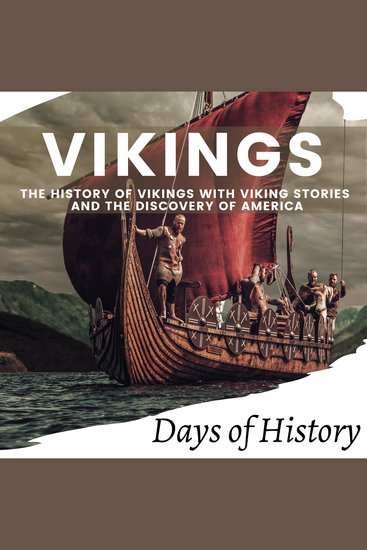
  • Vikings - The History of Vikings With Viking Stories and the Discovery of America - cover

    Vikings - The History of Vikings...

    Days of History

    • 0
    • 0
    • 0
    Join us on an epic journey through time as we explore Viking History! 
    Our book will take you back to a long-forgotten era - one where brave warriors embarked on daring raids, merchants traded exotic goods, explorers mapped uncharted lands, and settlers established new homes.  
    Get to know this remarkable culture like never before, discovering what drove them to such great heights and understanding why they left such a lasting legacy.  
    Come along and listen to the old Viking stories about the discovery of Iceland, Greenland, and the mysterious Wineland. Follow in King Harald’s footsteps as he conquers Norway. 
    Buy your copy now and be part of this legendary tale!
    Ver libro
  • Unlock the Momentum - Keeping Progress Alive Every Day - cover

    Unlock the Momentum - Keeping...

    Caleb David

    • 0
    • 0
    • 0
    Success isn’t just about starting strong—it’s about maintaining progress, staying motivated, and pushing forward every day. Unlock the Momentum: Keeping Progress Alive Every Day is your guide to building unstoppable drive, overcoming obstacles, and sustaining long-term success in every area of life. 
    Many people start their journey toward success with enthusiasm, but as time goes on, distractions, self-doubt, and fatigue creep in, slowing progress. What if you could keep the momentum alive, making daily progress feel effortless and energizing? This book provides the tools, strategies, and mindset shifts to help you stay on track, remain focused, and achieve your goals consistently. 
    With actionable steps, insightful strategies, and real-world examples, Unlock the Momentum will help you: 
    ✅ Overcome procrastination and build daily habits for lasting progress 
    ✅ Stay motivated even when challenges arise 
    ✅ Develop a mindset that thrives on continuous improvement 
    ✅ Break free from stagnation and keep moving forward with confidence 
    ✅ Transform setbacks into learning experiences that fuel growth 
    ✅ Create a system for maintaining productivity without burnout 
    ✅ Achieve your goals while staying balanced and energized 
    Momentum isn’t something you find—it’s something you create. Whether you’re working toward personal goals, career advancement, or a major life transformation, Unlock the Momentum will help you build the discipline, energy, and resilience needed to sustain progress and reach new heights. 
    If you’re ready to stop starting over and start building unstoppable momentum, this book is your ultimate guide.
    Ver libro
  • World War II in the Arctic: The History of the Aleutian Islands Campaign and Nazi Germany’s Arctic Invasion of the Soviet Union - cover

    World War II in the Arctic: The...

    Editors Charles River

    • 0
    • 0
    • 0
    Today, everyone remembers the most famous consequences of Hitler’s choice, particularly the fighting at Leningrad and Stalingrad, but the invasion was so comprehensive that it also involved fighting in the barren lands near the Arctic Circle, bringing fierce combat to the taiga and tundra. In fact, Arctic combat occurred in both the Pacific and European theaters of the war, and in both cases the operations were related in some measure to external lines of supply to the USSR. 
    Meanwhile, the Wehrmacht and the Red Army also met in the boreal pine forests, bogs, and tundra of Lapland and far northern Russia during the Barbarossa campaign of 1941. Fighting separately from the other Army Groups of the Third Reich, elite German Gebirgs (mountain) division soldiers and tough, resourceful Finns clashed with relatively determined and experienced Red Army soldiers in the forbidding terrain east of Finland’s border. This campaign bore the elegant operational tile of Silberfuchs, or “Silver Fox.” Aiming for Murmansk, a key Soviet port, or at least to sever the rail lines connecting it to points south and east, the Germans found themselves contending with the rugged, unfamiliar landscape, tough Soviet resistance, and as all too frequently occurred, the half-baked strategic meddling of Adolf Hitler, Fuhrer of the Third Reich. 
    For the Japanese, the secondary operation to the Aleutian Islands proved more successful than the main thrust at Midway Island. In a triumph of cryptanalytic skill and poker-player daring, codebreaker Joseph Rochefort and his team at “Hypo” cracked Japanese messages proving the main effort aimed at Midway. The U.S. Navy intercepted Yamamoto's fleet at Midway and smashed its carriers in one of the most decisive actions of the Pacific Theater on June 3rd to 7th, 1942. The Aleutians invasion, on the other hand, gave Japan a foothold on American territory that required almost a year to dislodge.
    Ver libro
  • Freedom of Speech - Navigating the Balance Between Expression and Responsibility - cover

    Freedom of Speech - Navigating...

    Marcus Klein

    • 0
    • 0
    • 0
    Freedom of speech is a cornerstone of democratic societies, integral to the exercise of individual autonomy and the pursuit of truth. At its core, it is the right to express ideas, opinions, and beliefs without fear of government reprisal or censorship. This principle is enshrined in numerous legal documents, most notably the First Amendment to the U.S. Constitution, which guarantees "the freedom of speech, or of the press," protecting the individual’s right to speak openly in the public sphere. 
      
    The origins of free speech can be traced back to philosophical and political thinkers of the Enlightenment era, who emphasized the importance of reason, individual rights, and personal liberty. Thinkers such as John Locke, Voltaire, and John Stuart Mill argued that the free exchange of ideas was essential for the flourishing of society, allowing for the progress of knowledge, the correction of errors, and the protection of political freedom. These ideas laid the groundwork for the modern understanding of free expression as a fundamental human right. 
      
    However, the right to free speech is not absolute. Throughout history, the boundaries of this freedom have been tested by a wide range of societal, political, and ethical concerns. From the regulation of speech in times of war or national security threats to the ongoing debates over hate speech, defamation, and misinformation, societies have struggled to find a balance between protecting free expression and safeguarding the common good. This tension continues to shape the debate surrounding free speech, particularly in the context of emerging technologies like social media, which have transformed the landscape of communication.
    Ver libro
  • Modern Europe: A Captivating Guide to European History Starting from the End of the Middle Ages to the Present - cover

    Modern Europe: A Captivating...

    Captivating History

    • 0
    • 0
    • 0
    Europe is home to some of the greatest artists and some of the most brutal wars in world history. 
    Revolutions, reformations, and the Renaissance—it took a lot of movements to turn medieval Europe into what we know today. The world was shaped by Europe’s contributions to art, literature, science, culture, religion, and technology. 
    Not only has Europe been at the forefront of intellectual movements, but it has also been a part of some of the bloodiest wars in history. Despite its period of great rational thought, Europe dabbled rather extensively in the superstitious. Witch hunts spanned across the continent, with men, women, children, and sometimes even redheads being accused of conjuring evil! 
    Europe’s far-reaching impact means European history is inherently connected to the history of the world. It has a fascinating history that spans cultures, beliefs, and languages and includes everything from gruesome wars to groundbreaking inventions. 
    This audiobook offers a complete and simple guide to all the events that shaped modern Europe as it stands today. 
    By listening to this audiobook, you will discover the following:The beginning and impact of the Renaissance and the resulting challenge to the Catholic Church;The role of the Protestant Reformation and the Renaissance in bringing about the Age of Discovery;The dark period of witch hunts and trials that took Europe by storm;The British Agricultural Revolution and the Industrial Revolution and how they pushed the two world wars;The emergence of the world’s first communist state and its fall;The role of influential women throughout Europe who were vital to shaping its history;And much, much more! 
    Scroll up and click the “add to cart” button to learn more about modern Europe!
    Ver libro
  • Fear of Being Judged - A Quiet Way to Heal Social Anxiety and Feel Safe Around Other People - cover

    Fear of Being Judged - A Quiet...

    Rolf Jansson

    • 0
    • 0
    • 0
    For many people, social anxiety is not simply fear of talking to others. 
    It is the exhausting fear of being seen. 
    Seen as awkward. 
    Seen as nervous. 
    Seen as different. 
    Seen as not good enough. 
    Over time, the nervous system becomes trapped inside constant social self-monitoring. Conversations feel emotionally dangerous. Silence feels uncomfortable. Small mistakes feel humiliating. The mind keeps replaying interactions while the body remains tense around other people almost all the time. 
    In Fear of Being Judged, Rolf Jansson explores the hidden emotional exhaustion behind social anxiety, self-consciousness, overthinking, masking, people pleasing, fear of awkwardness, and the pressure to constantly perform socially in order to feel accepted. 
    Written in a calm and compassionate style designed for peaceful listening, this audiobook combines emotional understanding with practical self-help for calming social anxiety in real situations. 
    Through reflective and practical chapters, you will learn: 
    • Why the nervous system fears judgment 
    • Why conversations replay endlessly afterward 
    • How social masking and people pleasing increase anxiety 
    • How to calm social overthinking 
    • How to survive awkward moments more calmly 
    • How to stop preparing constantly for rejection 
    • How the nervous system slowly learns to feel safer around other people again 
    Rather than promoting fake confidence or forcing extroversion, this audiobook offers something quieter: 
    A gentler way to exist around other people. 
    Because healing does not begin when you become socially perfect. 
    It begins when the nervous system slowly stops believing that being seen is dangerous.
    Ver libro