


Now It Can Be Told
Gibbs Philip
Editora: Author
Sinopse
Author Gibbs, Philip, 1877-1962
Title Now It Can Be Told
Language English
Disponível desde: 21/03/2022.

Editora: Author
Author Gibbs, Philip, 1877-1962 Title Now It Can Be Told Language English
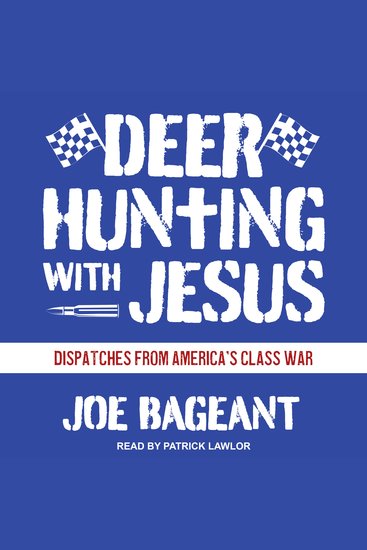
By turns tender, incendiary, and seriously funny, this book is a call to arms for fellow progressives with little real understanding of "the great beery, NASCAR-loving, church-going, gun-owning America that has never set foot in a Starbucks."


Deer Hunting with Jesus is Joe Bageant's report on what he learned when he moved back to his hometown of Winchester, Virginia. Like countless American small towns, it is fast becoming the bedrock of a permanent underclass. Two in five of the people in his old neighborhood do not have high school diplomas or health care. Alcohol, overeating, and Jesus are the preferred avenues of escape.


He writes of:


● His childhood friends who work at factory jobs that are constantly on the verge of being outsourced


● The mortgage and credit card rackets that saddle the working poor with debt


● The ubiquitous gun culture—and why the left doesn't get it


● Scots Irish culture and how it played out in the young life of Lynddie England
Ver livro
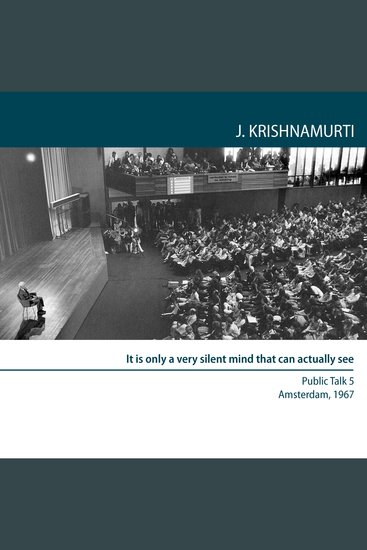
It is only a very silent mind that can actually see - 30 May 1967
- Conflict exists only when there are two opposing things: fear and non-fear,violence and non-violence.
- A mind that is in a state of inquiry is entirely different from a mind that is seeking. Seeking implies effort, conformity, authority and therefore conflict.
- Without space in which there is no boundary, the mind is incapable of comingupon immeasurable reality.
- It is only a silent mind that can perceive, actually see, not a chattering mind, acontrolled mind, a mind that is tortured, suppressed, yielding or indulging.
- When one has totally denied the psychological world which man has created,and the psychological structure of society of which we are, then there is spaceand silence.
- Q: Could you de ne contemplation and meditation?
- Q: It is not possible ever to observe totally one's own irrational thoughts.
- Q: What does it mean to stand alone?
Ver livro
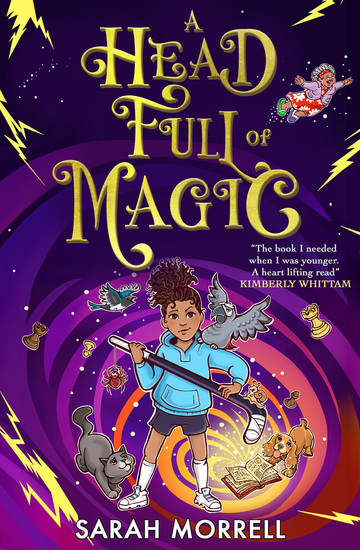
Fleur is used to balancing her two different cultures from her English Mum to her West Indian Nan but when she discovers that she can talk to animals she finds herself in a whole new world! Can her new powers help her take down Celeste 'The Best' the hockey-loving, ankle-smashing new girl, once and for all?Ver livro

The book Kathasaritsagara has been created by Soma Deva. It consists of 21,500 shlokas.
This book Kathasaritsagara has been divided into 18 lambakaas, and those 18 lambakaas are still more divided into 125 Tharanga's.
Some lambakaas are very big, while some are very small.
If there are 115 Shlokas in the 11th Lambaka, there are around 4925 Shlokas in 12th Lambaka.
During ancient times from the mouth of Lord Shiva, this story got birth. Those who listen to this story will experience all sorts of worldly pleasures. They will be blessed by Lord Shiva and at last reach jnana Loka by the blessings of lord shiva.
Ver livro
Do you feel trapped in routines that no longer serve you?
Do you sense there’s more inside you—more potential, more clarity, more fulfillment—but you keep circling back to the same patterns?
Do you crave a fresh start... but don’t know where to begin?
It’s not about willpower. It’s about having a system. And more than anything, you need a Reset!

Who is this book for?
rebuilding after a breakup or loss,
stuck in a job that drains you,
longing for a deeper purpose, or
simply ready to stop living on autopilot...
This book is your companion—a practical guide to rediscovering direction and designing a life that truly feels like your own. It will help you uncover the blind spots that keep you stuck, and teach you how to shift—not just your habits, but your identity and perspective.

What makes this reset different?
Modern transformation doesn’t rely on willpower alone. You now have tools to accelerate change. From biohacking your energy through sleep, light, and nutrition... to reducing cognitive clutter with AI and intentional design—this reset blends ancient self-awareness with modern intelligence.

Why This Book Now?
You don’t have to burn out to begin again. You don’t need permission to shift course.
With four decades of practical wisdom, this guide consolidates the most effective methods—saving you years of trial and error.
This reset isn’t about chasing an ideal. It’s about meeting your life as it is—imperfect, beautiful, possible—and stepping into your next chapter with grace, clarity, and courage.
Ver livro
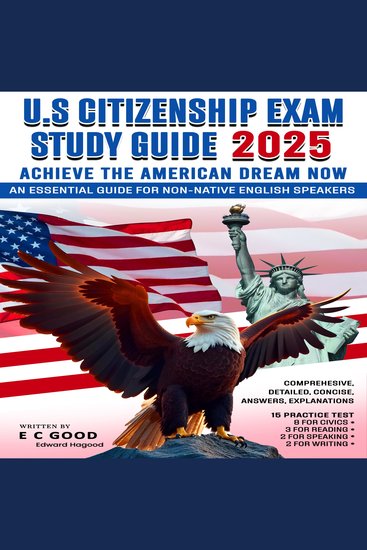
"U.S. Citizenship Exam Study Guide" is a straightforward resource designed for non-native English speakers aspiring to become U.S. citizens. Written by E.C. Good, this guide walks you through every step of the naturalization process. Starting with the basics of U.S. citizenship, the book highlights the importance of understanding the rights and responsibilities that come with being a citizen. It dives into key topics such as U.S. history, government structure, and the civics test, ensuring you’re well-prepared for the exam. Each chapter offers practical tips for mastering the English language and the interview process. You'll find personal stories, like Maria’s journey, illustrating the determination required to achieve citizenship. The guide also provides a detailed application process, including how to complete Form N-400 and gather essential documents. With a clear checklist to help you stay organized, this book is an invaluable tool for anyone on the path to citizenship. Whether you're just starting or nearing your test day, this guide empowers you to take confident steps toward your American dream.Ver livro





