Junte-se a nós em uma viagem ao mundo dos livros!
Adicionar este livro à prateleira
Grey
Deixe um novo comentário Default profile 50px
Grey
Assine para ler o livro completo ou leia as primeiras páginas de graça!
All characters reduced
The Journals of George Washington - cover
LER

The Journals of George Washington

George Washington

Editora: e-artnow

  • 0
  • 0
  • 0

Sinopse

The journals of young George Washington were written at the beginning of his military carrier. The books give us a marvelous insight of the atmosphere in the pre-revolution period in America. Apart from that significant value, these accounts reveal interesting details about Washington's daily life, military duties, his political opinions and personal thoughts on current events.  Contents: Journal of My Journey Over the Mountains While Surveying for Lord Thomas Fairfax, Baron of Cameron, in the Northern Neck of Virginia, Beyond the Blue Ridge, in 1747-8  Journal of Major George Washington: Sent by the Hon. Robert Dinwiddie to the Commandant of the French Forces in Ohio, in 1753-4
Disponível desde: 14/12/2023.
Comprimento de impressão: 110 páginas.

Outros livros que poderiam interessá-lo

  • What’s the Matter with Delaware? - How the First State Has Favored the Rich Powerful and Criminal—and How It Costs Us All - cover

    What’s the Matter with Delaware?...

    Hal Weitzman

    • 0
    • 0
    • 0
    The legal home to over a million companies, Delaware has more registered businesses than residents. Why do virtually all of the biggest corporations in the United States register there? This book reveals how a systematic enterprise lies behind the business-friendly corporate veneer, one that has kept the state afloat financially by diverting public funds away from some of the poorest people in the United States and supporting dictators and criminals across the world. 


    Hal Weitzman shows how the de facto capital of corporate America has provided safe haven to money launderers, kleptocratic foreign rulers, and human traffickers, and facilitated tax dodging and money laundering by multinational companies and international gangsters. Revenues from Delaware's business-formation industry, known as the Franchise, account for two-fifths of the state's budget and have helped to keep the tax burden on its residents among the lowest in the United States. Delaware derives enormous political clout from the Franchise, effectively writing the corporate code for the entire country. 


    What's the Matter with Delaware? shows how, in Joe Biden's home state, the corporate laws get written behind closed doors, enabling the rich and powerful to do business in the shadows.
    Ver livro
  • Prisoners of Jan Smuts - Italian Prisoners of War in South Africa in WWII - cover

    Prisoners of Jan Smuts - Italian...

    Karen Horn

    • 0
    • 0
    • 0
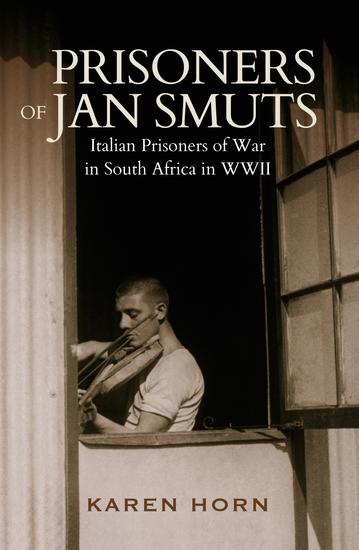
    Equally skilled in a variety of trades other than in the art of love, the Italian prisoners of war (POWs) who were incarcerated in South Africa during the Second World War are a source of great fascination to this day. Who were these men? And what made some of them attempt dramatic escapes, while others wanted to stay behind after the war?
    The first Italian POWs arrived in the Union of South Africa in early 1941, most of them being held in Zonderwater Camp outside Cullinan or in work camps across the country. The government of Jan Smuts saw them as a source of cheap labour that would contribute to harvesting schemes, road-building projects such as the old Du Toit's Kloof Pass between Paarl and Worcester and even to prickly-pear eradication schemes.
    Prisoners of Jan Smuts recounts the stories of survival and shenanigans of the Italian POWs in the Union through the eyes of five prisoners who had documented their experiences in memoirs and letters. While many POWs seemed to appreciate the opportunities to gain new skills, others clung to the Fascist ideas they had grown up with and refused to work
    .
    Many opted to remain in South Africa once the war had ended, forging quite a legacy. These included sculptor Edoardo Villa, who left an important mark in the local and international art world, and businessman Aurelio Gatti, who built an ice-cream empire whose gelato was to delight generations of South Africans.
    Ver livro
  • Homewaters - A Human and Natural History of Puget Sound - cover

    Homewaters - A Human and Natural...

    David B. Williams

    • 0
    • 0
    • 0
    Not far from Seattle skyscrapers live 150-year-old clams, more than 250 species of fish, and underwater kelp forests as complex as any terrestrial ecosystem. For millennia, vibrant Coast Salish communities have lived beside these waters dense with nutrient-rich foods, with cultures intertwined through exchanges across the waterways. Transformed by settlement and resource extraction, Puget Sound and its future health now depend on a better understanding of the region's ecological complexities. 


    Focusing on the area south of Port Townsend and between the Cascade and Olympic mountains, Williams uncovers human and natural histories in, on, and around the Sound. In conversations with archaeologists, biologists, and tribal authorities, Williams traces how generations of humans have interacted with such species as geoducks, salmon, orcas, rockfish, and herring. He sheds light on how warfare shaped development and how people have moved across this maritime highway, in canoes, the mosquito fleet, and today's ferry system. The book also takes an unflinching look at how the Sound's ecosystems have suffered from human behavior, including pollution, habitat destruction, and the effects of climate change.
    Ver livro
  • Great Northern War The: The History of the Conflict that Made Russia the Dominant Empire in the Baltic - cover

    Great Northern War The: The...

    Editors Charles River

    • 0
    • 0
    • 0
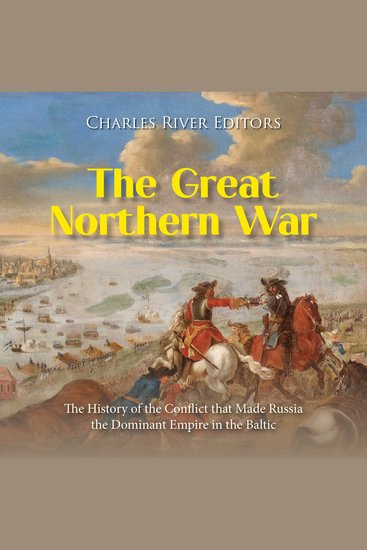
    The Great Northern War, fought from 1700-1721, gets its name from the fact the war focused on the Baltic, but the battlefields extended into Germany and deep into Poland and Ukraine. Sweden was a military power with a small empire in the Baltic, while Russia was still a landlocked place, backward when compared to the rest of Europe, not very powerful, and highly xenophobic. The Poland-Lithuanian Commonwealth was still powerful, and the Cossacks were still free. Moreover, despite the fact the Ottoman Empire was weakened, it held sway in the Balkans and deep into Eastern Europe, and the Krim Tatars were still raiding into Ukraine, Russia, and Poland for slaves. The Great Northern War would involve the Ottomans and the Tatars as well. 
    	Given the length of the conflict, perhaps it’s not surprising that other Western European kingdoms ended up in the mix. Brandenburg-Prussia was involved in the later phases of the war - Frederick William was an elector of Brandenburg and had just been granted the right (by the Holy Roman Emperor) to call himself king in Prussia. He held both titles, but there was still a formal separation between Brandenburg and Prussia. Frederick William was strongly interested in acquiring some or all of Pomerania, a region on the Baltic coast, particularly in acquiring a port, which would eliminate paying Swedish tolls in Swedish-controlled ports. 
    	Ultimately, the most important aspect of the war is that it laid the foundations for the Russian Empire. By 1718, the Russians had conquered most of Finland, the port of Riga, and the Swedish city of Vyborg. These gains in the Baltic Sea strengthened the burgeoning Russian Empire and provided ports and access to the rich resources of Finland, including valuable meat and lumber. Peter also proved to be a rather benevolent conqueror, allowing these regions to maintain both their faith and culture.
    Ver livro
  • The Great Wall of China - cover

    The Great Wall of China

    Franz Kafka

    • 0
    • 0
    • 0
    "The Great Wall of China" is a short story by Franz Kafka. While written in 1917, it was not published until 1930, seven years after his death. Its first publication occurred in Der Morgen, a German literary magazine. A year later, Max Brod included it in Beim Bau der Chinesischen Mauer, the first posthumous collection of short stories by Franz Kafka.Contained within the story is a parable that was separately published as "A Message from the Emperor" ("Eine kaiserliche Botschaft") in 1919 in the collection Ein Landarzt (A Country Doctor). Some sub-themes of the story include why the wall was built piecemeal (in small sections in many different places), the relationship of the Chinese with the past and the present and the emperor's imperceptible presence. The story is told in the first person by an older man from a southern province.The first English translation, by Willa and Edwin Muir, was published by Martin Secker in London in 1933. It appeared in The Great Wall of China. Stories and Reflections (New York City: Schocken Books, 1946).
    Ver livro
  • The Puppet As An Educational Value Tool - Early Childhood Education and Care (ECEC) Services for Children between 0 and 7 Years - cover

    The Puppet As An Educational...

    Paula G. Eleta

    • 0
    • 0
    • 0
    In this short paper Paula Eleta explores the theme of the value of the puppet in the pedagogical field, mainly in early childhood (0-6 years), as an effective tool to improve the quality of the educational service through play. Under the direction of the educator, the puppet can become an excellent ”assistant” to build new educational contexts, able to offer all those who live in the services different accesses to a common and shared space. The puppet can help to found a more inclusive ”school”, giving voice and listening to the past, experiences, knowledge and skills of the various actors involved: children (first of all), families, educators, pedagogical coordinators and other subjects of their own territory. ”The puppet as an educational tool value” is a written text in an accessible and immediate form. Furthermore, the topics covered have been elaborated on the basis of the author`s long experience in the field. The content is therefore full of concrete and enlightening examples and, among the many proposed activities to be carried out, there is an easy and quick technique to build puppet characters: an activity that can be performed, at the various educational services, both together with families and children (with the support of adults).
    Ver livro