Junte-se a nós em uma viagem ao mundo dos livros!
Adicionar este livro à prateleira
Grey
Deixe um novo comentário Default profile 50px
Grey
Assine para ler o livro completo ou leia as primeiras páginas de graça!
All characters reduced
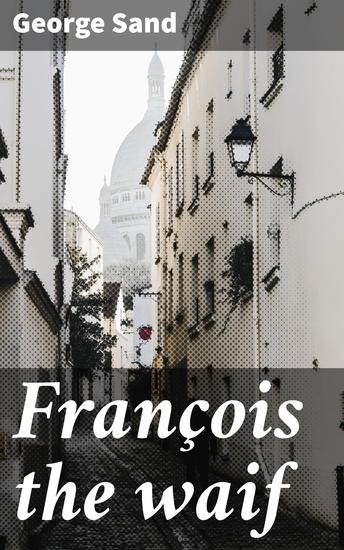
François the waif - A Tale of Resilience and Revolution: The Orphan's Journey in 19th Century France - cover
LER

François the waif - A Tale of Resilience and Revolution: The Orphan's Journey in 19th Century France

George Sand

Tradutor Jane Minot Sedgwick

Editora: Good Press

  • 0
  • 0
  • 0

Sinopse

"Fran√ßois the Waif" is a poignant exploration of the human condition set against the backdrop of the lush French countryside. Written in the characteristic lyrical style of George Sand, the novel intertwines themes of love, poverty, and the struggle for identity through the eyes of its eponymous protagonist, a vulnerable yet resilient young boy. Sand's narrative is rich with natural imagery and social commentary, reflecting the author's engagement with Romanticism while challenging the societal norms of her time. The novel captures not only Fran√ßois's journey but also offers insights into the broader socio-economic issues of 19th-century France, delving into themes of class disparity and the innocence of childhood juxtaposed with harsh realities. George Sand, the pen name of Amantine Lucile Aurore Dupin, was a pioneering French novelist and social thinker, known for her bold choices in both literary and personal realms. Her progressive views on gender and social justice heavily influenced her writings. Sand's own experiences of love, loss, and her commitment to championing the underprivileged likely shaped the empathetic portrayal of Fran√ßois, revealing her deep concern for the marginalized in society. This novel is highly recommended for readers interested in exploring the complexities of human emotions and social issues through the eyes of youth. Sand'Äôs masterful storytelling combined with her vivid prose invites readers to reflect on the nature of innocence and resilience in a changing world, making "Fran√ßois the Waif" a timeless contribution to literary discourse.
Disponível desde: 10/07/2023.
Comprimento de impressão: 128 páginas.

Outros livros que poderiam interessá-lo

  • Clay (Unabridged) - cover

    Clay (Unabridged)

    James Joyce

    • 0
    • 0
    • 0
    James Augustine Aloysius Joyce (2 February 1882 - 13 January 1941) was an Irish novelist, short story writer, poet and literary critic. He contributed to the modernist avant-garde movement and is regarded as one of the most influential and important writers of the 20th century.
    CLAY: The matron had given her leave to go out as soon as the women's tea was over and Maria looked forward to her evening out. The kitchen was spick and span: the cook said you could see yourself in the big copper boilers.
    Ver livro
  • Alice Adams - cover

    Alice Adams

    Booth Tarkington

    • 0
    • 0
    • 0
    "Alice Adams" is a novel written by Booth Tarkington and published in 1921. This captivating work received the 1922 Pulitzer Prize for the Novel1. Let's explore the world of Alice Adams:    Plot Summary:  The story revolves around the character of Alice Adams, a young woman with aspirations to climb the social ladder.  Set in a lower-middle-class household in an unnamed Midwest town shortly after World War I, the narrative follows Alice's journey.  She longs to win the affections of the wealthy young man Arthur Russell.  The novel delves into themes of social status, love, and personal transformation.  Key Moments:  Alice's attempts to fit in with the upper class lead to both humorous and poignant situations.  Her interactions with Arthur Russell become central to the plot.  The dance scene, where Alice faces embarrassment and tries to maintain appearances, highlights her struggle.  Adaptations:  Film Versions: "Alice Adams" was adapted into films in 1923 by Rowland V. Lee and more famously in 1935 by George Stevens.  Pulitzer Prize: The novel's recognition with the Pulitzer Prize solidified its place in literary history.  "Alice Adams" captures the complexities of social mobility and the human desire for acceptance. "
    Ver livro
  • A Journey of Little Profit - From their pens to your ears genius in every story - cover

    A Journey of Little Profit -...

    John Buchan

    • 0
    • 0
    • 0
    The Scottish novelist John Buchan enjoyed a remarkable career as politician, historian and Governor General. He was born John Buchan on 26th August 1875 and later added 1st Baron Tweedsmuir PC GCMG GCVO CH to his name.  
    Buchan studied at Hutchesons’ Grammar School, Glasgow and at seventeen won a scholarship to the University of Glasgow to study classics. There he began to write poetry. In 1895 he transferred to Oxford to continue his study of Classics and in 1896 ‘Sir Quixote of the Moors’ was published followed by the non-fiction ‘Scholar-Gipsies’. His prolific literary output now hardly faltered. 
    He graduated in 1900 and became the private secretary to Alfred Milner, the High Commissioner for Southern Africa and other colonies. Buchan found the same inspiration in the African landscape as he had in the Scottish Borders, and would later set many works here. Returning to London he became a partner in a publishing house, and garnered an editorial role at The Spectator. He also completed his law studies. He was called to the bar in 1901 but never practiced.  
    On 15th July 1907 Buchan married Susan Charlotte Grosvenor, the cousin of the Duke of Westminster. In 1910 he wrote ‘Prester John’, the first of a series set in South Africa.  
    In 1911 Buchan entered politics as a Unionist candidate in the Scottish Borders advocating the support of free trade, women’s suffrage, national insurance, and reducing the power of the House of Lords.  
    The Great War saw Buchan writing for the War Propaganda Bureau and as Times correspondent in France. In 1915, he published ‘The Thirty-Nine Steps’, his most famous book and a follow-up Richard Hannay novel, ‘Greenmantle’, in 1916.  
    In 1916 Buchan enlisted in the Intelligence Corps which included writing speeches for Sir Douglas Haig. By 1917 he was Director of Information under Lord Beaverbrook. Buchan called it “the toughest job he ever took on”. He somehow found time to assist in a history of the war magazine. This was later published in 24 volumes: Nelson’s History of the War. 
    After the war his writing focused on historical studies. In 1927 Buchan became the Unionist Party Member of Parliament for the Combined Scottish Universities. In a speech to Parliament he said “I believe every Scotsman should be a Scottish nationalist. If it could be proved that a Scottish parliament were desirable… Scotsmen should support it.”  
    Over the next decade he continued to distinguish himself politically and in literature.  On the 1st June 1935 he became 1st Baron Tweedsmuir of Elsfield in the County of Oxford.  
    He was now also given the position of Governor General in Canada and resolved to travel all over Canada to gain a better insight of the country. Having crossed both length and breadth he saw the cultural shift between areas and their common ground and helped bring about a clear national Canadian identity. 
    On the 6th February 1940 he collapsed from a stroke and sustained a very serious head injury in falling. Two rounds of surgery to stabilise his condition were unsuccessful and Buchan died on the 11th February. After a state funeral in Ottawa his ashes were returned to his estate in Oxfordshire.
    Ver livro
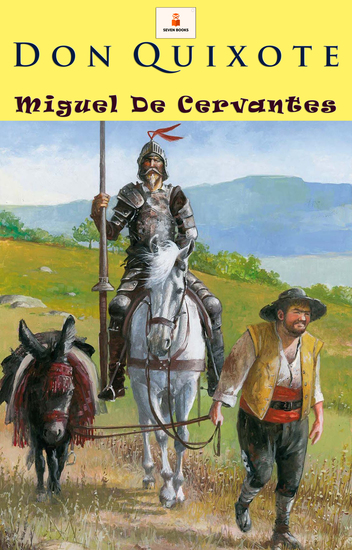
  • Don Quixote - cover

    Don Quixote

    Miguel de Cervantes

    • 0
    • 0
    • 0
    Don Quixote is a Spanish novel by Miguel de Cervantes. It was originally published in two parts, in 1605 and 1615. Considered a founding work of Western literature, it is often labelled as the first modern novel. Don Quixote is also one of the most-translated books in the world and one of the best-selling novels of all time.The plot revolves around the adventures of a member of the lowest nobility, an hidalgo[d] from La Mancha named Alonso Quijano, who reads so many chivalric romances that he loses his mind and decides to become a knight-errant (caballero andante) to revive chivalry and serve his nation, under the name Don Quixote de la Mancha. He recruits as his squire a simple farm labourer, Sancho Panza, who brings a unique, earthy wit to Don Quixote's lofty rhetoric. In the first part of the book, Don Quixote does not see the world for what it is and prefers to imagine that he is living out a knightly story meant for the annals of all time. However, as Salvador de Madariaga pointed out in his Guía del lector del Quijote (1972 [1926]), referring to "the Sanchification of Don Quixote and the Quixotization of Sancho", as "Sancho's spirit ascends from reality to illusion, Don Quixote's declines from illusion to reality".
    Ver livro
  • Medea - cover

    Medea

    Euripides

    • 0
    • 0
    • 0
    The story of Medea is only one part of a myth about the Argonauts' campaign. It portrays Jason joining a battle with fire-breathing bulls and a dragon guarding the Golden Fleece, Medea is helping him tame the beasts. She then follows him to Greece, because she falls in love.
    It is also a story of how a once young, beautiful and joyful woman, transforms into a monster, hungry for revenge, she kills even her own children. A long trail of horrible deaths, tied to her life path, is hard to imagine.
    Ver livro
  • News from Nowhere - cover

    News from Nowhere

    William Morris

    • 0
    • 0
    • 0
    William Morris's "News from Nowhere" transports readers to an idyllic future where industrial England has transformed into a harmonious, pastoral society. Narrator William Guest awakens in this utopian world, discovering a community that thrives on cooperation, equality, and ecological balance. Through his eyes, Morris critiques the ills of capitalism and envisions a society where human creativity flourishes, offering a hopeful vision of life beyond materialism and hierarchy.
    Ver livro