Rejoignez-nous pour un voyage dans le monde des livres!
Ajouter ce livre à l'électronique
Grey
Ecrivez un nouveau commentaire Default profile 50px
Grey
Abonnez-vous pour lire le livre complet ou lisez les premières pages gratuitement!
All characters reduced
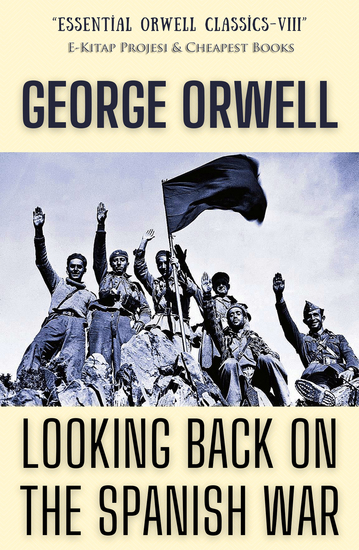
Looking Back on the Spanish War - cover

Looking Back on the Spanish War

George Orwell

Maison d'édition: E-Kitap Projesi & Cheapest Books

  • 0
  • 0
  • 0

Synopsis

First of all the physical memories,The sounds, the smells and the surfaces of things. It is curious that more vividly than anything that came afterwards in the Spanish war I remember the week of so-called training that we received before being sent to the front - the huge cavalry barracks in Barcelona with its draughty stables and cobbled yards, the icy cold of the pump where one washed, the filthy meals made tolerable by pannikins of wine, the Trousered militia-women chopping firewood, and the roll-call in the early mornings where my prosaic English name made a sort of comic interlude among the resounding Spanish ones, Manuel Gonzalez, Pedro Aguilar, Ramon Fenellosa, Roque Ballaster, Jaime Domenech, Sebastian Viltron, Ramon Nuvo Bosch. I name those particular men because I remember the faces of all of them. Except for two who were mere riff-raff and have doubtless become good Falangists by this time, it is probable that all of them are dead. Two of them I know to be dead. The eldest would have been about twenty-five, the youngest sixteen. One of the essential experiences of war is never being able to escape from disgusting smells of human origin. Latrines are an overworked subject in war literature, and I would not mention them if it were not that the latrine in our barracks did its necessary bit towards puncturing my own illusions about the Spanish civil war. The Latin type of latrine, at which you have to squat, is bad enough at its best, but these were made of some kind of polished stone so slippery that it was all you could do to keep on your feet. In addition they were always blocked. Now I have plenty of other disgusting things in my memory, but I believe it was these latrines that first brought home to me the thought, so often to recur: 'Here we are, soldiers of a revolutionary army, defending Democracy against Fascism, fighting a war which is about something, and the detail of our lives is just as sordid and degrading as it could be in prison, let alone in a bourgeois army.' Many other things reinforced this impression later; for instance, the boredom and animal hunger of trench life, the squalid intrigues over scraps of food, the mean, nagging quarrels which people exhausted by lack of sleep indulge in.
Disponible depuis: 27/11/2023.
Longueur d'impression: 75 pages.

D'autres livres qui pourraient vous intéresser

  • Before the Law - From their pens to your ears genius in every story - cover

    Before the Law - From their pens...

    Franz Kafka

    • 0
    • 0
    • 0
    Franz Kafka was born on 3rd July 1883 in Prague, then in Bohemia, the eldest of 6, into a middle-class Jewish family. 
    Life for the young Kafka and his passion for literature was often made an ordeal by his over-bearing and domineering entrepreneur of a father.   
    In 1889 Kafka was sent to the Deutsche Knabenschule, an elementary school in Prague. His father would only allow him to be educated in German-speaking schools and even went so far as to limit visits to the synagogue to four a year. 
    In 1901 he graduated from the classics-oriented Altstädter Gymnasium. Kafka did well there and across a large range of subjects.  He now enrolled at the Charles Ferdinand University, to study chemistry, but quickly switched to law for which he obtained his degree in June 1906 and then performed the mandatory year of unpaid service as clerk at the civil and criminal courts. 
    A job at an Italian insurance company left him little time to write and after a year he took another job with the Worker's Accident Insurance Institute for the Kingdom of Bohemia where he stayed until ill health led to his resignation in 1922. 
    Although he saw work as a means to pay the bills and to allow him time to write, he received several promotions and was noted as a good employee. 
    By 1917 Kafka was suffering from tuberculosis, which required frequent periods of convalescence. Interspersed with this, were several intense affairs before he settled in Berlin with Dora Diamant, a 25-year-old kindergarten teacher who herself having left the ghetto now influenced Kafka's interest in the book of Jewish law, the Talmud. 
     
     
    Kafka’s on-going health was littered with problems. Apart from TB there were several other ailments, including migraines, insomnia, boils, depression, all usually brought on by excessive stresses and strains. He attempted to counteract all of this by naturopathic treatments, a vegetarian diet and consuming large quantities of unpasteurized milk. 
    His tuberculosis still worsened. He returned to Prague, where he died on 3rd June 1924. He was 40.
    Voir livre
  • In the Duck Yard - cover

    In the Duck Yard

    H.C. Andersen

    • 0
    • 0
    • 0
    One day a Portuguese duck arrived at the duck house. Some said she came from Spain, but from then on all her descendants were called ‘Portuguese’. Today, there is only one Portuguese duck at the duck house – and it is she who takes care of the song bird who fell from the roof while the cat was chasing it...Hans Christian Andersen (1805-1875) was a Danish author, poet and artist. Celebrated for children’s literature, his most cherished fairy tales include "The Emperor's New Clothes", "The Little Mermaid", "The Nightingale", "The Steadfast Tin Soldier", "The Snow Queen", "The Ugly Duckling" and "The Little Match Girl". His books have been translated into every living language, and today there is no child or adult that has not met Andersen's whimsical characters. His fairy tales have been adapted to stage and screen countless times, most notably by Disney with the animated films “The Little Mermaid” in 1989 and “Frozen”, which is loosely based on “The Snow Queen”, in 2013. Thanks to Andersen's contribution to children's literature, his birth date, April 2, is celebrated as International Children's Book Day.
    Voir livre
  • He Knew He Was Right Volume 2 - cover

    He Knew He Was Right Volume 2

    Anthony Trollope

    • 0
    • 0
    • 0
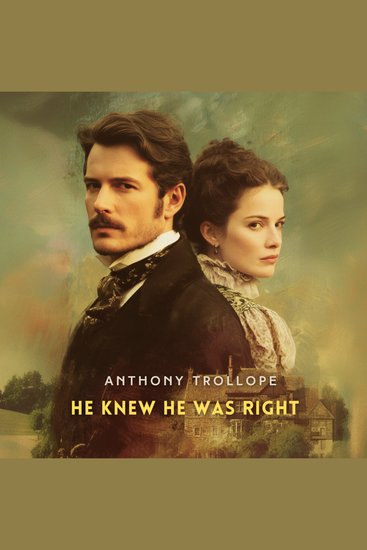
    "He Knew He Was Right" by Anthony Trollope unfolds the tragic tale of Louis Trevelyan, a man whose obsessive jealousy unravels his marriage and his life. Confident in his suspicion about his wife Emily's fidelity, Trevelyan's relentless pursuit of control and vindication leads him down a path of emotional turmoil and isolation. Set against a rich tapestry of Victorian society, the novel explores themes of trust, power, and the destructive nature of unwarranted suspicion, offering a deep psychological portrait within a compelling family drama.
    Voir livre
  • A Scene from the Ghetto of Venice - From their pens to your ears genius in every story - cover

    A Scene from the Ghetto of...

    Rainer Maria Rilke

    • 0
    • 0
    • 0
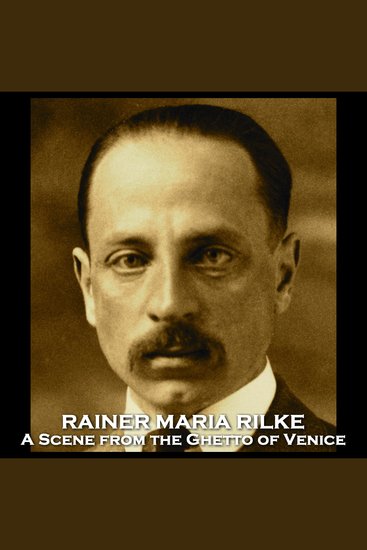
    René Karl Wilhelm Johann Josef Maria Rilke was born into a troubled marriage on the 4th December 1875 in Prague, then part of the Austro-Hungarian Empire.  His mother, having previously lost a baby girl, would dress the young boy up in girl’s clothing.   
    Later his father dispatched him to a military academy at age 10 but after a miserable 5 years the young Rilke left due to illness and instead entered first Prague and then Munich and finally Berlin university to study art history, philosophy and literature. 
    His initial forays into literature was in poetry.  His intense, mystical and lyrical style was much admired and over time inspired many in succeeding generations.    
    His short prose collection ‘Stories of God’, written in an impassioned burst over several nights was published in 1900 and offers a beguiling view of much of Rilke’s influences and outlook.  
    The following year he married the pioneering sculptor and artist Clara Westhoff.  The union produced one child, a daughter Ruth.   
    He lived in Paris for most of the Century’s first decade where he mixed with many great minds of the time.  Although he continued to write he also worked as a secretary to the sculptor, Rodin.   
    It was only after they settled in Switzerland in 1919 that his writing output was in full flow.  Here he wrote profusely in both German and French, which included much on his previous travels, his left-wing sympathies, his religious and existential thoughts, all part of a unique and consummate style. 
    From 1923 on, Rilke increasingly struggled with his health which was now in constant decline and often spent time rehabilitating at a sanatorium.   
    Rainer Maria Rilke died of leukaemia on the 29th December 1926 in Montreux, Switzerland.  He was 51.
    Voir livre
  • The Phantom of the Opera - cover

    The Phantom of the Opera

    Gaston Leroux

    • 0
    • 0
    • 0
    Beneath the Paris Opera lie five cellars, an underground lake, and a tenant whom the management pays not to think about. Leroux was a crime reporter first, and he built the novel as an investigation: witness statements, an inquest tone, and real machinery of the Palais Garnier, which does have a lake. The result is less a horror story than the strangest love triangle in French fiction.
    Voir livre
  • Dracula: Deluxe Edition - The Complete Original Unabridged Text from 1897 - cover

    Dracula: Deluxe Edition - The...

    Bram Stoker

    • 0
    • 0
    • 0
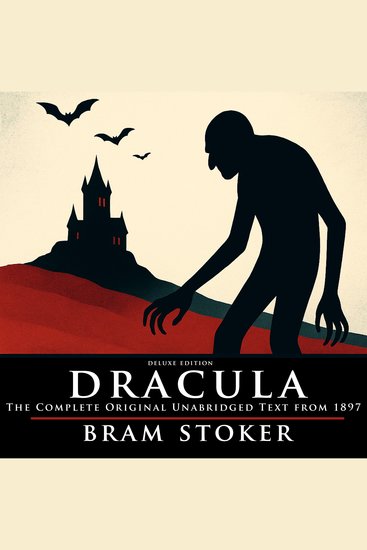
    Bram Stoker’s legendary Gothic tale is brought to thrilling life in this  dramatic full-cast audio production  from Jason Damron. Through diary entries, letters, and journal fragments, Dracula unfolds as an immersive sonic experience that captures both the terror and the elegance of Victorian England as Count Dracula’s shadow spreads from Transylvania to London. 
    Jason Damron’s production surrounds the listener with  cinematic sound design , haunting music, and richly detailed performances that transport you straight into the heart of the story. Every voice, every creak, and every whisper builds an atmosphere of suspense and dark beauty that pays homage to Stoker’s timeless masterpiece. 
    Listeners have called this dramatization “a classic brought to life with a phenomenal cast and amazing soundscape” (Marco), “spot-on in its vivid descriptions and performances” (Teresa J. Kendall), and “a great performance of a classic story—you’ll be wishing for a longer car trip just to keep listening” (C.M.). Others describe it as “one of the best books I’ve ever come across—the performance was amazing too!” (Jon Van). 
    Whether you’re discovering Dracula for the first time or revisiting it through sound, this audiobook offers a  captivating, emotionally charged performance  that turns Stoker’s masterpiece into a living, breathing experience of Gothic horror and timeless fascination.
    Voir livre