¡Acompáñanos a viajar por el mundo de los libros!
Añadir este libro a la estantería
Grey
Escribe un nuevo comentario Default profile 50px
Grey
Suscríbete para leer el libro completo o lee las primeras páginas gratis.
All characters reduced
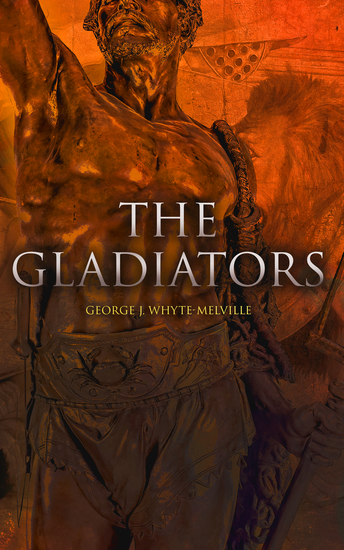
The Gladiators - Historical Novel: A Tale of Rome and Judea - cover

The Gladiators - Historical Novel: A Tale of Rome and Judea

George J. Whyte-Melville

Editorial: e-artnow

  • 0
  • 0
  • 0

Sinopsis

The Gladiators is a powerful historical novel of ancient Rome. It is the story of a young Briton of the first century captured in battle by the Roman legions invading his country. Being enslaved, he's transported to the "Eternal City" at the time of Vitellus and Vespasian. There, he enters a gladiator school to become a warrior destined to fight to the death in the arena. This superb and highly regarded historical trilogy contains combat, assassination, intrigue, love, and war. Moreover, it embraces many of the important events of the time, culminating in the siege of Jerusalem by Titus and the fall of the Temple in A.D. 70.
Disponible desde: 18/02/2022.
Longitud de impresión: 501 páginas.

Otros libros que te pueden interesar

  • A Rare Recording of Mother Teresa’s Nobel Prize Acceptance Speech - cover

    A Rare Recording of Mother...

    Mother Teresa

    • 0
    • 0
    • 0
    Mary Teresa Bojaxhiu (August 26, 1910 to September 5, 1997), better known as Mother Teresa or Saint Mother Teresa, born in Skopje, North Macedonia, then part of the Ottoman Empire, was a Catholic nun and founder of the Missionaries of Charity. In 1979, Mother Teresa received the Nobel Peace Prize for her humanitarian work. She died in September 1997 and was beatified in October 2003. In December 2015, Pope Francis recognized a second miracle attributed to Mother Teresa, clearing the way for her to be canonized on September 4, 2016.
    Ver libro
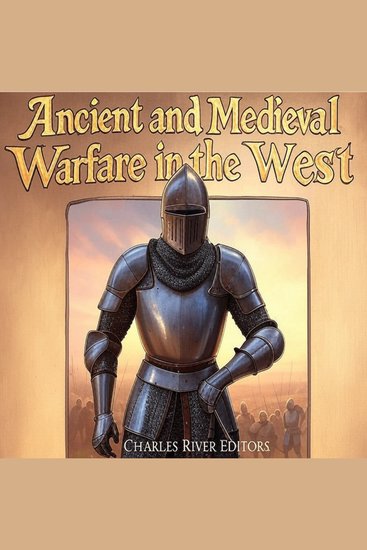
  • Ancient and Medieval Warfare in the West: The History of Western Europe’s Changing Military Tactics in Antiquity and the Middle Ages - cover

    Ancient and Medieval Warfare in...

    Editors Charles River

    • 0
    • 0
    • 0
    For the Greeks, a hoplite was only as strong as the hoplite next to him; without hoplites on the sides, both flanks were exposed, and heavy infantry units are not mobile. Thus, they implemented the phalanx formation, one of history’s most important military innovations. The phalanx was a line of infantry as wide across as the battlefield dictated, anything from five to 30 men deep, with each rank of men officered by a veteran. The formation also included an additional, expert file-closer at the back of each file, to keep the formation cohesive. The phalanx advanced slowly to maintain its tight formation and unit cohesion, speeding up in unison just before reaching combat.   
    	While the Roman army is rightly famed as an institution, the image of the individual legionary is also an iconic one. The uniformed, disciplined soldier of the late Republic and early Empire is one of the first things many people imagine when they think of Rome. They are the ultimate image of the ancient soldier, their arms and armor instantly recognizable. Their abilities, not only as warriors but also as engineers and administrators, have made them role models for other soldiers through the centuries. In the same vein, their commanders are still celebrated and studied, and generals the world over have tried to emulate the likes of Julius Caesar. 
    If anything, the one aspect of the Middle Ages that has been romanticized is medieval warfare. Indeed, the Middle Ages have long sparked people’s imaginations thanks to imagery of armored knights battling on horseback and armies of men trying to breach the walls of formidable castles. What is generally forgotten is that medieval warfare was constantly adapting to the times as leaders adopted new techniques and technology, and common infantry became increasingly important throughout the period. By the end of the period, warfare was radically changing thanks to the rise of gunpowder weapons and artillery. 
    Ver libro
  • Neuro-Mastery - Unlocking Your Brain's Potential for Lasting Success - cover

    Neuro-Mastery - Unlocking Your...

    Dr. Pamela Seraphine

    • 0
    • 0
    • 0
    Unlock the power of your brain with Neuro-Mastery, the ultimate practical guide to achieving lasting success and fulfillment. Dr. Pamela Seraphine, a trailblazer in neuroscience for high performance and trauma recovery, merges cutting-edge science with a soul-centered approach to help you take charge of your brain, align with your deepest self, and transform your life. Her raw authenticity and tough-love wisdom make this a transformative read for anyone seeking real, actionable change. Whether you’re looking to elevate your career, enhance personal growth, or overcome life’s toughest obstacles, this book offers practical, brain-based tools grounded in the latest neuroscience while nurturing the soul’s inner wisdom. Neuro-Mastery reveals how to unlock your brain’s full potential and create lasting change that impacts every aspect of your life. With Dr. Seraphine’s unapologetically brilliant approach, you’ll learn her unique step-by-step method for taking control of your future and achieving the goals that mean the most to you. Get ready to master your brain—and your life.
    Ver libro
  • Dusty Booze - In Search of Vintage Spirits - cover

    Dusty Booze - In Search of...

    Aron Goldfarb

    • 0
    • 0
    • 0
    In Dusty Booze: In Search of Vintage Spirits, journalist Aaron Goldfarb goes on an adventure in vintage spirits. This is an intoxicating story of obsessives on the hunt for old bottles of whiskey, tequila, rum, chartreuse—you name it—from estate sales, grandpa's liquor cabinet, and out-of-the-way and inner-city liquor stores that may just have a case or a few bottles lying around in the basement. 


    What Goldfarb and these "dusty hunters" discover are more than just bottles from bygone brands or old formulations no longer available—they find portals into history. Spirits, once bottled, don't age like wine. A bourbon from the 1935 lets you savor the end of Prohibition. A 1940s rum cocktail with actual 1940s rum tastes the way it would to a GI returning from WWII. An old Italian amaro captures la dolce vita in a glass, and vintage gin is a drinkable time capsule from Mad Men-era lunchtime martinis. 


    Dusty Booze mixes the history of our drinking culture and the Indiana Jones-meets-Simpsons Comic Book Guy adventures of the collectors, including the hunt for rumored stash from a reclusive Hollywood legend. This is a buoyant, thirst-triggering voyage into a unique subculture that has exploded in popularity in recent years.
    Ver libro
  • The Hour of the Predator - Encounters with the Autocrats and Tech Billionaires Taking Over the World - cover

    The Hour of the Predator -...

    Giuliano da Empoli

    • 0
    • 0
    • 0
    How do you defend democracy when the rules have changed?
    Presidents turning into monarchs. Tech tycoons and autocrats intent on global regime change. Armies of cyber trolls.
    The old order is at an end. The Hour of the Predator has come.
    Former political advisor Giuliano da Empoli takes us on an insider's journey through this new geopolitical reality, from the Glass Palace of the UN to the Riyadh Ritz-Carlton, from top secret meetings to violent power struggles. We encounter dictators and tyrants, strongmen and AI billionaires - geopolitical predators, and the flailing leaders who desperately try to appease them.
     
    Just as in the age of the Borgias or the conquistadors, cynical scheming and brute force increasingly determine the course of international affairs. This is an urgent guide to our new world, and our uncertain future.
    Ver libro
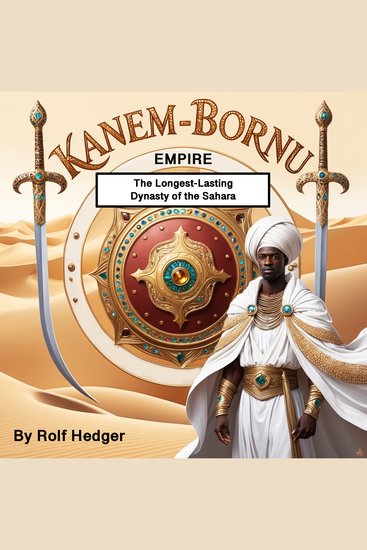
  • Kanem-Bornu - The Longest-Lasting Dynasty of the Sahara - cover

    Kanem-Bornu - The...

    Rolf Hedger

    • 0
    • 0
    • 0
    Before the rise of the mighty Kanem-Bornu dynasty, the vast expanse of the Sahel was home to diverse tribes and scattered settlements that laid the groundwork for what would become one of the Sahara’s longest-lasting empires. In this early era, communities thrived in a challenging environment where survival hinged on adaptability and a profound connection with the land. The region, bridging the fertile savannahs and the arid expanse of the desert, nurtured a mosaic of cultures that developed sophisticated social structures long before centralized power emerged. 
    The early inhabitants relied on oral traditions to pass down stories of heroic ancestors, migrations, and the intimate bond they shared with nature. These narratives, rich in symbolism and local lore, served as the cultural bedrock for later generations. They recounted times of plentiful harvests and the strategic use of scarce water resources, highlighting the ingenuity and resilience of communities that innovated in agriculture and irrigation. Such stories not only preserved the memory of a once-abundant land but also inspired the collaborative spirit that would be essential for forming larger political entities.  
    Over time, as environmental challenges and the need for security intensified, these small communities began to coalesce into broader tribal alliances. The bonds formed through intermarriage, trade, and mutual defense gradually paved the way for the emergence of rudimentary governance structures. Early leaders, often revered for their wisdom and ability to resolve conflicts, began to assert influence over wider territories, laying the foundational framework for centralized authority. These leaders capitalized on the established trade networks that crisscrossed the region, facilitating the exchange of goods, ideas, and technologies that further solidified communal bonds.
    Ver libro