¡Acompáñanos a viajar por el mundo de los libros!
Añadir este libro a la estantería
Grey
Escribe un nuevo comentario Default profile 50px
Grey
Suscríbete para leer el libro completo o lee las primeras páginas gratis.
All characters reduced
#DarkAcademia Classics Collection - Rosa Alchemica This Side of Paradise Streets of Night Stover at Yale The Longest Journey A Portrait of the Artist as a Young Man Zuleika Dobson - cover

#DarkAcademia Classics Collection - Rosa Alchemica This Side of Paradise Streets of Night Stover at Yale The Longest Journey A Portrait of the Artist as a Young Man Zuleika Dobson

George Gissing, Henry Blake Fuller, F. Scott Fitzgerald, J. M. Barrie, W. B. Yeats, E. M. Forster, R. M. Ballantyne, Max Beerbohm, James Joyce, John Dos Passos, Owen Johnson, Mrs. E. D. E. N. Southworth

Editorial: e-artnow

  • 0
  • 0
  • 0

Sinopsis

Discover the timeless literary classics that helped create and define this beloved genre. In the #DarkAcademia Classics Collection, academic settings and intellectual pursuits blend with undercurrents of mystery and existential longing, weaving stories that captivate readers with their meditations on youth, identity, and the complex allure of forbidden knowledge. This genre thrives on gothic undertones, introspection, and the bittersweet tension between ambition and moral consequence—a potent mix that beckons us into hallways of libraries and classrooms, where shadows of secrets and passions abound.
F. Scott Fitzgerald's This Side of Paradise delves into the restless mind of Amory Blaine, whose experiences at Princeton reveal the excitement and heartbreak of forging an identity within elite academic circles. John Dos Passos's Streets of Night confronts youthful disillusionment in an urban university setting, exposing the clash between idealism and societal constraints. Philosopher Jack by R. M. Ballantyne takes a more adventurous approach to scholarly pursuits, following its titular character as he grapples with moral questions in exotic locales.
In Owen Johnson's Stover at Yale, we watch an impetuous student navigate the politics of a prestigious institution, torn between tradition and personal independence. Ishmael by Mrs. E.D.E.N. Southworth centers on a determined protagonist who fights against societal norms and overcomes adversity to obtain an education, demonstrating how self-discovery can be as stirring as any gothic drama. Max Beerbohm's Zuleika Dobson injects dark humor and spectacle into academia, as the enchanting Zuleika's arrival at Oxford triggers a cascade of absurd yet riveting events.
Born in Exile by George Gissing explores the anguish of class struggle and intellectual pride, revealing the darker side of ambition amid scholarly debates. E. M. Forster's The Longest Journey offers an introspective trek through academia's ideals and the yearning for authentic human connection. W. B. Yeats's Rosa Alchemica ventures into mysticism, weaving arcane lore and metaphysical intrigue into its examination of artistic and spiritual devotion.
Better Dead by J. M. Barrie is a sardonic portrayal of morality and mischief in academic circles, while Henry Blake Fuller's Bertram Cope's Year traces the entangled relationships and private dilemmas of a young literature instructor searching for acceptance and belonging. Finally, James Joyce's A Portrait of the Artist as a Young Man stands as a cornerstone of modernist thought, illuminating the complexities of faith, desire, and intellectual awakening.
Each novel in this collection invites you to peer behind the polished veneer of scholarly life, discovering personal entanglements, hidden truths, and revelations lurking in midnight libraries or shadowed lecture halls. The allure of Dark Academia lies in this fusion of knowledge and danger, reminding us that intellect can be both illuminating and perilous when pursued with unbridled passion.
Disponible desde: 10/11/2024.
Longitud de impresión: 2506 páginas.
Otros libros que te pueden interesar

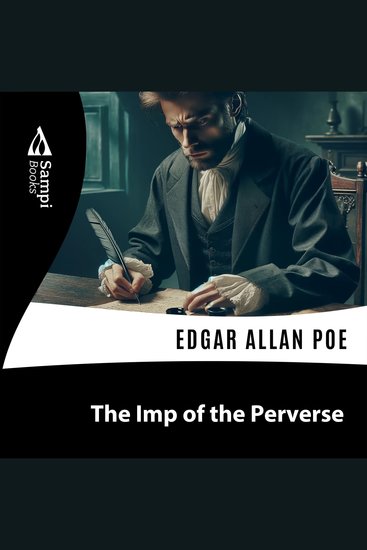
  • The Imp of the Perverse - cover

    The Imp of the Perverse

    Sampi Books, Edgar Allan Poe

    • 0
    • 0
    • 0
    In the short story "The Imp of the Perverse", Edgar Allan Poe deals with the psychology of guilt and self-destruction. A man, after committing a murder in order to inherit a fortune, is tormented by the need to confess his crime, driven by an irresistible impulse, the "demon of perversity", which leads him to his own ruin.
    Ver libro
  • At Christmas Time - From their pens to your ears genius in every story - cover

    At Christmas Time - From their...

    Anton Chekhov

    • 0
    • 0
    • 0
    Anton Pavlovich Chekhov was born on 29th January 1860 in Taganrog, on the south coast of Russia.  
    His family life was difficult; his father was strict and over-bearing but his mother was a passionate story-teller, a subject Chekhov warmed to. As he later said; ‘our talents we got from our father, but our soul from our mother’.  
    At school Chekhov was distinctly average. At 16 his father mis-managed his finances and was declared bankrupt. His family fled to Moscow. Chekhov remained and eked out a living by various means, including writing and selling short sketches to newspapers, to finish his schooling. That completed and with a scholarship to Moscow University obtained he rejoined his family. 
    He was able to help support them by selling satirical sketches and vignettes of Russian lifestyles and gradually obtained further commissions. In 1884, he qualified as a physician and, although it earned him little, he often treated the poor for free, he was fond of saying ‘Medicine is my lawful wife, and literature is my mistress.’ 
    His own health was now an issue as he began to cough up blood, a symptom of tuberculosis.  Despite this his writing success enabled him to move the family into more comfortable accommodation.  
    Chekhov wrote over 500 short stories which included many, many classics including ‘The Kiss’ and ‘The Lady with a Dog’.  His collection ‘At Dusk’ won him the coveted Pushkin Prize when was only 26.  
    He was also a major playwright beginning with the huge success of ‘Ivanov’ in 1887.   
    In 1892 Chekhov bought a country estate north of Moscow. Here his medical skills and money helped the peasants tackle outbreaks of cholera and bouts of famine. He also built three schools, a fire station and a clinic.  It left him with less time for writing but the interactions with real people gained him detailed knowledge about the peasantry and their living conditions for his stories.  
    His most famous work, ‘The Seagull’ was received disastrously at its premiere in St Petersburg. It was later restaged in Moscow to highlight its psychological aspects and was a huge success. It led to ‘Uncle Vanya’, ‘The Three Sisters’ and ‘The Cherry Orchard’.  
    Chekhov suffered a major lung hemorrhage in 1897 while visiting Moscow. A formal diagnosis confirmed tuberculosis and the doctors ordered changes to his lifestyle.  
    Despite a dread of weddings the elusive literary bachelor quietly married the actress Olga Knipper, whom he had met at rehearsals for ‘The Seagull’, on 25th May 1901. 
    By May 1904 with his tuberculosis worsening and death imminent he set off for the German town of Badenweiler writing cheerful, witty letters to his family and assuring them his health was improving.  
    On 15th July 1904 Anton Chekhov died at Badenweiler.  He was 44.
    Ver libro
  • Masterpieces of Tragedies and Comedies - Medea by Euripides; Antigone by Sophocles; The Oresteia by Aeschylus; Othello Hamlet Macbeth by Shakespeare; A Doll's House by Ibsen; Uncle Vanya by Chekhov; Pygmalion by Shaw and others - cover

    Masterpieces of Tragedies and...

    Euripides, Sophocles, ...

    • 0
    • 0
    • 0
    This collection contains the following works:
    Euripides: Medea
    Sophocles: Antigone
    Aeschylus: Agamemnon
    Aeschylus: Eumenides
    Aeschylus: The Choephori
    William Shakespeare: The Tragedy of Othello, the Moor of Venice
    William Shakespeare: The Tragedy of Romeo And Juliet
    William Shakespeare: The Tragedy of Hamlet, Prince of Denmark
    William Shakespeare: The Tragedy of Macbeth
    William Shakespeare: A Midsummer Night's Dream
    William Shakespeare: The Tragedy of King Lear
    William Shakespeare: Antony and Cleopatra
    William Shakespeare: The Tragedy of Coriolanus
    William Shakespeare: The Tragedie of Julius Caesar
    William Shakespeare: Cymbeline, King of Britain
    William Shakespeare.: The Life of Tymon of Athens
    William Shakespeare: Titus Andronicus
    William Shakespeare: Troilus and Cressida
    Henrik Ibsen: A Doll's House
    Anton Chekhov: Uncle Vanya
    Bernard Shaw: Pygmalion
    Ver libro
  • Dead The (Unabridged) - cover

    Dead The (Unabridged)

    James Joyce

    • 0
    • 0
    • 0
    James Augustine Aloysius Joyce (2 February 1882 - 13 January 1941) was an Irish novelist, short story writer, poet and literary critic. He contributed to the modernist avant-garde movement and is regarded as one of the most influential and important writers of the 20th century.
    THE DEAD: Lily, the caretaker's daughter, was literally run off her feet. Hardly had she brought one gentleman into the little pantry behind the office on the ground floor and helped him off with his overcoat than the wheezy hall-door bell clanged again and she had to scamper along the bare hallway to let in another guest.
    Ver libro
  • A Fight with a Cannon - From their pens to your ears genius in every story - cover

    A Fight with a Cannon - From...

    Victor Hugo

    • 0
    • 0
    • 0
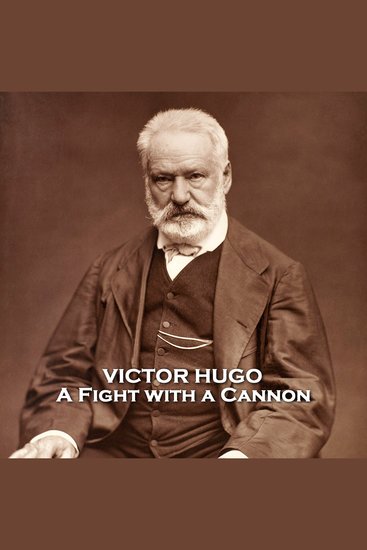
    Victor Marie Hugo was born on 26th February 1802 in Besançon, France.   
    There can be no doubt that Hugo is ranked as the greatest of French authors and poets. In addition to this he fought against social injustice throughout his life and from his frequent elections to the French Assembly. 
    Hugo published his first novel, Han d’Islande (1823), the year after his marriage and so began an immense canon of fiction and poetry not only for France but to World literature.  
    He was elected to the Académie Française in 1841 and the same year came a peerage and entrance to the Higher Chamber as a pair de France, where he spoke against the death penalty, social injustice and in favour of press freedom.  
    In the years leading up to the Revolution of 1848 Hugo began to lean towards Republicanism and greater freedoms.  With the formation of the Second Republic, he was again elected to the Assembly. 
    When Napoleon III seized power in 1851, and established an anti-parliamentary constitution, Hugo openly declared him a traitor to France. This, of course, meant exile where he remained until 1870.  In exile he published his greatest work ‘Les Misérables’, and further widely honoured collections of poetry. 
    Returning home he was again elected to the National Assembly and the Senate.  It was the time of the Franco-Prussian war and with Paris under siege and food ever more scarce, he wrote in his diary that he was now "eating the unknown". 
    Later he was instrumental in strengthening the rights of artists and copyright, steps which led to the international protections of the Berne Convention.  
    Victor Hugo died on 22nd May 1885, aged 83.
    Ver libro
  • Murat - cover

    Murat

    Alexandre Dumas

    • 0
    • 0
    • 0
    "Murat" by Alexandre Dumas is a vivid historical drama chronicling the life of Joachim Murat, the dashing cavalry officer who became King of Naples. A loyal ally of Napoleon Bonaparte, Murat’s ambition and charisma propel him to power, but his loyalty is tested as political tides shift. Dumas explores Murat’s rise and fall, capturing his battlefield heroics, flamboyant personality, and ultimate betrayal. Set against the tumultuous backdrop of the Napoleonic Wars, the novel delves into themes of loyalty, ambition, and the fragility of power. A blend of adventure and tragedy, it portrays Murat’s relentless drive for glory and the personal cost of his ambitions, offering a poignant reflection on leadership and legacy in times of upheaval.
    Ver libro