¡Acompáñanos a viajar por el mundo de los libros!
Añadir este libro a la estantería
Grey
Escribe un nuevo comentario Default profile 50px
Grey
Suscríbete para leer el libro completo o lee las primeras páginas gratis.
All characters reduced
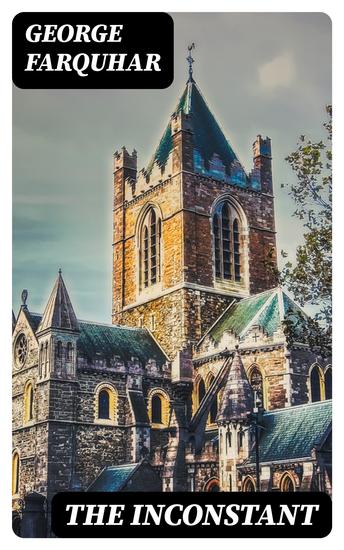
The Inconstant - cover

The Inconstant

George Farquhar

Editorial: DigiCat

  • 0
  • 0
  • 0

Sinopsis

George Farquhar's "The Inconstant" is a vibrant example of early 18th-century comedy that intricately explores themes of love, fidelity, and deception within the context of Restoration theatrical conventions. The play showcases Farquhar's characteristic wit and keen observations of social mores, employing a lively blend of humor and pathos. Through clever dialogue and engaging character dynamics, the narrative traverses the complexities of romantic entanglements, exposing the fragility of human affections in a world rife with duplicity and charm. Farquhar, born in 1678 in Derry, Ireland, emerged as a prominent dramatist during a transformative period in English theatre. His personal experiences in love and society, coupled with his innate talent for storytelling, influenced his approach to characterization and plot development. Farquhar's works often reflect his understanding of the human condition and the social stratifications of his time, particularly in their exploration of both aristocratic and bourgeois interactions. For scholars and enthusiasts of early modern theatre, "The Inconstant" is a compelling examination of the subtleties of human relationships and societal expectations. Farquhar's sharp humor and poignant insights make this play an enduring piece of literature that invites readers to reflect on their own notions of love and loyalty.
Disponible desde: 16/09/2022.
Longitud de impresión: 46 páginas.
Otros libros que te pueden interesar

  • The Complete Tales and Poems of Edgar Allan Poe - cover

    The Complete Tales and Poems of...

    Edgar Allan Poe

    • 0
    • 0
    • 0
    What if fear, beauty, and madness shared the same voice?
    
    The Complete Tales and Poems of Edgar Allan Poe gathers the full imaginative legacy of one of literature's most influential and haunting minds. A master of psychological horror and lyrical poetry, Poe explored obsession, grief, guilt, love, and the fragile boundaries of reason.
    
    This definitive collection includes Poe's celebrated short stories and poems—works that shaped modern horror, detective fiction, and symbolist poetry. From chilling tales of terror to musical verses of sorrow and longing, Poe's writing reveals the darkness within the human soul with unmatched intensity and precision.
    
    Elegant, unsettling, and endlessly memorable, Poe's works continue to captivate readers across generations.
    
    Inside this eBook, you'll explore:
    
    All short stories and poems by Edgar Allan Poe in one collection
    
    Iconic works such as The Tell-Tale Heart, The Raven, and The Fall of the House of Usher
    
    Foundational texts of horror, mystery, and detective fiction
    
    A cornerstone of American and world literature
    
    Studied worldwide and adapted across art, film, and popular culture, Edgar Allan Poe's work remains as powerful and unsettling today as ever.
    
    Enter the shadows of genius. Buy now and experience the complete tales and poems of Edgar Allan Poe.
    Ver libro
  • 'Look Back to Look Forward' - Frank O'Connor's Complete Translations from the Irish - cover

    'Look Back to Look Forward' -...

    Frank O'Connor

    • 0
    • 0
    • 0
    While Frank O'Connor was known primarily as one of Ireland's finest short-story writers, he was also an accomplished translator. In the long line of Irish writers given to translating poems in Irish into poems written in English – a tradition stretching back at least as far as Jonathan Swift – he stands out above all the rest.
    Between the mid-1920s and the mid-1960s, O'Connor published 121 translations that give voice to the full range of this centuries-old tradition. Collected here in full for the first time, O'Connor's work shows an uncanny aptitude for carrying over into English verse many of the riches to be found in the originals – the ancient voice of the Hag of Beare lamenting her decline into old age; the voices of the early monks describing the Irish landscape, Irish weather, their religious faith, and, in at least one instance, their cat; the voice of Hugh O'Rourke's wife torn between loyalty to her husband and a rising desire for her seducer. All these voices haunted O'Connor throughout his career, whatever else he was doing. The collection includes the Irish-language sources for all 121 translations along with literal translations, enabling the reader to see what O'Connor started from.
    O'Connor's translations sprang from a compulsive desire to breathe life into Ireland's past, to 'look back to look forward,' as he once put it; for him the Irish-language tradition was not for scholars and archives alone, but formed a living body of work vitally relevant to an Ireland that seemed puzzlingly indifferent to it.
    Thanks to O'Connor's profound love of his country's language and its rich, literary subsoil – 'a literature of which no Irishman need feel ashamed', he once said – these voices from Ireland's past can still be heard. Strikingly modern in tone, they conjoin flesh and spirit, the sacred and the secular, in a way that speaks to humankind.
    Ver libro
  • The Carrying - Poems - cover

    The Carrying - Poems

    Ada Limón

    • 1
    • 1
    • 0
    NBCC Award Winner: “The narrative lyrics in this remarkable collection . . . could stand as compressed stories about anxiety and the body.” —The New York Times Vulnerable, tender, acute, these are serious poems, brave poems, exploring with honesty the ambiguous moment between the rapture of youth and the grace of acceptance. A daughter tends to aging parents. A woman struggles with infertility—“What if, instead of carrying / a child, I am supposed to carry grief?”—and a body seized by pain and vertigo as well as ecstasy. A nation convulses: “Every song of this country / has an unsung third stanza, something brutal.” And still National Book Award finalist Ada Limón shows us, as ever, the persistence of hunger, love, and joy, the dizzying fullness of our too-short lives. “Fine then, / I’ll take it,” she writes. “I’ll take it all.” “Gorgeous, thought-provoking . . . simple, striking images.” —Publishers Weekly (starred review) “Exquisite.” —The Washington Post “Pitch-perfect . . . full of poems to savor and share . . . She writes with remarkable directness about painful experiences normally packaged in euphemism and, in doing so, invites the readers to enter a world where abundant joy exists alongside and simultaneous to loss.” —Minneapolis Star-TribuneWinner of the National Book Critics Circle Award for Poetry
    Ver libro
  • Duino Elegies - cover

    Duino Elegies

    Rainer Maria Rilke

    • 0
    • 0
    • 0
    We have a marvelous, almost legendary image of the circumstances in which the composition of this great poem began. Rainer Maria Rilke was staying at Duino Castle, on a rocky headland of the Adriatic Sea near Trieste. 
    One morning, he walked out onto the battlements and climbed down to where the cliffs dropped sharply to the sea. From out of the fierce wind, Rilke seemed to hear a voice: Wer, wenn ich schriee, horte mich denn aus der Engel Ordnungen? (If I cried out, who would hear me up there, among the angelic orders?). 
    He wrote these words, the opening of the first Duino Elegy, in his notebook, then went inside to continue what was to be his major opus—completely only after another ten, tormented years of effort—and one of the literary masterpieces of the century.  
    Duino Elegies speaks in a voice that is both intimate and majestic on the mysteries of human life and our attempt, in the words of the translator David Young, “to use our self-consciousness to some advantage: to transcend, through art and the imagination, our self-deception and our fear.”
    Ver libro
  • Songbook - cover

    Songbook

    Joshua Idehen

    • 0
    • 0
    • 0
    "We know where we came from. We came on boats, onplanes, with passports and on the back of trucks. Weworked three jobs and sent the money back home. Webrought our motherland to life in our kitchens, ourbedrooms, our churches, our songs, our dance, our sex,our pidgin, our patois…"
    Joshua Idehen's collected works has been a long time coming. Songbook comprises verses from Mercury-nominated and MOBO-winning albums by Sons of Kemet and The Comet Is Coming, alongside watershed poems of spoken word legend, newly captured in book form. From Poejazzi and Benin City to a string of supreme collaborations, Idehen's impact resonates far and wide across the landscapes of poetry and jazz/electronica. Cross-examining colonialism, masculinity, mental health and ways of healing, his writing is an essential provocation, a diasporic dance, a comedy roast, an intervention, a cannonball from which no one is safe, least of all himself.
    "The poet laureate of UK jazz" Kate Hutchinson, The Guardian
    "Idehen's words are always worth leaning in for." Q Magazine
    Ver libro
  • Poets & Their Trades - Journalists - Poems from writers who were also members of the clergy - cover

    Poets & Their Trades -...

    Walt Whitman, Rudyard Kipling,...

    • 0
    • 0
    • 0
    The life and career of a Poet is often thought of as musing at a desk, or lying in a meadow, or on long journeys to find inspiration for their next masterwork.  But more often than not a poet was a part-time profession in subservient submission to their a
    Ver libro