¡Acompáñanos a viajar por el mundo de los libros!
Añadir este libro a la estantería
Grey
Escribe un nuevo comentario Default profile 50px
Grey
Suscríbete para leer el libro completo o lee las primeras páginas gratis.
All characters reduced
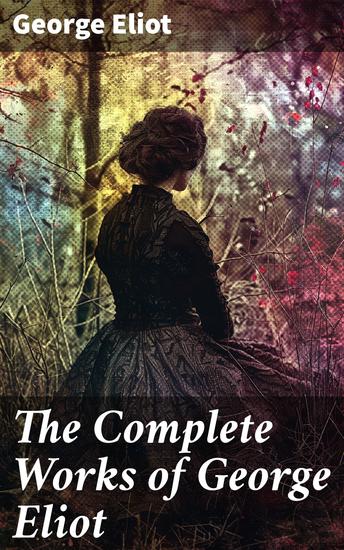
The Complete Works of George Eliot - Exploring Societal Norms and Moral Dilemmas through a Literary Lens - cover

The Complete Works of George Eliot - Exploring Societal Norms and Moral Dilemmas through a Literary Lens

George Eliot

Editorial: Good Press

  • 0
  • 0
  • 0

Sinopsis

The Complete Works of George Eliot is an expansive compilation that showcases the profound depth of her narrative artistry and philosophical insight. Eliot, a pioneer of psychological realism, weaves intricate character studies and moral dilemmas within her richly textured narratives. Notably, her exploration of social identity, gender roles, and the human condition resonates with the Victorian era while also challenging prevailing norms. This collection highlights seminal works such as 'Middlemarch' and 'Silas Marner', revealing her keen observation of societal intricacies and intimate human relationships through eloquent prose and a deep sensitivity to her characters'Äô inner lives. George Eliot, the pen name of Mary Ann Evans, was a trailblazer for women in literature, determined to explore themes often overshadowed by her male contemporaries. Raised in rural England and well-educated, she imbibed diverse philosophical and religious ideas, which would later permeate her writings. Her unique blend of personal experience and intellectual rigor reflects in her narratives, making her a formidable voice in Victorian literature and a precursor to modern psychological fiction. I highly recommend The Complete Works of George Eliot to readers seeking a profound engagement with the human spirit and the societal constructs that shape it. Eliot'Äôs works invite introspection and critical thought, ensuring her legacy remains pivotal for literature enthusiasts and scholars alike.
Disponible desde: 14/12/2023.
Longitud de impresión: 820 páginas.
Otros libros que te pueden interesar

  • That's not how I remember it - glimpses of the Packington Estate from those who were there - cover

    That's not how I remember it -...

    Pack*Art Panel (eds)

    • 0
    • 0
    • 0
    Interwoven memories of wallpaper, sugar sandwiches, violence and unwritten rules of community offer an insider history of the Pack, a now demolished London council estate.
    Ver libro
  • Built For Stealth - Key Principles for Building a Great Life - cover

    Built For Stealth - Key...

    Scott Allan

    • 0
    • 0
    • 0
    In Built for Stealth, Scott Allan provides battle-tested action plans that generate tangible results through taking consistent massive action. Built for Stealth is a compilation of the best frameworks created to help epic performers—just like you—push past difficult boundaries and break self-imposed limitations. 
    In this training, you learn to create opportunity instead of waiting for it to happen. You build the path that you want to take instead of treading on the path already taken. You learn from failure instead of avoiding hard things. You get to decide who you want to be, instead of someone else deciding who you should be. 
    In Built for Stealth, you will discover:6 proven steps to break your bad habits7 battle-tested methods for retraining your brainThe 11 definitive traits implemented by world-class epic performers5 simple steps to leverage fear and become an unstoppable badassThe 7-step framework for creating continuous change7 ways to master repetitive failure and build resilience 
    Optimize your life, develop into the person you are meant to be, and pivot towards mastery. Now you have the best tools and tactics to stop holding yourself back and do whatever it takes to reach your dreams and achieve your goals.
    Ver libro
  • Peter Tchaikovsky: A short biography - 5 Minutes: Short on time - long on info! - cover

    Peter Tchaikovsky: A short...

    5 Minutes, 5 Minute Biographies,...

    • 0
    • 0
    • 0
    Peter Tchaikovsky, Russian composer and tragic figure: Life and work in a short biography! Everything you need to know, brief and concise. Infotainment, education and entertainment at its best!
    Ver libro
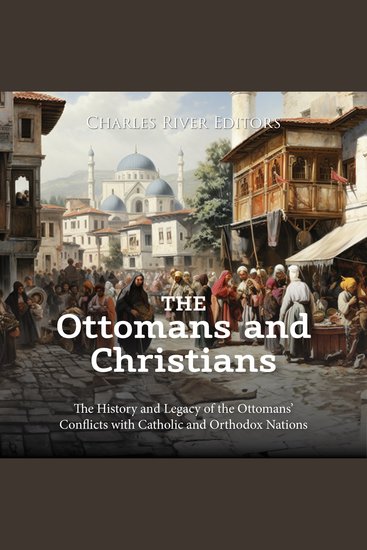
  • Ottomans and Christians The: The History and Legacy of the Ottomans’ Conflicts with Catholic and Orthodox Nations - cover

    Ottomans and Christians The: The...

    Editors Charles River

    • 0
    • 0
    • 0
    In terms of geopolitics, perhaps the most seminal event of the Middle Ages was the successful Ottoman siege of Constantinople in 1453. The city had been an imperial capital as far back as the 4th century, when Constantine the Great shifted the power center of the Roman Empire there, effectively establishing two almost equally powerful halves of antiquity’s greatest empire. Constantinople would continue to serve as the capital of the Byzantine Empire even after the Western half of the Roman Empire collapsed in the late 5th century. Naturally, the Ottoman Empire would also use Constantinople as the capital of its empire after their conquest effectively ended the Byzantine Empire, and thanks to its strategic location, it has been a trading center for years and remains one today under the Turkish name of Istanbul.  
    	The end of the Byzantine Empire had a profound effect not only on the Middle East but Europe as well. Constantinople had played a crucial part in the Crusades, and the fall of the Byzantines meant that the Ottomans now shared a border with Europe. In the wake of taking Constantinople, the Ottoman Empire would spend the next few centuries expanding its size, power, and influence, bumping up against Eastern Europe and becoming one of the world’s most important geopolitical players. It was a rise that would not truly start to wane until the 19th century. Naturally, the Islamic empire was viewed as a threat by the predominantly Christian continent to their west, and it took little time for different European nations to start clashing with the powerful Turks. In fact, the Ottomans would clash with Russians, Austrians, Venetians, Polish, and more before collapsing as a result of World War I, when they were part of the Central Powers. 
    Ver libro
  • Who Pays for Diversity? - Why Programs Fail at Racial Equity and What to Do about It - cover

    Who Pays for Diversity? - Why...

    Oneya Fennell Okuwobi

    • 0
    • 0
    • 0
    How diversity initiatives harm employees of color by turning them into workplace commodities. 
      
    Diversity programs are under attack. Should those interested in racial justice fight to keep them, or might there be another way forward? Who Pays for Diversity? reveals the costs that employees of color pay under current programs by having their racial identities commodified to benefit white people and institutions. Oneya Fennell Okuwobi proposes fresh and thoughtful ways to reorient these initiatives, move beyond tokenism, and authentically center marginalized employees. 
      
    Drawing on accounts of employees from across the workplace spectrum, from corporations to churches to universities, Who Pays for Diversity? details how the optics of diversity programs undermine employees' competence while diminishing their well-being and workplace productivity. Okuwobi argues that diversity programs have been a costly detour on the path to racial justice, and getting back on track requires solutions that provide equity, dignity, and agency to all employees, instead of defending the status quo.  
      
    "Oneya Fennell Okuwobi brilliantly uncovers the hidden costs of diversity initiatives, challenging the superficiality of such programs and the burdens they place on people of color within so-called 'diverse' environments with a powerful, evidence-backed critique. This book is an essential read for anyone committed to creating genuine racial equity in workplaces and institutions."—Mary Murphy, Herman B. Wells Endowed Professor, Indiana University
    Ver libro
  • The Fraternity of the Rose Cross - cover

    The Fraternity of the Rose Cross

    Manly Palmer Hall

    • 0
    • 0
    • 0
    Who were the Rosicrucians? Were they an organization of profound thinkers rebelling against the inquisitional religious and philosophical limitations of their time or were they isolated transcendentalists united only by the similarity of their viewpoints and deductions? Where was the "House of the Holy Spirit, " in which, according to their manifestoes, they met once a year to plan the future activities of their Order? Who was the mysterious person referred to as "Our Illustrious Father and Brother C.R.C."? Did those three letters actually stand for the words "Christian Rosie Cross"? Was Christian Rosencreutz, the supposed author of the Chymical Nuptials, the same person who with three others founded "The Society of the Rose Cross"? 
    What relationship existed between Rosicrucianism and mediæval Freemasonry? Why were the destinies of these two organizations so closely interwoven? Is the "Brotherhood of the Rose Cross" the much-sought-after link connecting the Freemasonry of the Middle Ages with the symbolism and mysticism of antiquity, and are its secrets being perpetuated by modern Masonry? Did the original Rosicrucian Order disintegrate in the latter part of the eighteenth century, or does the Society still exist as an organization, maintaining the same secrecy for which it was originally famous? What was the true purpose for which the "Brotherhood of the Rose Cross" was formed? Were the Rosicrucians a religious and philosophic brotherhood, as they claimed to be, or were their avowed tenets a blind to conceal the true object of the Fraternity, which possibly was the political control of Europe? These are some of the problems involved in the study of Rosicrucianism.
    Ver libro