¡Acompáñanos a viajar por el mundo de los libros!
Añadir este libro a la estantería
Grey
Escribe un nuevo comentario Default profile 50px
Grey
Suscríbete para leer el libro completo o lee las primeras páginas gratis.
All characters reduced
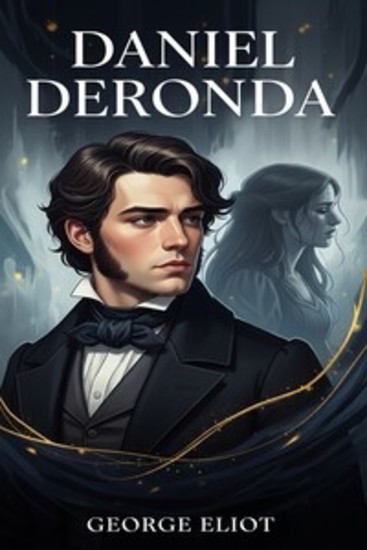
Daniel Deronda - cover

Daniel Deronda

George Eliot

Editorial: Bu Classics Books

  • 0
  • 0
  • 0

Sinopsis

A young man uncertain of his origins and a spirited woman trapped in an oppressive marriage find their paths crossing in a search for meaning. This profound novel delves into the complexities of Jewish identity and personal destiny, offering a rich, panoramic view of Victorian society's spiritual void.
Disponible desde: 05/03/2026.
Longitud de impresión: 1237 páginas.

Otros libros que te pueden interesar

  • HG Wells Collection - The Pearl of Love - cover

    HG Wells Collection - The Pearl...

    H. G. Wells

    • 0
    • 0
    • 0
    Step into the Enchanting Worlds of HG Wells' Short Stories! 
     
    Immerse yourself in the genius of HG Wells with our digital audiobook collection, showcasing his captivating short stories: "The Loyalty of Esau Common," "My First Aeroplane," "Little Mother up the Morderberg," and "The Pearl of Love." 
     
    "The Loyalty of Esau Common": Delve into the intricate world of human relationships, as Esau Common navigates loyalty, betrayal, and the complexities of the heart. This story will leave you questioning the depths of trust. 
     
    "My First Aeroplane": Join Wells on a journey through time as he recounts the exhilaration and awe of witnessing the birth of aviation. Experience the thrill of human achievement and technological progress through his vivid storytelling. 
     
    "Little Mother up the Morderberg": Explore the mysteries of a quaint village perched on the edge of a cliff. Wells weaves a tale of eerie folklore, secrets, and the inexplicable in a setting that will send shivers down your spine. 
     
    "The Pearl of Love": Witness the transformative power of love as Wells takes you on a sentimental journey filled with poignant moments and tender emotions. This story is a testament to the enduring strength of the human heart.
    Ver libro
  • Aloysha the Pot - From their pens to your ears genius in every story - cover

    Aloysha the Pot - From their...

    Leo Tolstoy

    • 0
    • 0
    • 0
    Leo Tolstoy was born in 1828 in the Russian province of Tula to a wealthy noble family. As a child, he had private tutors but he showed little interest in any formal education. When he went to the University of Kazan in 1843 to study oriental languages and law, he left without completing his courses.  Life now was relaxed and idle but with some writing also taking place.  Gambling debts forced an abrupt change of path and he joined the army to fight in the Crimean War.  He was commended for his bravery and promoted but was appalled at the brutality and loss of life.  He recorded these and other earlier experiences in his diaries which formed the basis of several of his works. 
    In 1852 ‘Childhood’ was published to immediate success and was followed by ‘Boyhood’ and ‘Youth’. 
    His experience in the army and the horrors he witnessed resulted in ‘The Cossacks’ in 1862 and the trilogy ‘Sevastopol Tales’. After the war he travelled around Europe, visiting London and Paris and meeting such luminaries as Victor Hugo and Charles Darwin.  
    It was now that Tolstoy began his masterpiece, ‘War and Peace’. Published in 1869 it was an epic work that changed literature. He quickly followed this with ‘Anna Karenina’.  
    These successes made Tolstoy rich and helped him accomplish many of his dreams but also brought problems as he grappled with his faith and the lot of the oppressed poor. These revolutionary views became so popular that the authorities now kept him under surveillance.  
    He led a life of asceticism and vegetarianism and put his socialist ideals into practice by establishing numerous schools for the poor and food programmes. He also believed in giving away his wealth, which caused much discord with his wife.  
    His writing continued to bring forth classics such as ‘The Death of Ivan Ilyich’ and many brilliant and incisive short stories such as ‘How Much Land Does A Man Need’.  
    In 1901 Tolstoy was excommunicated from the Church and controversially deselected for the Nobel Prize for Literature. 
    Whilst undertaking a pilgrimage by train in October 1910 with his daughter Aleksandra he caught pneumonia in the nearby town of Astapovo.  Leo Tolstoy died on November 9th, 1910, he was 82.
    Ver libro
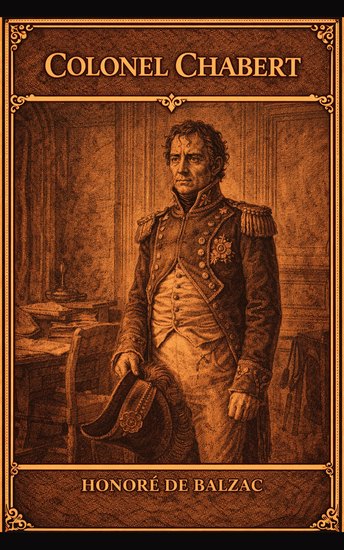
  • Colonel Chabert - cover

    Colonel Chabert

    Honoré de Balzac

    • 0
    • 0
    • 0
    Colonel Chabert is a haunting and masterfully crafted novella by Honoré de Balzac that explores identity, betrayal, justice, and the crushing indifference of society. Set in post-Napoleonic France and part of Balzac's monumental series La Comédie Humaine, this gripping tale examines what happens when a man declared dead returns to reclaim his name, his honor, and his life — only to discover that the world has moved on without him.
    
    Colonel Hyacinthe Chabert, a heroic cavalry officer under Napoleon, was presumed killed during the Battle of Eylau. Left for dead beneath a pile of corpses, he miraculously survives, only to endure years of hardship, wandering, and suffering. When he finally makes his way back to Paris, he finds that his identity has been erased. His wife has remarried, his estate has been claimed, and the legal system recognizes him as nothing more than a ghost.
    
    Reduced to poverty and dismissed as an impostor, Chabert seeks the help of a young lawyer, Derville, in an attempt to restore his legal status and recover what was once his. Through courtroom negotiations, tense confrontations, and deeply emotional exchanges, Balzac unfolds a powerful drama of justice and moral compromise. The colonel's wife, now elevated in society through her new marriage, refuses to relinquish the wealth and status she has gained, setting the stage for a tragic conflict between love, greed, and survival.
    
    Balzac's narrative offers a penetrating critique of a society driven by ambition, social advancement, and self-interest. The novel exposes the rigid bureaucracy of the legal system and the moral decay beneath the glittering surface of Parisian high society. Colonel Chabert's struggle becomes more than a personal quest — it becomes a symbol of the forgotten heroes of a fallen empire and the casualties of political change.
    
    At its heart, Colonel Chabert is a deeply human story. Chabert is portrayed not merely as a wronged man, but as a figure of dignity and tragic nobility. His unwavering sense of honor contrasts sharply with the cold calculations of those around him. As he confronts the painful reality that time and society have erased him, readers are drawn into a poignant meditation on identity, loyalty, and the cost of survival in a world governed by power and appearances.
    
    Balzac's prose is precise, realistic, and psychologically rich. With sharp insight and emotional depth, he captures both the external mechanisms of law and the internal turmoil of a man fighting for recognition. The novella remains strikingly relevant, touching on timeless themes of displacement, bureaucratic injustice, and the fragility of personal identity.
    
    Powerful, tragic, and thought-provoking, Colonel Chabert stands as one of Balzac's most compelling shorter works. It is a story of resurrection without redemption, of heroism forgotten, and of a society that rewards cunning over courage. For readers who appreciate classic literature filled with emotional intensity and social commentary, this unforgettable narrative offers both heartbreak and profound reflection.
    Ver libro

  • The Tempest - cover

    The Tempest

    William Shakespeare

    • 0
    • 0
    • 0
    The Tempest is a play by English playwright William Shakespeare, probably written in 1610-1611, and thought to be one of the last plays that Shakespeare wrote alone. After the first scene, which takes place on a ship at sea during a tempest, the rest of the story is set on a remote island, where the sorcerer Prospero, a complex and contradictory character, lives with his daughter Miranda, and his two servants: Caliban, a savage monster figure, and Ariel, an airy spirit. The play contains music and songs that evoke the spirit of enchantment on the island. It explores many themes, including magic, betrayal, revenge, and family. In Act IV, a wedding masque serves as a play-within-a-play, and contributes spectacle, allegory, and elevated language.
    Although The Tempest is listed in the First Folio as the first of Shakespeare's comedies, it deals with both tragic and comic themes, and modern criticism has created a category of romance for this and others of Shakespeare's late plays. The Tempest has been put to varied interpretations, from those that see it as a fable of art and creation, with Prospero representing Shakespeare, and Prospero's renunciation of magic signaling Shakespeare's farewell to the stage, to interpretations that consider it an allegory of Europeans colonizing foreign lands.
    Ver libro
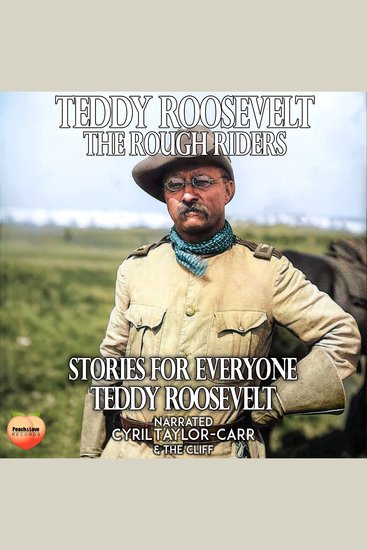
  • Teddy Roosevelt The Rough Riders - Stories For Everyone - cover

    Teddy Roosevelt The Rough Riders...

    Teddy Roosevelt

    • 0
    • 0
    • 0
    The Rough Riders was a nickname given to the 1st United States Volunteer Cavalry, one of three such regiments raised in 1898 for the Spanish–American War and the only one to see combat. The United States Army was small, understaffed, and disorganized in comparison to its status during the American Civil War roughly thirty years prior. Following the sinking of USS Maine, President William McKinley needed to muster a strong ground force swiftly, which he did by calling for 125,000 volunteers to assist in the war. The U.S. had gone to war in opposition to Spanish colonial policies in Cuba, which was then torn by a rebellion.[1] The regiment was also nicknamed "Wood's Weary Walkers" for its first commander, Colonel Leonard Wood. This reflected their dissatisfaction that despite being cavalry, they ended up fighting in Cuba as infantry since their horses were not sent there with them. 
     
    Wood's second in command was former Assistant Secretary of the Navy Theodore Roosevelt, a strong advocate for the Cuban War of Independence. When Wood was promoted to become commander of the 2nd Cavalry Brigade, the regiment became known as "Roosevelt's Rough Riders." That term was borrowed from Buffalo Bill, who called his traveling Western show "Buffalo Bill's Wild West and Congress of Rough Riders of the World." 
     
    The original plan called for the regiment to be composed of frontiersmen from the Indian Territory, the New Mexico Territory, the Arizona Territory, and the Oklahoma Territory. However, after Roosevelt joined the ranks, it attracted an odd mixture of Ivy League athletes, glee club singers, Texas Rangers, and Native Americans. All accepted into the regiment had to be skilled horsemen and eager to see combat. The Rough Riders would receive more publicity than any other Army unit in that war, and they are best remembered for their conduct during the Battle of San Juan Hill.
    Ver libro
  • Wonderful Wizard of Oz The [The Wizard of Oz series #1] - cover

    Wonderful Wizard of Oz The [The...

    L. Frank Baum

    • 0
    • 0
    • 0
    Dorothy and her canine pal Toto live a quiet life on a Kansas farm with Uncle Henry and Aunt Em. But one day, the little girl and her dog find themselves spirited away from the fields of Kansas, to the magical land of Oz! Dorothy and Toto meet many friends on the yellow-brick road to Emerald City, where she hopes to find a way home to Kansas - but when she arrives, the city's mysterious ruler, the Wizard of Oz, is not what she expects!
    Ver libro