Join us on a literary world trip!
Add this book to bookshelf
Grey
Write a new comment Default profile 50px
Grey
Subscribe to read the full book or read the first pages for free!
All characters reduced
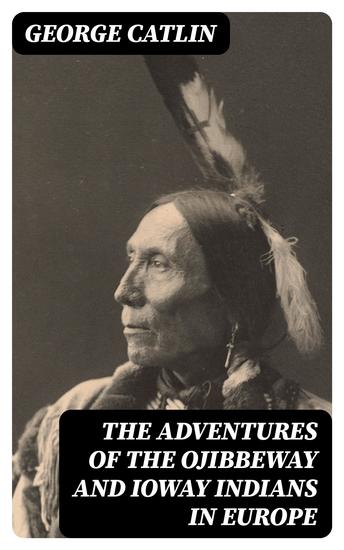
The Adventures of the Ojibbeway and Ioway Indians in Europe - Enriched edition - cover

The Adventures of the Ojibbeway and Ioway Indians in Europe - Enriched edition

George Catlin

Publisher: DigiCat

  • 0
  • 0
  • 0

Summary

In "The Adventures of the Ojibbeway and Ioway Indians in Europe," George Catlin presents an engaging and vivid account of his travels with indigenous tribes in Europe during the 19th century. Through a richly descriptive narrative, combining ethnographic detail with personal reflection, Catlin captures the cultural vibrancy and complexities of the Ojibbeway and Ioway peoples against the backdrop of a rapidly evolving European landscape. His literary style deftly intertwines observation and storytelling, producing a work that is both informative and enchanting, reflecting a growing interest in cultural representation during an era marked by colonial expansion and the romanticization of the 'noble savage.' George Catlin, an American painter, author, and anthropologist, devoted much of his life to documenting Native American cultures at a time when they were facing significant existential threats. His extensive travels across the United States, coupled with his artistic background, provided him with a unique perspective that informed his writing. Catlin aimed to raise awareness of Native American cultures and advocate for their preservation, motivated by a profound respect for their ways of life amid the pressures of assimilation and cultural erasure. This book is highly recommended for readers interested in anthropology, Native American studies, and 19th-century travel literature. Catlin's meticulous documentation not only showcases the richness of indigenous cultures but also serves as a poignant reminder of the fragile and often overlooked human stories behind historical narratives. Engaging and thought-provoking, it is a significant contribution to both literary and cultural history.

In this enriched edition, we have carefully created added value for your reading experience:
- A succinct Introduction situates the work's timeless appeal and themes.
- The Synopsis outlines the central plot, highlighting key developments without spoiling critical twists.
- A detailed Historical Context immerses you in the era's events and influences that shaped the writing.
- A thorough Analysis dissects symbols, motifs, and character arcs to unearth underlying meanings.
- Reflection questions prompt you to engage personally with the work's messages, connecting them to modern life.
- Hand‐picked Memorable Quotes shine a spotlight on moments of literary brilliance.
- Interactive footnotes clarify unusual references, historical allusions, and archaic phrases for an effortless, more informed read.
Available since: 05/17/2022.
Print length: 569 pages.

Other books that might interest you

  • Israel’s Wars: The History and Legacy of the Jewish State’s Most Important Military Conflicts - cover

    Israel’s Wars: The History and...

    Editors Charles River

    • 0
    • 0
    • 0
    On May 14, 1948, the British Mandate officially expired. That same day, the Jewish National Council issued the Declaration of the Establishment of the State of Israel. About 10 minutes later, President Truman officially recognized the State of Israel, and the Soviet Union also quickly recognized Israel. However, the Palestinians and the Arab League did not recognize the new state, and the very next day, armies from Egypt, Syria, Lebanon and Iraq invaded the former British Mandate to squelch Israel, while Saudi Arabia assisted the Arab armies. Jordan would also get involved in the war, fighting the Israelis around Jerusalem. The eventual armistice lines became known as the “Green Line,” and the conflict has continued to involve those lines and the issues that were contested in a war now nearly 70 years old. 
    In early June 1967, the Israelis captured Jordanian intelligence that indicated an invasion was imminent and thus launched preemptive strikes. Over the next six days, the Israelis overwhelmed the Egyptians in the west, destroying thousands of tanks and capturing the Gaza Strip and the entire Sinai Peninsula. At the same time, Israel drove the Jordanians out of Jerusalem and the West Bank, and it captured the Golan Heights from Syria near the border of Lebanon. In the span of a week, Israel had tripled the size of the lands it controlled. Israel had gone from less than 10 miles wide in some spots to over 200 miles wide from the Sinai Peninsula to the West Bank. Israel also unified Jerusalem. 
    On October 6, 1973, Syria and Egypt caught Israel off guard during the Jewish holy holiday of Yom Kippur, surprise attacking the Sinai Peninsula and Golan Heights. The Israelis turned the tide within a week, going on the counteroffensive and winning the war within 3 weeks.
    Show book
  • Narasimha Dev - Lion Of Devotion Protector Of The Devotees - cover

    Narasimha Dev - Lion Of Devotion...

    Sripad Jaganantha Das

    • 0
    • 0
    • 0
    Discover the awe-inspiring tale of Narasimha, the manifest man-lion incarnation of Vishnu, who descends to the earthly realm to restore balance and uphold the eternal Vedic tradition. As a destroyer of evil and a protector of dharma, Narasimha’s story is one of divine intervention, fierce justice, and unwavering devotion. 
    In this powerful narrative, witness the Supreme Lord’s miraculous appearance to save the devoted Prahlada from the tyranny of his demonic father, Hiranyakashipu. Explore the dual nature of Narasimha—His fearsome visage with fiery eyes, sharp teeth, and tumultuous roars strikes terror into the hearts of the wicked, while His tender, lotus-like hands offer shelter and reassurance to His devotees. 
    This audiobook delves into the significance of Narasimha as the ultimate protector, removing obstacles on the spiritual path and safeguarding those who seek refuge in Him. It challenges conventional notions, inviting listeners to expand their understanding of the universe and its myriad possibilities beyond earthly confines. 
    Perfect for those seeking inspiration, spiritual insight, or a deeper connection to the timeless teachings of the Vedic tradition, Narasimha: The Divine Protector is a journey into the heart of faith, courage, and divine grace.
    Show book
  • Moroccan Curiosities - Eid Al-Adha in Souss Massa - cover

    Moroccan Curiosities - Eid...

    Kate El Grini Shilar

    • 0
    • 0
    • 0
    A narrative full of adrenaline rush intertwined with warm Moroccan hospitality. 
    L'Eid, Boujloud, and summer. 
    On how thick a human mask and understanding can be while not only beetles fall victims to the Feast of Sacrifice. 
    An amusingly reflective story about real incidents and humanity amidst intercultural holidays in the 'Land of Liquid Gold.' 
    Moroccan traditions, dialect, cuisine, and products through comparative lenses. 
    Suitable and enriching for all ages. Animal sacrifice discussion could feel too detailed for very young and sensitive listeners. 
    Practical for those considering their first-time-ever stay abroad or intercultural marriage or challenging phobias through exposure. Lovers of peculiarities and anthropology enthusiasts might broaden their collection. 
    To never judge by own background...
    Show book
  • Romaine Wasn't Built in a Day - The Delightful History of Food Language - cover

    Romaine Wasn't Built in a Day -...

    Judith Tschann

    • 0
    • 0
    • 0
    Discover how the food we love shapes the language we use in this sharp, laugh-out-loud story of the etymology of food words. All food has a story, reaching as far back into history as language itself. Throughout time, as languages followed and reflected the tides of civilizations, food language came to represent some of the highs and lows of how humans communicate: from the highbrow "Chateauneuf du Pape," which must be pronounced with a healthy dose of snootiness; to the giggle-inducing yet delicious "nun's farts" of Jamaica (also known as "beignets"); to the fascinating travels of the word "coffee" across centuries and continents, attesting to the undying and unifying allure this drink holds for us. From Spam to amuse-bouches, ciabatta to kombucha, Romaine Wasn’t Built in a Day reveals the delightful history and stories behind the words we use for the foods we love.   In Romaine Wasn’t Built in a Day, linguist Tschann takes us on a journey from the vineyards of Avignon to the shores of Tahiti to the port of Mocha on the Red Sea coast to explore the history of the history of the words we use for the food we eat. Chock full of linguistic did-you-knows and delectable trivia, this is your go-to gift for history buffs, crossword fiends, and Scrabble diehards. This is the surprising and sometimes hilarious history of food, told through the lens of the fascinating evolution of language. All food has a story, reaching as far back into history as language itself. Throughout time, as languages followed and reflected the tides of civilizations, food language came to represent some of the highs and lows of how humans communicate: from the highbrow "Chateauneuf du Pape," which must be pronounced with a healthy dose of snootiness; to the giggle-inducing yet delicious "nun's farts" of Jamaica (also known as "beignets"); to the fascinating travels of the word "coffee" across centuries and continents, attesting to the undying and unifying allure this drink holds for us. From Spam to amuse-bouches, ciabatta to kombucha, Romaine Wasn’t Built in a Day reveals the delightful history and stories behind the words we use for the foods we love.   In Romaine Wasn’t Built in a Day, linguist Tschann takes us on a journey from the vineyards of Avignon to the shores of Tahiti to the port of Mocha on the Red Sea coast to explore the history of the history of the words we use for the food we eat. Chock full of linguistic did-you-knows and delectable trivia, this is your go-to gift for history buffs, crossword fiends, and Scrabble diehards. This is the surprising and sometimes hilarious history of food, told through the lens of the fascinating evolution of language.
    Show book
  • Portugal's Bush War in Mozambique - cover

    Portugal's Bush War in Mozambique

    Al J. Venter

    • 0
    • 0
    • 0
    A new account of how Portugal fought a bush war in Mozambique for over a decade.Portugal fought a bush war in Mozambique — one of the most beautiful countries in the world — for over a decade. The small European nation was ranged against formidable odds and in the end was unable to muster the resources required to effectively take on the might of the Soviet Union and its collaborators—every single communist country on the planet and almost all of Black Africa. Yet, Al Venter argues, Portugal did not actually lose the war, and indeed fought in difficult terrain with a good degree of success over an extended period. It was radical domestic politics that heralded the end.  Mozambique is once again embroiled in a guerrilla war, this time against a large force of Islamic militants, many from Somalia and some Arab countries, and unequivocally backed by Islamic State and the lessons of Mozambique’s bush war are still relevant today.
    Show book
  • Revisiting the Titanic: The Exploration of the Wreck and Current Controversies Surrounding the World’s Most Famous Ship - cover

    Revisiting the Titanic: The...

    Editors Charles River

    • 0
    • 0
    • 0
    In the over 100 years since it sank on its maiden voyage, the Titanic has been the subject of endless fascination, as evidenced by the efforts to find its final resting spot, the museums full of its objects, and the countless books, documentaries, and movies made about the doomed ocean liner. Thanks to the dramatization of the Titanic’s sinking and the undying interest in the story, millions of people are familiar with various aspects of the ship’s demise, and the nearly 1,500 people who died in the North Atlantic in the early morning hours of April 15, 1912. The sinking of the ship is still nearly as controversial now as it was over 100 years ago, and the drama is just as compelling.  
    	In the century since the Titanic sank, public interest in the ship and its history has waxed and waned on a regular basis. There was a flurry of activity right after it went down, as people tried to wrap their minds around what happened, but the World Wars pushed attention elsewhere. Then, during the 1950s, scientists had the time and money to become interested in it again. While there were numerous attempts to find that ship during the 1970s, the mighty ship still kept her secrets, her dead and their possessions safely at the bottom of the sea, where only strange creature comfortable in the depths could disturb them. 
    	As it turned out, the most famous wreck in the world would not be located until 1985, over 70 years after the ship sank that fateful April night. The discovery ignited a new flurry of interest in Titanic, including an interest in what the wreck still held, who those items belonged, to and what should be done with them. The 1997 blockbuster movie about the ship only stirred up more interest and controversy, both of which continue to this day. 
    Show book