¡Acompáñanos a viajar por el mundo de los libros!
Añadir este libro a la estantería
Grey
Escribe un nuevo comentario Default profile 50px
Grey
Suscríbete para leer el libro completo o lee las primeras páginas gratis.
All characters reduced
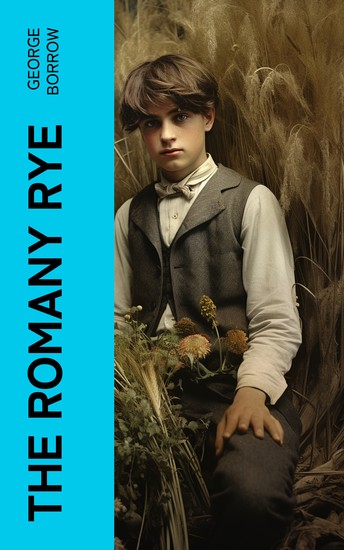
The Romany Rye - A Sequel to 'Lavengro' - cover

The Romany Rye - A Sequel to 'Lavengro'

George Borrow

Editorial: e-artnow

  • 0
  • 0
  • 0

Sinopsis

"The Romany Rye" by George Borrow. Published by e-artnow. e-artnow publishes a wide range of titles that encompasses every genre. From well-known classics & literary fiction and non-fiction to forgotten−or yet undiscovered gems−of world literature, we issue the books that need to be read. Each e-artnow edition has been meticulously edited and formatted to boost readability for all e-readers and devices. Our goal is to produce eBooks that are user-friendly and accessible to everyone in a high-quality digital format.
Disponible desde: 01/12/2023.
Longitud de impresión: 432 páginas.

Otros libros que te pueden interesar

  • The Arthurian Legends - The Epic Tales of King Arthur and His Knights - cover

    The Arthurian Legends - The Epic...

    Julia Blacksmith

    • 0
    • 0
    • 0
    The Arthurian legends have captivated audiences for centuries, blending history, myth, and romance into a timeless narrative. At the heart of these tales stands King Arthur, the noble ruler of Camelot, surrounded by his valiant knights, wise counsel, and a destiny shaped by magic and fate. These stories, filled with chivalry, heroism, and tragedy, have evolved over time, transforming from medieval folklore into one of the most enduring mythological traditions in the Western world. Whether viewed as a historical figure or a fictional hero, Arthur’s legend continues to inspire literature, art, and modern storytelling.  
      
    The roots of the Arthurian legends can be traced back to early medieval Britain, a period marked by conflict and shifting power. The earliest references to Arthur appear in Welsh and Celtic traditions, portraying him as a warrior who defended his land against invading forces. As these stories spread, they were enriched by medieval chroniclers such as Geoffrey of Monmouth, whose twelfth-century work *Historia Regum Britanniae* established Arthur as a grandiose king with a mythical kingdom. French and English writers expanded the legend, introducing characters like Lancelot, Guinevere, and the Holy Grail, further shaping the narrative into the form known today.  
      
    The debate over whether King Arthur was a real historical figure or merely a legendary construct has fascinated scholars for centuries. Some believe that Arthur may have been based on a real Brittonic war leader who fought against Saxon invasions in the fifth or sixth century. However, definitive historical evidence remains elusive. What is clear is that Arthurian stories took on a life of their own, infused with elements of medieval knighthood, Christian symbolism, and mythical enchantment. Arthur became more than just a king—he became an ideal, embodying the virtues of justice, bravery, and sacrifice. 
    Ver libro
  • The Last Romantic - C S Lewis English Literature and Modern Theology - cover

    The Last Romantic - C S Lewis...

    Jeffrey W. Barbeau

    • 0
    • 0
    • 0
    Credo Book Award Winner – Natural Theology
    "There are so many books on Lewis that are simply a rehash of existing knowledge; by contrast, this is a work of fresh, detailed, illuminating scholarship. ... Barbeau's use of Lewis's personal annotations in the books in the Marion E. Wade Collection is a revelation and makes this book a permanent and important contribution to the study of Lewis's thought." – Malcolm Guite, Girton College, Cambridge
    Three Essays on C. S. Lewis and Romanticism
    Many readers have heard C. S. Lewis's logical arguments for the Christian faith. Yet throughout his wide-ranging study and writing, Lewis often began with experience, intuition, and religious feeling rather than dogmatic assertions. The most profound questions of Lewis's own life, argues theologian and literary critic Jeffrey Barbeau, can be seen in his quest to understand the relationship between personal experience and the truth about the world around him.
    In a series of three essays, Barbeau explores the influence of nineteenth-century Romanticism on the writings of C. S. Lewis. Barbeau demonstrates Lewis's indebtedness to Romantic notions of imagination and subjectivity, opens new contexts for understanding ideas about memory and personal identity in his autobiographical writings, and explores beliefs about nature and Christian sacraments throughout his writings on Christian faith. This theological and literary investigation reveals Lewis as a profoundly modern thinker and illuminates his ongoing relevance to contemporary debates about theology and culture.
    Drawing on extensive reading of the marginalia in the personal library of C. S. Lewis held by the Marion E. Wade Center, Barbeau offers a fresh understanding of the influence of modern theology and Romantic poetry, especially Wordsworth and Coleridge, on many of Lewis's most beloved works. Essays and responses include:
    
    - C. S. Lewis and the "Romantic Heresy," with response from professor Sarah Borden,
    - C. S. Lewis and the Anxiety of Memory, with response from professor Matthew Lundin, and
    - C. S. Lewis and the Sacramental Imagination, with response from professor Keith L. Johnson.
    
    About the Series
    The Hansen Series celebrates the literary and spiritual contributions of seven British authors whose works have captivated readers across generations: Owen Barfield, G. K. Chesterton, C. S. Lewis, George MacDonald, Dorothy L. Sayers, J. R. R. Tolkien, and Charles Williams. These seven authors were all deeply involved in the friendships and intellectual exchanges that shaped the Inklings, a mid-twentieth-century group of Christian writers and thinkers in Oxford, England. This series invites readers to deepen their engagement with these timeless voices and their enduring influence on literature, faith, and the life of the imagination.
    Ver libro

  • Mania - A Short History of Bipolar Disorder - cover

    Mania - A Short History of...

    David Healey

    • 0
    • 0
    • 0
    This provocative history of bipolar disorder illuminates how perceptions of illness, if not the illnesses themselves, are mutable over time. 


    Beginning with the origins of the concept of mania—and the term maniac—in ancient Greek and Roman civilizations, renowned psychiatrist David Healy examines how concepts of mental afflictions evolved as scientific breakthroughs established connections between brain function and mental illness. Healy recounts the changing definitions of mania through the centuries, explores the effects of new terminology and growing public awareness of the disease on culture and society, and examines the rise of psychotropic treatments and pharmacological marketing over the past four decades. Along the way, Healy clears much of the confusion surrounding bipolar disorder even as he raises crucial questions about how, why, and by whom the disease is diagnosed. 


    Drawing heavily on primary sources and supplemented with interviews and insight gained over Healy's long career, this lucid and engaging overview of mania sheds new light on one of humankind's most vexing ailments.
    Ver libro
  • Thus Spake Zarathustra - cover

    Thus Spake Zarathustra

    Friedrich Nietzsche

    • 0
    • 0
    • 0
    Could it be possible? This old saint in the forest hath not yet heard of it, that God is dead!
     
    The ancient Persian prophet Zarathustra descends from a life of solitude on the mountain to announce to the world that God has been supplanted by the "Superman", the divine in human form. In one of the most radical and influential works of modern philosophy, Friedrich Nietzsche lays out the new standards of morality after the "death of God".
     
    Frequently misrepresented (and hijacked to dangerous purpose by Nazi intellectuals), Thus Spake Zarathustra is a work of profound brilliance and poetic mastery which still provides meaning in today's complex and changing world.
    Ver libro
  • Meet The Three Princesses - cover

    Meet The Three Princesses

    Judith Annique Francois

    • 0
    • 0
    • 0
    “Meet the Three Princesses” is a heart-warming story about a loving family who live in Haiti. Readers will enjoy the bright, beautiful illustrations and interesting story details that highlight the unique, lovely charm of a small island town.Esther, Cassandra and Rosa are happy girls, but they miss their father when he is away at work. They don’t know he has a wonderful surprise in store! Will this surprise show his sweet daughters how much he thinks of them all throughout the day?  Read along and share the special love, joy and pride that Mama and Papa have for their three princesses. A beautiful, uplifting family tale.
    Ver libro
  • Brokers of Deceit - How the US Has Undermined Peace in the Middle East - cover

    Brokers of Deceit - How the US...

    Rashid Khalidi

    • 0
    • 0
    • 0
    For more than seven decades the conflict between Israel and the Palestinian people has raged on with no end in sight, and for much of that time, the United States has been involved as a mediator in the conflict. 


    Khalidi closely analyzes three historical moments that illuminate how the United States' involvement has, in fact, thwarted progress toward peace between Israel and Palestine. The first moment he investigates is the "Reagan Plan" of 1982, when Israeli prime minister Menachem Begin refused to accept the Reagan administration's proposal to reframe the Camp David Accords more impartially. The second moment covers the period after the Madrid Peace Conference, from 1991 to 1993, during which negotiations between Israel and Palestine were brokered by the United States until the signing of the secretly negotiated Oslo accords. Finally, Khalidi takes on President Barack Obama's retreat from plans to insist on halting the settlements in the West Bank. 


    Through in-depth research, as well as his own firsthand experience as an advisor to the Palestinian delegation at the 1991 pre-Oslo negotiations in Washington, DC, Khalidi reveals how the United States and Israel have actively colluded to prevent a Palestinian state and resolve the situation in Israel's favor.
    Ver libro