
¡Acompáñanos a viajar por el mundo de los libros!
Añadir este libro a la estantería
Grey
Escribe un nuevo comentario Default profile 50px
Grey
Suscríbete para leer el libro completo o lee las primeras páginas gratis.
All characters reduced
Saint Joan - cover

Saint Joan

George Bernard Shaw

Editorial: DigiCat

  • 0
  • 0
  • 0

Sinopsis

In his thought-provoking play "Saint Joan," George Bernard Shaw masterfully weaves a narrative that explores the life and trials of Joan of Arc, a peasant girl who rises to become a national hero and martyr for France. Shaw employs a blend of wit and philosophical discourse, characterized by his characteristic sharp dialogue, to grapple with themes of nationalism, faith, and individuality. Set against the backdrop of the Hundred Years' War, the play transcends mere historical retelling, inviting audiences to contemplate the complexity of human motives and the societal forces that shape legend from life. George Bernard Shaw, a prominent figure in early 20th-century literature and theatre, was deeply influenced by his socialist beliefs and his fascination with the interplay between morality and societal norms. His admiration for Joan of Arc as a symbol of courageous defiance against oppressive authority reflects Shaw's broader critique of conventional institutions and ideologies. This dynamic perspective renders Shaw's portrayal of Joan not just as a religious figure but as a revolutionary thinker, challenging the established order of her time. "Saint Joan" is an enduring work that captivates the reader and theatre-goer alike, offering profound insights into the nature of heroism and the conflict between personal conviction and societal expectations. This play is essential for those seeking to understand the complexities of moral authority and the timeless struggle for individual agency, making it a compelling read for students, scholars, and lovers of classic literature.
Disponible desde: 15/09/2022.
Longitud de impresión: 137 páginas.

Otros libros que te pueden interesar

  • Epilogue - cover

    Epilogue

    Bliss Carman

    • 0
    • 0
    • 0
    In 1904, Canadian poet Bliss Carman published Sappho: One Hundred Lyrics, which was not just a translation of the fragments but an imaginative reconstruction of the lost poems. While of little to no scholarly value, Carman's translations brought Sappho's work to the attention of a wide readership. Our Fortnightly Poem is the Epilogue to this collection by Bliss Carman. (Wikipedia)
    Ver libro
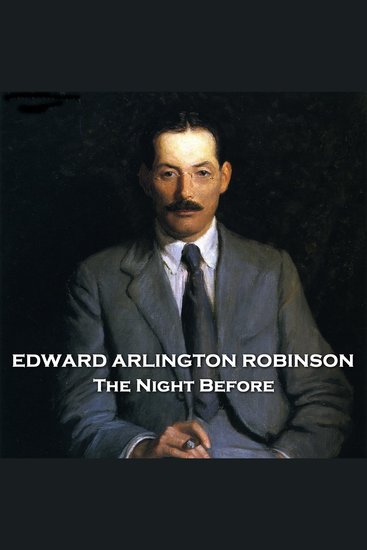
  • The Night Before - Incredible 19th Century psychological poem about a mans final hours before exectuion - cover

    The Night Before - Incredible...

    Edward Arlington Robinson

    • 0
    • 0
    • 0
    Edwin Arlington Robinson was born on the 22nd December 1869 in Tide in Lincoln County, Maine.  
    His childhood was described by him as ‘stark and unhappy’.  His name was drawn out of a hat from a fellow vacationer from Arlington Massachusetts when fellow holiday makers decided that his parents had waited long enough at 6 months to name him.  It was a name he despised and reflects the station to which his parents had placed him; their great hope at his birth were that he was a girl to complement their two sons. 
    His pessimistic mood carried him to adulthood and a doomed encounter with Emma Loehen Shepherd who constantly encouraged his poetry.  Edwin was thought too young to be her companion and so his elder, middle brother, Herman was assigned to her.  It was a great blow to Edwin and during their marriage on February 12th, 1890, he stayed home and wrote ‘Cortege’ 
    In the fall of 1891 Edwin entered Harvard, taking classes in English, French and Shakespeare.  He felt at ease with the Ivy League and made great efforts to be published in one of the Harvard literary journals.  Indeed, the Harvard Advocate published ‘Ballade of a Ship’ but then his career appeared to stall.  His father died and although he returned to Harvard for a second year it was to be his last but also the start of some life-long friendships. 
    In 1893 he returned to Gardiner Maine as the man of the household.  Herman by this time had become an alcoholic, having suffered business failures, and was now to become estranged from Emma. 
    Edwin began farming whilst he wrote and quickly developed a close relationship with Emma who had now moved back to Gardiner after Herman’s death with her children. 
    Although he proposed twice, he was rejected and in consequence moved to New York to start afresh. 
    But it was a salutary experience. Although surrounded by artists he had little money and life was difficult. 
    In 1896 he published his own book, ‘The Torrent and the Night Before’, paying 100 dollars for 500 copies.  Edwin wanted it to be a surprise for his Mother, but days before its arrival she died of diphtheria. 
    His second volume, ‘The Children of the Night’, had a wider circulation.  At the behest of President Roosevelt, whose son was an avid admirer, he was given a job in 1905 at the New York Customs Office although it appears his real job was “to help American letters”. 
    Either way his success began to widen and his influence proper.  During the 1920s he won the Pulitzer Prize for Poetry on three separate occasions. In 1922 for ‘Collected Poems’ again in 1925 for ‘The Man Who Died Twice’ and finally in 1928 for ‘Tristram’. 
    During the last twenty years of his life he became a regular summer resident at the MacDowell Colony in New Hampshire, where he became the object of fascination by several women.  But he never married. 
    Edwin Arlington Robinson died of cancer on the 6th April 1935 in the New York Hospital in New York. He was 65.
    Ver libro
  • Love-Songs of Childhood - cover

    Love-Songs of Childhood

    Eugene Field

    • 0
    • 0
    • 0
    This book contains verse for young and old. It is full of fantastic stories, breathtaking images, and brilliant rhymes. Including classics from "The Duel" to "The Delectable Ballad of Walter Lot," the author, a devout Christian, keeps his religious overtones to a minimum. When listening, please keep in mind that the text was originally written in the 1800s. -- Summary by Squid Varilekova
    Ver libro
  • Canine Legends: A Dog Agility Story - cover

    Canine Legends: A Dog Agility Story

    Marco Magiolo

    • 0
    • 0
    • 0
    Marcus Machado or Marquito, as his friends call him, is a young man who, along with his dog Arrow, find themselves in a sport called dog agility. A new beginning after the traumas within his family. 
    Alongside his canine partner, Marquito travels across the United States competing in the most challenging dog agility League in the country. He will not only have to deal with the challenges on the track, but also with the psychological dramas that the competitive environment will impose on him. 
    In a plot full of adventure, drama, romance and lots of dogs, CANINE LEGENDS takes the reader on an exciting journey into a world of canine competition with unexpected plot twists.
    Ver libro
  • The Army of Death - cover

    The Army of Death

    Charles Hamilton Sorley

    • 0
    • 0
    • 0
    Captain Sorley was among 16 Great War poets commemorated in Westminster Abbey's Poets' Corner. The inscription was written by Wilfred Owen. It reads: "My subject is War, and the pity of War. The Poetry is in the pity." This is regarded as one of Sorley's finest poems, and was discovered in his kit after his death. (Summary by Ruth Golding)
    Ver libro
  • True Culture - cover

    True Culture

    Ella Wheeler Wilcox

    • 0
    • 0
    • 0
    LibriVox volunteers bring you 14 recordings of True Culture by Ella Wheeler Wilcox. This was the Weekly Poetry project for December 16, 2012. Ella Wheeler Wilcox was an American author and poet. Her best-known work was Poems of Passion. Her most enduring work was " Solitude", which contains the lines: "Laugh, and the world laughs with you; Weep, and you weep alone". Her autobiography, The Worlds and I, was published in 1918, a year before her death. ( Summary from Wikipedia )
    Ver libro