Join us on a literary world trip!
Add this book to bookshelf
Grey
Write a new comment Default profile 50px
Grey
Subscribe to read the full book or read the first pages for free!
All characters reduced
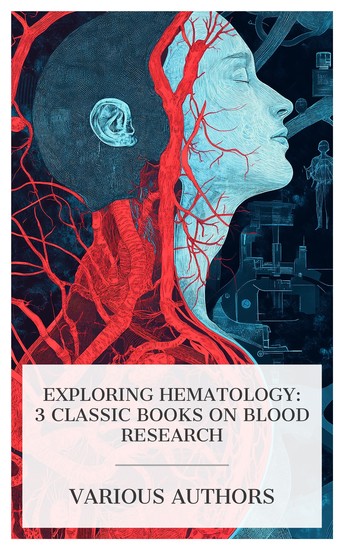
Exploring Hematology: 3 Classic Books on Blood Research - Blood Transfusion Histology of the Blood Normal and Pathological Harvey's Views on the Use of the Circulation of the Blood etc - cover

Exploring Hematology: 3 Classic Books on Blood Research - Blood Transfusion Histology of the Blood Normal and Pathological Harvey's Views on the Use of the Circulation of the Blood etc

Geoffrey Keynes, Paul Ehrlich, Adolf Lazarus, John Green Curtis

Publisher: e-artnow

  • 0
  • 0
  • 0

Summary

Exploring Hematology: 3 Classic Books on Blood Research is a compelling anthology that delves into the complexities of blood studies through a collection of three seminal works. This collection stands as a testament to the rich tapestry of scientific inquiry spanning centuries. Embodying diverse literary styles, this anthology weaves together comprehensive analyses with pioneering theories that have shaped modern understandings of hematology. It traverses the vast landscape of scientific evolution, drawing readers into groundbreaking research that examines the fundamental essence of life itself through blood. Standout pieces within the collection illuminate pivotal discoveries and thought-provoking hypotheses, offering a panoramic view of the field’s historical milestones. The esteemed contributorsâ€"Geoffrey Keynes, Paul Ehrlich, Adolf Lazarus, and John Green Curtisâ€"represent varied backgrounds that enrich the anthology’s thematic focus on blood research. Their collective expertise spans profound cultural and scientific movements, capturing the essence of transformative periods in medical history. Together, they engage in a dynamic exploration of hematological phenomena, each bringing unique insights influenced by their respective eras and disciplines. The collection is a vital reflection of the synergy between scientific investigation and cultural contexts, providing a deeper understanding of how diverse perspectives coalesce to enhance the study of blood. This anthology presents a rare opportunity for readers to engage with authoritative voices in an essential field of study, offering a gateway to the profound complexities and significance of blood research. It should be considered indispensable for scholars and enthusiasts alike who wish to immerse themselves in the intricate dialogues fostered by such varied contributions. With its educational value and rich array of insights, Exploring Hematology stands as an exemplary resource for anyone seeking to grasp the multifaceted nature of hematological study, encouraging a deeper appreciation for the dynamic interplay of past and present scientific endeavors.
Available since: 03/04/2025.
Print length: 2000 pages.

Other books that might interest you

  • Virology - Tiny Invaders and Their Global Impact - cover

    Virology - Tiny Invaders and...

    Mike Crawford

    • 0
    • 0
    • 0
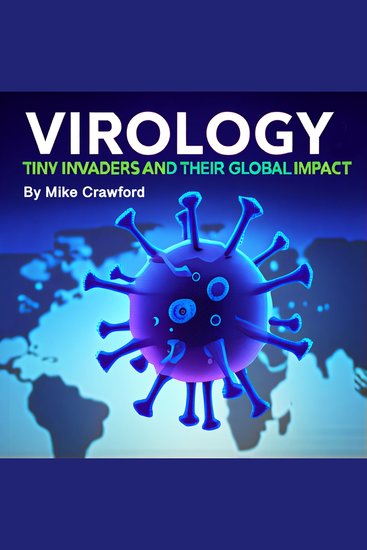
    Viruses are microscopic entities that exist at the boundary between living and non-living matter. Despite their minuscule size, viruses have a profound impact on all forms of life, from bacteria and plants to humans and animals. They are the most abundant biological entities on Earth, outnumbering bacteria by a factor of ten. Viruses have played a key role in shaping ecosystems, driving evolution, and causing significant diseases in both humans and other organisms. 
    A virus is fundamentally a small particle, or "virion," composed of genetic material (either DNA or RNA) encased in a protein coat known as a capsid. Some viruses also have an outer lipid membrane called an envelope. Unlike bacteria or other microorganisms, viruses lack the machinery necessary for self-replication and metabolism. Instead, they must infect a host cell to reproduce. The virus hijacks the host's cellular machinery to replicate its genome and assemble new viral particles, which are then released to infect other cells. 
    The structure of viruses is incredibly diverse. There are simple, rod-shaped viruses, more complex spherical ones, and even geometrically intricate varieties like the icosahedral viruses. The genetic material within the virus—whether it is single-stranded or double-stranded, RNA or DNA—dictates the virus's replication strategy and determines how it interacts with the host organism. While some viruses infect only specific species or cell types, others are capable of infecting multiple hosts, sometimes crossing species barriers in the process.
    Show book
  • On the Gait of Animals - cover

    On the Gait of Animals

    Aristotle

    • 0
    • 0
    • 0
    "On the Gait of Animals" is a scientific work written by Aristotle, which explores the ways in which different animals move and how their movements are related to their anatomy and physiology. The work is part of Aristotle's broader investigation into the natural world, and it represents an important contribution to the field of biology. Read in English, unabridged.
    Show book
  • The Hidden Plague - A Holistic Field Guide to Managing Hidradenitis Suppurativa & Other Skin and Autoimmune Conditions - cover

    The Hidden Plague - A Holistic...

    Tara Grant

    • 0
    • 0
    • 0
    Have you been plagued with boils, cysts, ingrown hairs, and acne-like bumps that take months to resolve, leave embarrassing scars, and cause considerable pain? Have you been to the doctor, only to leave with a prescription for antibiotics, few answers, and little to no hope? Hidradenitis supprativa (HS) is a poorly understood skin condition that is believed to affect nearly 12 million people in the US alone. Only a small fraction of those affected have been properly diagnosed, leaving many others to suffer in silence or pursue ill-advised conventional treatment methods that fail to address the cause of this painful condition. Tara Grant, a twenty-year sufferer of HS, has become an underground legend to her Internet community of HS victims by presenting a methodical, self-tested action plan to heal naturally. The centerpiece of her holistic approach rests on the understanding that HS is an autoimmune disorder caused by leaky gut syndrome. With a few simple dietary changes that eliminate certain trigger' foods, you can heal your gut, restore your skin, reclaim your health, and rid yourself of HS symptoms forever. That means no antibiotics, no experimental surgeries, and no more pain, suffering, or confusion. 
    You will learn to adopt a big picture perspective about disease and dysfunction, and understand how autoimmunity (the body attacking itself in an adverse manner) represents the root cause of many frustrating chronic health conditions. By modifying your diet and other lifestyle habits, you can break free from the suffering, frustration and uncertainty that seems to go hand in hand with autoimmune conditions and skin conditions like HS in particular. The Hidden Plague is a fabulous and comprehensive resource for not just HS specifically, but many other related inflammatory and autoimmune conditions.
    Show book
  • The Beast Within - Humans as Animals - cover

    The Beast Within - Humans as...

    Jessica Serra

    • 0
    • 0
    • 0
    How different from animals are we really? 


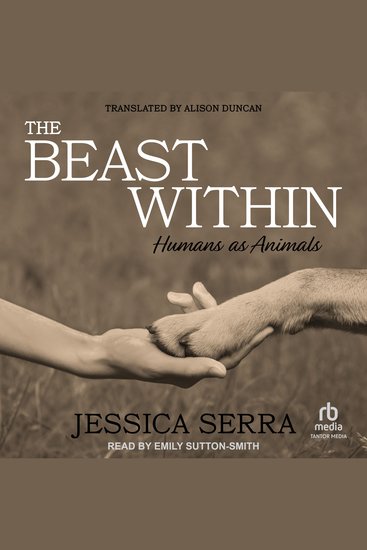
    Are humans the only creatures who love, laugh, cry, possess morals, and wage war? In The Beast Within, scientific researcher and ethologist Jessica Serra upends the assumptions that underpin our very human hypothesis that we possess a superior place in the hierarchy of organisms on Earth. How did we come to think of our animality as standing in opposition to our humanity—and does this reasoning have a scientific basis? 


    Through the fascinating discoveries made by ethologists, anthropologists, and archeologists, Serra deciphers our behaviors in light of their animal roots and demystifies ideas about how different animals are from humans. She compares human behaviors with those exhibited by other species in chapters spanning topics as varied as sex, morality, emotions, intelligence, and family. Exploring the evolution of various animal species, as well as the evolution of historical ideas about humanity and animality, Serra theorizes that human behaviors and motivations may hold more in common with those of animals than we think. These explorations of scientific findings encourage us to reconsider how much we have truly removed ourselves from "the beast within."
    Show book
  • Software development and Organizational transformation - Aligning Technology and Strategy for Lasting Business Impact - cover

    Software development and...

    Sam Claydon

    • 0
    • 0
    • 0
    In today’s fast-paced digital economy, software development is more than just writing code—it’s a catalyst for organizational change. As businesses strive for agility, innovation, and competitive advantage, the alignment between technology and strategy becomes critical. 
    Software Development and Organizational Transformation explores how modern software practices—Agile, DevOps, cloud computing, AI, and automation—are reshaping industries and redefining the way organizations operate. This book provides a roadmap for leaders, developers, and decision-makers to successfully navigate the intersection of technology and business transformation. 
    You’ll learn:How software development drives business agility and innovationStrategies for integrating technology into an organization’s core strategyThe role of Agile and DevOps in fostering a culture of continuous improvementHow to manage change, overcome resistance, and align teams around shared goalsReal-world case studies of companies that have successfully transformed through software 
    This book equips you with the insights and tools to leverage software development as a driver of lasting business impact. 
     
    Show book
  • My Turn - When Caregiving Roles Reverse - cover

    My Turn - When Caregiving Roles...

    Linda Wright

    • 0
    • 0
    • 0
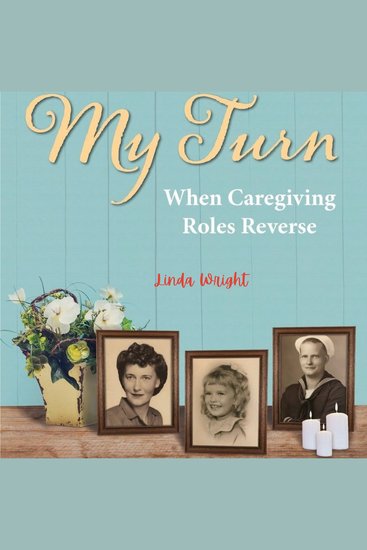
    Weaving two different parts of her life, Linda Wright combines the care she received from her parents and the care she gave to them when they became elderly and frail. She was born with a rare bleeding disorder, so even the slightest bump created deep bruises on her body and a minor injury kept her out of school. The disorder limited her ability to grow up like a typical kid—riding bikes, climbing, and running. Despite the many hospitalizations for uncontrolled bleeding and infusions to clot her blood for a condition that even doctors struggled to treat, Linda’s parents gave her a childhood filled with wonder, joy, and love. “My parents protected me, inspired me, and believed in me. They were the ones who had taught me how to be safe,” Linda said. When her aging and infirm parents grew to need increasing levels of care themselves, she declared, “I would do whatever it cost to care for them. It was my turn.”
    Show book