Begleiten Sie uns auf eine literarische Weltreise!
Buch zum Bücherregal hinzufügen
Grey
Einen neuen Kommentar schreiben Default profile 50px
Grey
Jetzt das ganze Buch im Abo oder die ersten Seiten gratis lesen!
All characters reduced
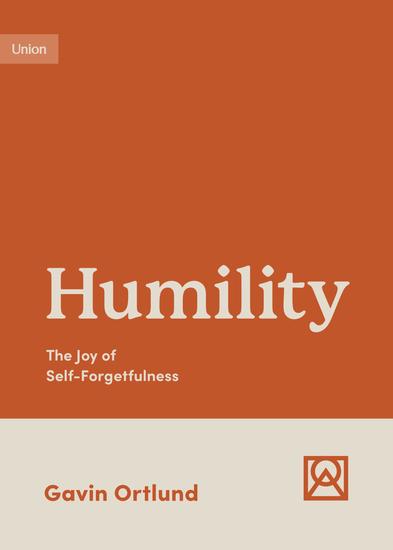
Humility - The Joy of Self-Forgetfulness - cover

Humility - The Joy of Self-Forgetfulness

Gavin Ortlund

Verlag: Crossway

  • 0
  • 0
  • 0

Beschreibung

Cultivating Humility in a Gospel-Centered Way
There are many misconceptions about what it means to be humble. Some think that being humble means hiding your talents and abilities or being weak and inauthentic. But the Bible paints a different picture—defining humility as a self-forgetfulness leading to joy and explaining that it is a life-giving virtue that frees you from the restricting needs of your ego. 
In Humility: The Joy of Self-Forgetfulness, Gavin Ortlund encourages readers that humility is not just an abstract virtue but a mark of gospel integrity. Ortlund examines humility both on a personal level and in the context of the church, giving examples of ways to cultivate it—including meditation on the gospel and practicing intentional gratitude. Drawing from Philippians 2 and historical texts such as C. S. Lewis's Mere Christianity and Jonathan Edwards's sermon "A Christian Spirit Is a Humble Spirit," Ortlund defines humility in light of the incarnation and death of Jesus Christ, casting a vision for a gospel-centered, humble life.

- First Book in the Growing Gospel Integrity Series: Created in partnership with Union School of Theology, with future volumes written by Sinclair B. Ferguson, Joe Rigney, and Conrad Mbewe
- Written by Gavin Ortlund: Author of Theological Retrieval for Evangelicals: Why We Need Our Past to Have a Future and Finding the Right Hills to Die On: The Case for Theological Triage
- For Small Groups and Individual Study: Questions at the end of each chapter encourage small group discussion 
Verfügbar seit: 19.12.2022.
Drucklänge: 136 Seiten.

Weitere Bücher, die Sie mögen werden

  • The Sweetest Spark - cover

    The Sweetest Spark

    Liwen Y. Ho

    • 0
    • 0
    • 0
    He’s a fun-loving ice cream shop owner looking for more than a fling. She’s a straight-laced food critic too scared for love. One foolish kiss they share changes their entire friendship.  
    Colin Spark may not have the best track record when it comes to his career choices, but he’s loved the same woman since he was thirteen. His only obstacle to winning her heart is proving he’s ready to settle down—an impossible task now that his store is going out of business. 
    Since her sister’s passing, Candy Connelly has survived by being in control and protecting her heart. There’s only one man she’s let her guard down with, but his unreliable past shakes her confidence in his future. 
    Colin won’t give up pursuing his passion; Candy won’t give in to her attraction. That is until an accident brings all their unspoken issues to the surface and forces them to listen to their hearts. Will this incident be the spark that drives them apart for good or gives them their sweetest taste of romance yet?
    Zum Buch
  • Can You Be a Catholic and a Feminist? - cover

    Can You Be a Catholic and a...

    Julie Hanlon Rubio

    • 0
    • 0
    • 0
    Is it possible to be both a faithful Catholic and an avowed feminist? Earlier generations of feminists first formulated answers to this question in the 1970s. Their views are still broadly held, but with increasing tentativeness and a growing sense of their inadequacy. Yet in a post-#MeToo, #ChurchToo moment, when the Church seems disconnected from struggles for racial justice and LGBTQ inclusion, those answers sound increasingly insufficient. Today, tensions between Catholicism and feminism are more visible and ties to Catholic communities are increasingly weak. Can Catholic feminism survive? 


    Julie Hanlon Rubio argues that it can. But if it is going to do so, it is necessary to rethink how women and men who experience the pull of feminism and Catholicism can credibly claim both identities. In Can You Be a Catholic and a Feminist? Rubio argues that Catholic feminist identity is only tenable if we frankly acknowledge tensions between Catholicism and feminism, bring forward shared concerns, and embrace the future with ambiguity and creativity. Rubio explores the potential for synergy and dialogue between Catholics and feminists through various lenses, including sexual violence, gender theory, pregnancy and prenatal loss, work-life balance, relationships and family life, spirituality, conscience, and what it means to be human.
    Zum Buch
  • The Divergence - Awakening in the Age of Illusion - cover

    The Divergence - Awakening in...

    Maurice Price

    • 0
    • 0
    • 0
    We are no longer asking what is real—we are being forced to decide. 
    In an age of deepfakes, artificial intelligence, curated realities, and spiritual mimicry, the lines between the authentic and the artificial are dissolving. The Divergence is not a warning about the future—it is a guide for navigating the now. 
    Maurice Price takes you on a soul-stirring journey through the illusions of modern life, exposing the subtle forces vying for control of your mind, your attention, and your identity. But beyond the algorithms and simulations lies a deeper truth—one that cannot be digitized, replicated, or controlled. 
    This is a book for the seekers. For those who feel the world has changed but can’t quite say how. For those who know that something deeper is calling—that amidst the noise, the soul still speaks. 
    What if the real revolution isn’t out there, but within you? 
    What if awakening is the only way through? 
    The Divergence invites you to remember what the world would have you forget: 
    That you are the line. 
    You are what’s real. 
    And the time to awaken is now.
    Zum Buch
  • The Future of the American Family - An Unprecedented Crisis - cover

    The Future of the American...

    Dr. Jerry Cammarata

    • 0
    • 0
    • 0
    The Future of the American Family-An Unprecedented Crisis-explores the events that have molded the very idea of family. From the Iron Age to the Enlightenment, from the Industrial Revolution to social media, the family has been subject to storm and squaller as it adapts and struggles to find itself in these modern times. Together, we will examine the forces that have brought the American family to its current state of being, the political architecture that will shape it one way or the other and the ideas that we can consider to shape a healthy, revitalized picture of how we understand family, and the end game that we strive for. "Together, we must examine the forces that have brought the American family to its current state and the political architecture that must evolve to shape the family's future success as the centerpiece of who we are as a nation!" ~Jerry Cammarata. 
    About the author.  
    Dr. Jerry Cammarata is a syndicated columnist and a featured contributor to medical and political journals. In 1980, President Carter appointed him to the White House Conference on Families, a framework which he reintroduces in this book. Other works include "The Fun Book of Fatherhood," an autobiographical account of raising children following his groundbreaking Paternity Leave. 
    "Government needs to listen to what Dr. Cammarata is saying. The idea of a secretary of the family and a re-establishment of a White House Conference on Families is the type of thinking we need for extraordinary and permanent change for the better. Jerry gets it." 
      ~David A. Paterson, 55th Governor of New York.
    Zum Buch
  • Believe In What You See - Knowing God Personally By Seeing His Presence In Nature - cover

    Believe In What You See -...

    Debbie Feyh

    • 0
    • 0
    • 0
    Every living thing wants to be known and loved. The sun, trees, zebras, stars, and tulips all trust God, the maker of the waves, to provide for their needs. God’s presence is glorified at all times in His plan for nature. 
    In an uplifting presentation, Debbie Feyh shares insights into her spiritual journey, biblical wisdom, introspective questions, and points to ponder to reveal God’s handiwork, highlighted on Earth during every day, hour, and minute. She encourages believers to seek God in nature, release worries and fears, unearth their unique purpose, and learn how the gift of His presence and love saturates the great outdoors, never leaving them alone. Through her spiritual roadmap, others are guided to trust God’s plan and learn to live life expecting to see Him in it. 
    Believe In What You See is an inspirational guide that leads believers down a thoughtful path to see God’s constant presence in nature and recognize that He is always providing comfort, hope, and unconditional love.
    Zum Buch
  • The Fantasy of JRR Tolkien - Mythopoeia and the Recovery of Creation - cover

    The Fantasy of JRR Tolkien -...

    Robert J. Dobie, Bradley J. Birzer

    • 0
    • 0
    • 0
    At the heart of Tolkienian fantasy is "recovery," a "cleaning of the windows" of our perception that we may learn to see the world again in all its strange beauty. And, for Tolkien, to recover the world anew is to recover a sense of the world as a meaningful act of creation by a living and loving Creator. How does Tolkien accomplish this? Through "sub-creation" or mythopoeia, the "fashioning of myth." For it is in creating an imaginary world ourselves through poetry, fairy-story, and myth that we come to "see" our "primary world" as itself an act of creation. In short, mythopoetic creation, far from being "lies breathed through silver," uncovers for us the truth of our world as a story of creation. 


    This book demonstrates not only the centrality of recovery to Tolkien's fantasy but the way in which his fantasy affects that primal recovery in every reader. It reveals the marvelous philosophical and theological riches that underlie Tolkien's fantasy and shows how his mythopoetic fiction allows the recovery and enactment of these riches in our own lives. The book shows how for Tolkien fantasy has within itself a healing power through which intellectual, moral, and existential paradoxes are resolved and our intellectual and perceptual faculties are made whole again so that they may participate with renewed vigor in the life-giving work of creation of every sort.
    Zum Buch