Junte-se a nós em uma viagem ao mundo dos livros!
Adicionar este livro à prateleira
Grey
Deixe um novo comentário Default profile 50px
Grey
Assine para ler o livro completo ou leia as primeiras páginas de graça!
All characters reduced
Austria-Hungary - Exploring the rich literary history and cultural legacy of Austria-Hungary - cover
LER

Austria-Hungary - Exploring the rich literary history and cultural legacy of Austria-Hungary

G. E. Mitton

Editora: Good Press

  • 0
  • 0
  • 0

Sinopse

In "Austria-Hungary," G. E. Mitton offers a poignant exploration of the complex sociopolitical landscape of the Austro-Hungarian Empire, weaving together historical narrative and vivid descriptions. Mitton's literary style is marked by clarity and precision, reflecting a keen scholarly understanding of the intricacies of the empire's diverse cultures and turbulent history. The book places a strong emphasis on the dual monarchy'Äôs multifaceted identity'Äîhighlighting the challenges of nationalism, ethnic diversity, and the balance of power that characterized this historical milieu. G. E. Mitton, a respected historian and travel writer of the early 20th century, drew on her extensive experiences in Europe and deep interest in cultural interactions to fulfill her ambition of documenting this significant yet often overlooked empire. Her erudition allows her to navigate the complexities of 19th-century geopolitics while maintaining a narrative that is both accessible and engaging. Mitton's background and her travels across Europe profoundly shaped her insights and perspectives, as she sought to illuminate the region's rich tapestry of histories and peoples. This book is highly recommended for readers interested in European history, as it offers a nuanced perspective on Austria-Hungary'Äôs legacy and its impact on modern Europe. Mitton's depth of research, combined with her evocative writing, makes "Austria-Hungary" an essential addition to any historian's library or for anyone seeking a deeper understanding of the interplay between culture and politics in this remarkable empire.
Disponível desde: 10/07/2023.
Comprimento de impressão: 149 páginas.

Outros livros que poderiam interessá-lo

  • Jews and Booze - Alcoholism Addiction and Denial in the Jewish World - cover

    Jews and Booze - Alcoholism...

    Michael Levine

    • 0
    • 0
    • 0
    We Jews wrongly believe we're immune to alcoholism and addiction—instead, individuals, families, and communities are suffering because of the stigmas surrounding addiction and recovery in the Jewish world. 


    "Is the 12 step program suitable for Jews? In this book Michael Levin shows with learning, sensitivity and wisdom why the answer is a resounding 'Yes.'" —Rabbi David Wolpe 


    "Shikkur is a goy." This Yiddish phrase means "Only Gentiles can be alcoholics," but it's not true. Jews suffer from alcoholism and addiction at the same rate as everyone else in society. Due to the stigma surrounding addiction in our community, people are dying unnecessarily . . . because they believe they can't get help. Jews and Booze attacks the stigmas surrounding addiction and recovery in our world.
    Ver livro
  • Hourly - Empowering the Invisible Workforce for Shared Success - cover

    Hourly - Empowering the...

    AJ Richichi

    • 0
    • 0
    • 0
    Hourlyshines a spotlight on the often-overlooked majority of the US workforce: The Hourly employees who keep our economy running yet feel invisible.Businesses don’t just need A-players at their corporate offices; they need them on the front lines, interacting with customers and representing their brand. However, those who occupy these types of positions don’t often get the respect they deserve.In Hourly, author AJ Richichi shares eye-opening insights into the challenges these “invisible” workers face on a daily basis as a result of large-scale issues that have gone unaddressed for years. Through research and firsthand experience, Richichi discusses why it seems so difficult to find solutions but shows that change is possible, providing practical ways for companies to support their hourly workers.The book includes real-world examples of brands successfully empowering hourly staff through measures like stock grants, tuition support, and workplace perks. Readers can review these perks and resulting impacts to drive change within their own organization.Hourly proves that we can achieve a brighter future for employers, workers, and the economy as a whole. However, we must first open our eyes to “see” the invisible workers and understand how important they truly are in society.
    Ver livro
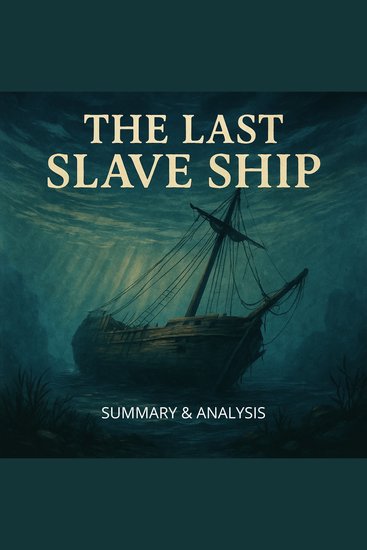
  • Last Slave Ship The: Book Summary & Analysis - cover

    Last Slave Ship The: Book...

    Alexander Pike

    • 0
    • 0
    • 0
    This content is an independent and unofficial summary created for informational and educational purposes only. It is not affiliated with, authorized, approved, licensed, or endorsed by the original author or publisher. All rights to the original work belong to its respective copyright holders. This summary is not intended to substitute the original book, but to offer a concise overview and interpretation of its main ideas.


    Buried beneath the muddy waters of the Mobile River lay a secret too powerful to remain hidden forever.
     
    The Last Slave Ship uncovers the haunting true story of the Clotilda—the final vessel to bring enslaved Africans to America, decades after the transatlantic trade was outlawed. But this is not just a story about a ship. It’s a story about survival, memory, and the extraordinary strength of a people who refused to be erased.
    Ver livro
  • Artaxiad Dynasty The: The History and Legacy of the Ancient Armenian Kingdom that Fought the Romans - cover

    Artaxiad Dynasty The: The...

    Editors Charles River

    • 0
    • 0
    • 0
    One general tied to the Seleucid Empire was Artaxias, who founded the Artaxiad dynasty and managed to unite various Armenian regions under his rule and establish a strong central government, which enabled him to wage successful military campaigns against neighbouring powers. Artaxias I the Pious also built the capital city of Artaxata, which became a cultural and economic centre for the Armenian people. The succeeding kings of the Artaxiad dynasty continued to expand the territory of Greater Armenia, which at its height, stretched from the Black Sea to the Caspian Sea and from the Caucasus Mountains to the Mediterranean Sea. 
    During the reign of the Artaxiad dynasty, Armenia became a hub of trade and commerce, connecting the Silk Road and the Mediterranean world. The Armenian kings encouraged the development of agriculture, commerce, and arts, and the kingdom became renowned for its skilled artisans, writers, and philosophers. Of course, given its central location, the dynasty also faced numerous challenges, including repeated invasions by the Roman and Parthian empires, internal conflicts, and economic hardships. The dynasty’s resilience and adaptability enabled it to survive for nearly two centuries, leaving behind a rich cultural and political legacy that has endured in the region, even as its historical memory was overshadowed by its more powerful neighbors. 
    Today, the Artaxiad dynasty remains an integral part of the Armenian identity, and its influence can be found in Armenian art, literature, music, and architecture. Perhaps just as importantly, the dynasty continues to inspire Armenian patriotism to this day. Many literary works have been written about the kings of the Artaxiad dynasty, including novels, plays, and poems, and many operas have been written about the most powerful king of the dynasty, Tigran II the Great (Tigranes II), including one written by the famed composer Antonia Vivaldi, Tigrane.
    Ver livro
  • A Rare Recording of Film Icon Shirley Temple - cover

    A Rare Recording of Film Icon...

    Shirley Temple

    • 0
    • 0
    • 0
    Shirley Temple (April 23, 1928 - February 10, 2014) was an American actress, singer, dancer, and diplomat, who was Hollywood's number-one box-office draw as a child actress from 1934 to 1938. Temple began her film career in 1931 when she was three years old. In 1935, she received a special Juvenile Academy Award for her contributions in motion pictures. Temple embarked on her U.S. diplomatic career in 1969, later being named Ambassador to Ghana and Czechoslovakia, and also served as Chief of Protocol of the United States.
    Ver livro
  • The French Famine of 1693-1694 - A Historical Overview - cover

    The French Famine of 1693-1694 -...

    Sarah Willards

    • 0
    • 0
    • 0
    The French Famine of 1693-1694, one of the most devastating in the nation's history, was deeply influenced by a confluence of environmental, social, and political factors that shaped its catastrophic outcome. To understand the severity of this famine, it is crucial to examine the conditions that preceded it, including the weather patterns, economic environment, and political climate of late 17th-century France. 
    At the heart of the famine was a series of harsh weather conditions that led to poor harvests in 1693. A combination of torrential rains, flooding, and unseasonably cold temperatures during the growing season caused widespread crop failure. The heavy rainfall ruined crops such as wheat, barley, and oats, essential staples for the population. In particular, the harsh winter of 1693–1694 exacerbated the problem by delaying planting and further destroying the few crops that had managed to survive. This extreme weather pattern, which was part of a broader climate event known as the "Little Ice Age," contributed to reduced food production and severe shortages across France. 
    In addition to the challenging weather, the economic and social conditions in France played a significant role in magnifying the effects of the famine. By the late 17th century, the French economy had been heavily strained by costly wars, including the Nine Years' War, and the lavish spending of Louis XIV. The country’s infrastructure was ill-equipped to handle such widespread agricultural distress. The peasants, who made up the majority of the population, were already burdened with heavy taxes and had limited resources to survive such a crisis. With most of the population living in rural areas, food shortages hit them hardest, leading to widespread hunger and suffering.
    Ver livro