Junte-se a nós em uma viagem ao mundo dos livros!
Adicionar este livro à prateleira
Grey
Deixe um novo comentário Default profile 50px
Grey
Assine para ler o livro completo ou leia as primeiras páginas de graça!
All characters reduced
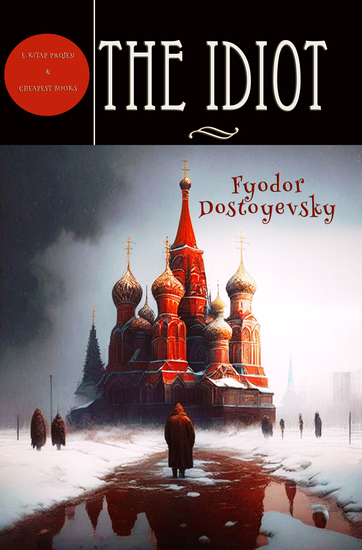
The Idiot - cover
LER

The Idiot

Fyodor Dostoyevsky

Editora: E-Kitap Projesi & Cheapest Books

  • 0
  • 0
  • 0

Sinopse

Towards the end of November, during a thaw, at nine o'clock one morning, a train on the Warsaw and Petersburg railway was approaching the latter city at full speed. The morning was so damp and misty that it was only with great difficulty that the day succeeded in breaking; and it was impossible to distinguish anything more than a few yards away from the carriage windows.
Some of the passengers by this particular train were returning from abroad; but the third-class carriages were the best filled, chiefly with insignificant persons of various occupations and degrees, picked up at the different stations nearer town. All of them seemed weary, and most of them had sleepy eyes and a shivering expression, while their complexions generally appeared to have taken on the colour of the fog outside.

When day dawned, two passengers in one of the third-class carriages found themselves opposite each other. Both were young fellows, both were rather poorly dressed, both had remarkable faces, and both were evidently anxious to start a conversation. If they had but known why, at this particular moment, they were both remarkable persons, they would undoubtedly have wondered at the strange chance which had set them down opposite to one another in a third-class carriage of the Warsaw Railway Company.

One of them was a young fellow of about twenty-seven, not tall, with black curling hair, and small, grey, fiery eyes. His nose was broad and flat, and he had high cheek bones; his thin lips were constantly compressed into an impudent, ironical—it might almost be called a malicious—smile; but his forehead was high and well formed, and atoned for a good deal of the ugliness of the lower part of his face. A special feature of this physiognomy was its death-like pallor, which gave to the whole man an indescribably emaciated appearance in spite of his hard look, and at the same time a sort of passionate and suffering expression which did not harmonize with his impudent, sarcastic smile and keen, self-satisfied bearing. He wore a large fur—or rather astrachan—overcoat, which had kept him warm all night, while his neighbour had been obliged to bear the full severity of a Russian November night entirely unprepared. His wide sleeveless mantle with a large cape to it—the sort of cloak one sees upon travellers during the winter months in Switzerland or North Italy—was by no means adapted to the long cold journey through Russia, from Eydkuhnen to St. Petersburg.

Copyright, Illustrated version of "the Idiot" by e-Kitap Projesi, 2024
Disponível desde: 30/01/2024.
Comprimento de impressão: 800 páginas.

Outros livros que poderiam interessá-lo

  • God Sees the Truth But Waits - From their pens to your ears genius in every story - cover

    God Sees the Truth But Waits -...

    Leo Tolstoy

    • 0
    • 0
    • 0
    Leo Tolstoy was born in 1828 in the Russian province of Tula to a wealthy noble family. As a child, he had private tutors but he showed little interest in any formal education. When he went to the University of Kazan in 1843 to study oriental languages and law, he left without completing his courses.  Life now was relaxed and idle but with some writing also taking place.  Gambling debts forced an abrupt change of path and he joined the army to fight in the Crimean War.  He was commended for his bravery and promoted but was appalled at the brutality and loss of life.  He recorded these and other earlier experiences in his diaries which formed the basis of several of his works. 
    In 1852 ‘Childhood’ was published to immediate success and was followed by ‘Boyhood’ and ‘Youth’. 
    His experience in the army and the horrors he witnessed resulted in ‘The Cossacks’ in 1862 and the trilogy ‘Sevastopol Tales’. After the war he travelled around Europe, visiting London and Paris and meeting such luminaries as Victor Hugo and Charles Darwin.  
    It was now that Tolstoy began his masterpiece, ‘War and Peace’. Published in 1869 it was an epic work that changed literature. He quickly followed this with ‘Anna Karenina’.  
    These successes made Tolstoy rich and helped him accomplish many of his dreams but also brought problems as he grappled with his faith and the lot of the oppressed poor. These revolutionary views became so popular that the authorities now kept him under surveillance.  
    He led a life of asceticism and vegetarianism and put his socialist ideals into practice by establishing numerous schools for the poor and food programmes. He also believed in giving away his wealth, which caused much discord with his wife.  
    His writing continued to bring forth classics such as ‘The Death of Ivan Ilyich’ and many brilliant and incisive short stories such as ‘How Much Land Does A Man Need’.  
    In 1901 Tolstoy was excommunicated from the Church and controversially deselected for the Nobel Prize for Literature. 
    Whilst undertaking a pilgrimage by train in October 1910 with his daughter Aleksandra he caught pneumonia in the nearby town of Astapovo.  Leo Tolstoy died on November 9th, 1910, he was 82.
    Ver livro
  • King Midas - A Romance - cover

    King Midas - A Romance

    Upton Sinclair

    • 0
    • 0
    • 0
    This captivating novel weaves the tale of two idealistic lovers, Billy Fairfax and Ethel Hever, whose dreams clash with the greed and materialism of their families. As they navigate love and ambition, they encounter the timeless tale of King Midas, drawing poignant parallels between myth and their reality. Sinclair's richly detailed romance explores the moral dilemmas of wealth and the enduring power of true love, making it a deeply touching and thought-provoking read.
    Ver livro
  • Emma - cover

    Emma

    Jane Austen

    • 0
    • 0
    • 0
    Experience the charming world of Highbury with Jane Austen's "Emma." Meet Emma Woodhouse, a lively and headstrong young woman who revels in matchmaking, despite her own romantic disinterest. Her well-intentioned meddling leads to misadventures and heartache, especially involving her friend Harriet. Through a series of social intrigues and personal revelations, guided by the perceptive Mr. Knightley, Emma matures and discovers the true nature of love and humility. This beloved classic explores friendship and self-discovery with Austen's signature wit and insight.
    Ver livro
  • Fireside Reading of The Call of the Wild - cover

    Fireside Reading of The Call of...

    Jack London

    • 0
    • 0
    • 0
    Experiencing a story read out loud is one of the oldest forms of entertainment there is. Fireside Reading is a way to slow down, reconnect with the timeless wisdom of great books and rediscover the simple pleasure of being read to. Join Gildart Jackson in front of a cozy fire as he reads The Call of the Wild by Jack London to you and your family from beginning to end.
    Ver livro
  • Fir Tree The - Story Time Episode 68 (Unabridged) - cover

    Fir Tree The - Story Time...

    Hans Christian Andersen

    • 0
    • 0
    • 0
    "The Fir-Tree" is a literary fairy tale by the Danish poet and author Hans Christian Andersen (1805-1875). The tale is about a fir tree so anxious to grow up, so anxious for greater things, that he cannot appreciate living in the moment. The tale was first published 21 December 1844 with "The Snow Queen", in Copenhagen, Denmark, by C.A. Reitzel. One scholar (Andersen biographer Jackie Wullschlager) indicates that "The Fir-Tree" was the first of Andersen's fairy tales to express a deep pessimism.
    Ver livro
  • William - an Englishman - cover

    William - an Englishman

    Cicely Hamilton

    • 0
    • 0
    • 0
    A satirical view of the suffragette movement and an unblinking yet compassionate story that chronicles the impact of the First World War on an ordinary young couple, William – an Englishman by Cicely Hamilton won the first Prix Femina-Vie Heureuse prize in 1919.Written in a hospital tent to the sound of gunfire and shells falling, Cicely Hamilton drew on her experiences working in France during WW1 to tell the story of William Tully and his new bride Griselda, who are wrenched away from their all-consuming interests – socialism and votes for women – and plunged into the almost dream-like horror of war. As brutal tragedy strikes, their attitude to both pacifism and patriotism is altered and their lives are changed forever.William - An Englishman is part of the Persephone Audiobook Collection, a series of forgotten classics that includes neglected fiction and non-fiction by women writers. First published in 1919, this edition includes a preface by writer and MD of Persephone Books, Nicola Beauman.
    Ver livro