¡Acompáñanos a viajar por el mundo de los libros!
Añadir este libro a la estantería
Grey
Escribe un nuevo comentario Default profile 50px
Grey
Suscríbete para leer el libro completo o lee las primeras páginas gratis.
All characters reduced
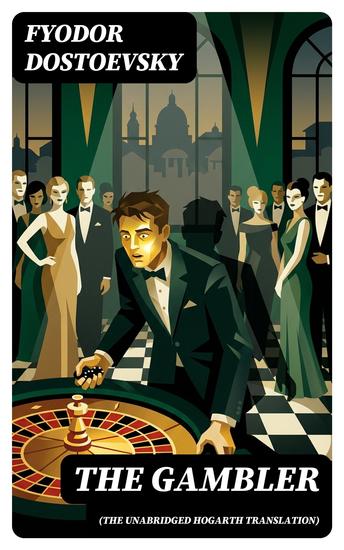
The Gambler (The Unabridged Hogarth Translation) - Enriched edition - cover

The Gambler (The Unabridged Hogarth Translation) - Enriched edition

Fyodor Dostoevsky

Editorial: DigiCat

  • 0
  • 0
  • 0

Sinopsis

In "The Gambler," Fyodor Dostoevsky delves into the psychological complexities of addiction and the perils of obsession through the lens of gambling. Set against the backdrop of a fictional European spa town, the narrative unfolds with a visceral immediacy, employing a distinctive first-person perspective that immerses the reader in the protagonist's turbulent mind. Dostoevsky's prose is marked by its intensity and moral ambiguity, reflecting the existential struggles of the human condition while navigating themes of desperation, desire, and the quest for identity within the realm of chance. This unabridged Hogarth translation captures the nuances of Dostoevsky's style, richly conveying the tension and vivid characterizations that make the novel a poignant study of societal pressures and personal downfall. Dostoevsky's life experiences, characterized by his own battles with gambling addiction and his time in Siberian exile, profoundly shaped the narrative of "The Gambler." Emerging from a period of tumultuous financial instability and existential inquiry, Dostoevsky's intricate understanding of human psychology is evident in the depth of his characters, who grapple with their moral choices in a world rife with uncertainty. The novel can be seen as a reflection of the author's broader contemplation on fate, luck, and the essence of freedom. This compelling work is a must-read for those fascinated by the intersection of psychology and literature, as well as admirers of existential thought. "The Gambler" provides readers with an intimate exploration of the destructive allure of addiction, prompting introspection on the choices that define us. Dostoevsky's exploration of the darker aspects of human nature remains resonant, making it a timeless classic deserving of attention.

In this enriched edition, we have carefully created added value for your reading experience:
- A succinct Introduction situates the work's timeless appeal and themes.
- The Synopsis outlines the central plot, highlighting key developments without spoiling critical twists.
- A detailed Historical Context immerses you in the era's events and influences that shaped the writing.
- An Author Biography reveals milestones in the author's life, illuminating the personal insights behind the text.
- A thorough Analysis dissects symbols, motifs, and character arcs to unearth underlying meanings.
- Reflection questions prompt you to engage personally with the work's messages, connecting them to modern life.
- Hand‐picked Memorable Quotes shine a spotlight on moments of literary brilliance.
- Interactive footnotes clarify unusual references, historical allusions, and archaic phrases for an effortless, more informed read.
Disponible desde: 13/11/2023.
Longitud de impresión: 170 páginas.


Otros libros que te pueden interesar

  • History of the Necronomicon The (Unabridged) - cover

    History of the Necronomicon The...

    H. P. Lovecraft

    • 0
    • 0
    • 0
    "History of the Necronomicon" is a short text written by H. P. Lovecraft in 1927, and published in 1938. It describes the origins of the fictional book of the same name: the occult grimoire Necronomicon, a now-famous element of some of his stories. The short text purports to be non-fiction, adding to the appearance of 'pseudo-authenticity' which Lovecraft valued in building his Cthulhu Mythos oeuvre. Accordingly, it supposes the history of the Necronomicon as the inspiration for Robert W. Chambers' The King in Yellow, which concerns a book that overthrows the minds of those who read it.
    Ver libro
  • Beowulf - Hall Translation - cover

    Beowulf - Hall Translation

    John Lesslie Hall

    • 0
    • 0
    • 0
    Composed toward the end of the first millennium, Beowulf is the elegiac narrative of the adventures of Beowulf, a Scandinavian hero who saves the Danes from the seemingly invincible monster Grendel and, later, from Grendel's mother. He then returns to his own country and dies in old age in a vivid fight against a dragon. The poem is about encountering the monstrous, defeating it, and then having to live on in the exhausted aftermath. In the contours of this story, at once remote and uncannily familiar at the beginning of the twenty-first century, Nobel laureate Seamus Heaney finds a resonance that summons power to the poetry from deep beneath its surface. Drawn to what he has called the "four-squareness of the utterance" in Beowulf and its immense emotional credibility, Heaney gives these epic qualities new and convincing reality for the contemporary reader.
    Ver libro
  • Eugene Onegin - cover

    Eugene Onegin

    Alexander Pushkin

    • 0
    • 0
    • 0
    In this timeless Russian classic, the charismatic but aloof Eugene Onegin rejects love, friendship, and opportunity in favor of cynicism and self-isolation. When he returns to his rural estate, he crosses paths with the idealistic Tatyana, who falls deeply in love with him. But Onegin's cold dismissal of her leads to a tragic sequence of events that changes all their lives.
    
    With sharp wit and vivid characters, Eugene Onegin is a rich exploration of love, regret, and the consequences of neglecting what truly matters.
    Ver libro
  • The Reef - cover

    The Reef

    Edith Wharton

    • 0
    • 0
    • 0
    “The Reef” is a 1912 novel by American writer Edith Wharton. The story primarily follows George Darrow and Anna Leath, a young gentleman and a widowed lady who plan to marry. The novel takes place in Paris and rural France, but primarily features American characters. The narrative explores complex morality and its intricately woven place in society.
    Ver libro
  • Heart of Darkness - cover

    Heart of Darkness

    Joseph Conrad

    • 0
    • 0
    • 0
    "Heart of Darkness," written by Joseph Conrad in the late 19th century, is a novella that follows Charles Marlow, a seaman on a journey up the Congo River to connect with a mysterious ivory trader named Kurtz. Through this quest, the story explores themes of imperialism, colonization, and the darkness within humanity. 
    The narrative begins aboard the Nellie, a cruising yawl anchored on the Thames River, where Marlow reflects on the river's historical significance and its connection to both the past and the present. He contemplates the vastness and mystery of the unknown world, in contrast to the familiar sights of London. As the story unfolds, we gain insights into Marlow’s character and his quest to uncover the enigmatic figure of Kurtz, who embodies the complex moral ambiguities of European colonialism. 
    The atmosphere grows increasingly heavy with foreshadowing, inviting readers to reflect on the deeper implications of Marlow's journey into the heart of darkness.
    Ver libro
  • Babbitt - cover

    Babbitt

    Sinclair Lewis

    • 0
    • 0
    • 0
    Lewis’ scathing satire of middle-class America, Babbitt explores the social pressures of conformity and materialism. It tells the story of George Babbitt, a middle-aged family man who becomes disillusioned with both conformity and his belated attempts at rebellion. Set in the fictional Midwestern town of Zenith, Babbitt offers a powerful critique of the American Dream and all it entails.
    Ver libro