Poor Folk
Fyodor Dostoevsky
Tradutor CJ Hogarth
Editora: The Ebook Emporium
Sinopse
"We are poor people, we are simple people, but we have hearts and souls too."

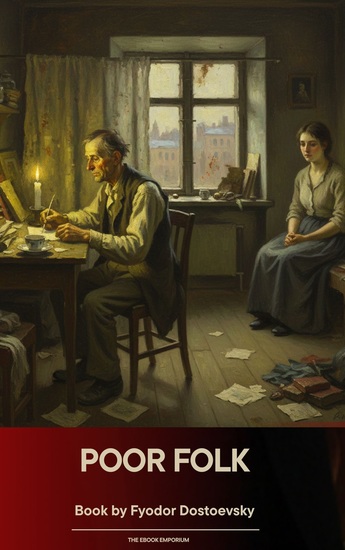
Before the psychological labyrinths of Crime and Punishment, a young Dostoevsky captured the world's attention with this exquisite epistolary novel. Through a series of increasingly desperate letters, we witness the relationship between Makar Devushkin, a lowly, aging copy clerk, and Varvara Dobroselova, a fragile young seamstress. Living in squalid rooms across a dismal St. Petersburg courtyard, they exchange words of comfort, shared bread, and the flickering hope of a better life. Poor Folk is a searingly intimate portrait of the "little man" struggling to maintain his humanity in a society that views him as nothing more than a smudge on a ledger.

The Birth of Psychological Realism: Dostoevsky takes the traditional "sentimental" epistolary form and infuses it with a brutal, modern realism. He elevates the clerk—a figure usually mocked in Russian literature—to a tragic hero. Makar's obsession with his social standing and his desperate attempts to appear "respectable" even as he starves reveal the deep psychological scars of class inequality.

A Tragedy of Self-Sacrifice: As their financial situation deteriorates, the letters become a battleground between love and survival. Makar's selfless devotion to Varvara leads him to ruin, while Varvara is forced to make a heart-shattering choice between the man who loves her and the safety of a wealthy, predatory suitor. It is a story that proves the greatest tragedies are often the quietest ones, occurring behind closed doors in the poorest corners of the city.

Witness the soul of a genius in its first bloom. Purchase "Poor Folk" today and experience the novel that changed Russian literature forever.
Disponível desde: 07/01/2026.
Comprimento de impressão: 182 páginas.