¡Acompáñanos a viajar por el mundo de los libros!
Añadir este libro a la estantería
Grey
Escribe un nuevo comentario Default profile 50px
Grey
Suscríbete para leer el libro completo o lee las primeras páginas gratis.
All characters reduced
Beyond Good and Evil - cover

Beyond Good and Evil

Friedrich Wilhelm Nietzsche

Editorial: Publisher s23237

  • 0
  • 0
  • 0

Sinopsis

Beyond Good and Evil (German: Jenseits von Gut und Böse), subtitled "Prelude to a Philosophy of the Future" (Vorspiel einer Philosophie der Zukunft), is a book by the German philosopher Friedrich Nietzsche, first published in 1886.
It takes up and expands on the ideas of his previous work, Thus Spoke Zarathustra, but approached from a more critical, polemical direction.
In Beyond Good and Evil, Nietzsche attacks past philosophers for their alleged lack of critical sense and their blind acceptance of Christian premises in their consideration of morality. The work moves into the realm "beyond good and evil" in the sense of leaving behind the traditional morality which Nietzsche subjects to a destructive critique in favour of what he regards as an affirmative approach that fearlessly confronts the perspectival nature of knowledge and the perilous condition of the modern individual.
Disponible desde: 20/09/2022.
Otros libros que te pueden interesar

  • Fairlie's Secret War - How One Village Helped Defeat German U-Boats - cover

    Fairlie's Secret War - How One...

    John Riddell

    • 0
    • 0
    • 0
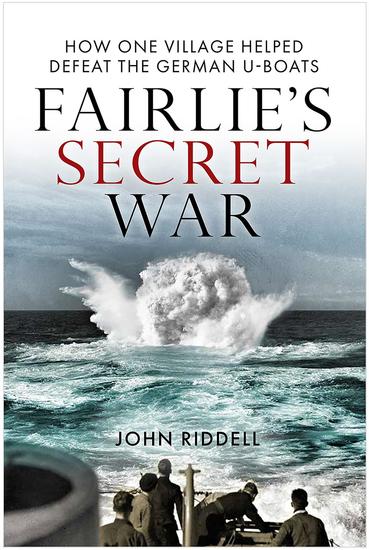
    During the Second World War the Royal Navy's vitally important Anti-submarine Experimental Establishment was secretly moved from Portland in Dorset to the Ayrshire village of Fairlie, to escape German bombing on the south coast. For the next six years it occupied the boatyard of yacht builder William Fife on the Firth of Clyde. During this time, highly confidential world-leading research on the acoustic detection of submarines by asdic – now known as sonar – was carried out by hundreds of scientists, officers and local men and women based at Fairlie. As experiments took place into new ways of sinking German U-boats, the peace of the quiet village was shattered. Winston Churchill described the work done at Fairlie as critical to winning the Battle of the Atlantic and ultimately the war. The research remained relevant to anti-submarine warfare long after the war, and is still relevant today.
    Fairlie's role in the war was not disclosed until relatively recently. Highly illustrated throughout and making use of previously unpublished material, this book tells the full story of the establishment at Fairlie for the first time. It describes the impact it had on local people, and their relationship with the naval officers and scientists who came to work there.
    Winner of the John Strawhorn Memorial Quaich, awarded by the Ayrshire Federation of Historical Societies 'to an individual or group who is judged to have made an outstanding contribution to the local history of Ayrshire'.
    Ver libro
  • Ancient and Medieval Conspiracy Theories: The History of the World’s Most Persistent Conspiracy Theories - cover

    Ancient and Medieval Conspiracy...

    Editors Charles River

    • 0
    • 0
    • 0
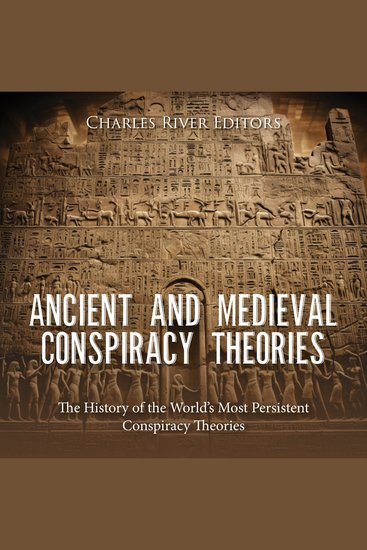
    Perhaps it should also not be surprising that the themes found in contemporary conspiracy theories are often echoed in ancient conspiracy theories. While some people still insist that Lyndon B. Johnson was in on John F. Kennedy’s assassination, it was speculated across the ancient world that the young Macedonian king, Alexander the Great, conspired to have his own father, Philip II of Macedon, assassinated. Likewise, the New Age beliefs that Mesoamerican ruins in Mexico were somehow tied to extraterrestrials find common cause with people who believe the ancient Indus Valley site at Mohenjo-daro was destroyed by a nuclear weapon. And through it all, the lack of surviving documentary evidence about much of antiquity has allowed for all of the unknowns to become highly speculative sources of debate. For example, did Caesar’s men burn the Library of Alexandria in the 1st century B.C., or was it destroyed later, if at all? Some people even suggest that the Library of Alexandria, whose ruins have never been located, never existed at all.  
    	Few eras are easier to let the imagination run wild than the Middle Ages, which have often been coined the Dark Ages based on a perceived lack of progress and information. In some respects, that is not completely unfounded because less is known about that historical period compared to the eras that came after it. In addition, it was a period marked by a great number of deaths caused by plague epidemics, crusades, and inquisitorial persecutions. Often, researchers are not even sure how and why certain events happened, and these mysteries still occupy the attention of historians. 
    	At the same time, some historical mysteries about the era may never be solved, if only because the relevant excavated material has been lost or the archaeological site has been destroyed. Of course, the lack of answers only makes these enigmas more intriguing. 
    Ver libro
  • History of African Kingdoms - Civilizations of Ancient Africa including the Kingdom of Kush the Land of Punt Carthage the Kingdom of Aksum the Mali Empire - cover

    History of African Kingdoms -...

    Will Forrest

    • 0
    • 0
    • 0
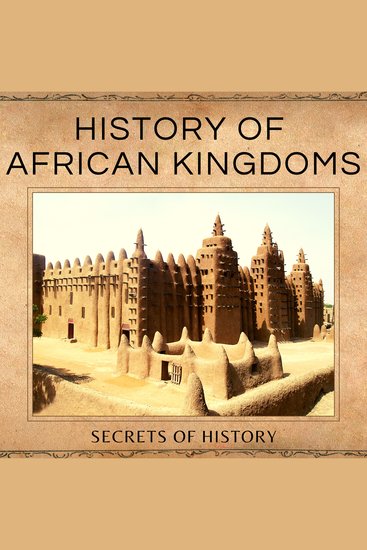
    Unlock The Mysteries Of Ancient African Kingdoms 
    Are you ready to embark on a journey through time? 
    With this book, you can explore some of Africa’s most mysterious and powerful ancient kingdoms - from the Land of Punt to the Kingdom of Kush - unlocking their secrets with every page. 
    This book delves deep into each kingdom's culture, society and leadership. You'll uncover the stories behind their rise to power and learn how they influenced history long after they fell from grace. Plus, you'll gain valuable insight into why these ancient civilizations are still so important today. 
    So don't wait any longer! Get your copy now and start discovering all that Ancient African Kingdoms have to offer!
    Ver libro
  • Lead Like a Teacher - How to Elevate Expertise in Your School - cover

    Lead Like a Teacher - How to...

    Miriam Plotinsky

    • 0
    • 0
    • 0
    For the sake of students, close the empathy gap between the classroom and the front office. 


    Far too often, teachers and administrators are adversaries within a school or district and display a mutual distrust and disrespect for each other's perspectives. Yet when this dissonance can be overcome, the result is a more-harmonious school environment that promotes student achievement. 


    In Lead Like a Teacher, instructional specialist Miriam Plotinsky urges secondary school administrators to lead more effectively by actively listening to teachers and welcoming their expertise. Each chapter examines one of nine key aspects of leadership and offers specific, creative solutions to the complex challenge of empowering change. 


    Moving from a micro to a macro focus as the book progresses—from classroom instruction to schoolwide initiatives—Plotinsky provides administrators with the tools to build and maintain collaborative leadership structures. This thoughtful approach to secondary leadership provides an actionable plan to dismantle some of the biggest barriers to achieving school excellence.
    Ver libro
  • The Poetry of Strangers - What I Learned Traveling America with a Typewriter - cover

    The Poetry of Strangers - What I...

    Anónimo

    • 0
    • 0
    • 0
    It might surprise you who’s a fan of poetry — when it meets them where they are. 
    Before he became an award-winning writer and poet, Brian Sonia-Wallace set up a typewriter on the street with a sign that said “Poetry Store” and discovered something surprising: all over America, people want poems. An amateur busker at first, Brian asked countless strangers, “What do you need a poem about?” To his surprise, passersby opened up to share their deepest yearnings, loves, and heartbreaks. Hundreds of them. Then thousands. Around the nation, Brian’s poetry crusade drew countless converts from all walks of life. 
    In The Poetry of Strangers, Brian tells the story of his cross-country journey in a series of heartfelt and insightful essays. From Minnesota to Tennessee, California to North Dakota, Brian discovered that people aren’t so afraid of poetry when it’s telling their stories. In “dying” towns flourish vibrant artistic spirits and fascinating American characters who often pass under the radar, from the Mall of America’s mall walkers to retirees on Amtrak to self-proclaimed witches in Salem. 
    In a time of unprecedented loneliness and isolation, Brian’s journey shows how art can be a vital bridge to community in surprising places. Conventional wisdom says Americans don’t want to talk to each other, but according to this poet-for-hire, everyone is just dying to be heard. 
    Thought-provoking, moving, and eye-opening, The Poetry of Strangers is an unforgettable portrait of America told through the hidden longings of one person at a time, by one of our most important voices today. The fault lines and conflicts which divide us fall away when we remember to look, in every stranger, for poetry. 
    Ver libro
  • Turkish War of Independence The: The History of the Conflicts that Created the Modern State of Turkey - cover

    Turkish War of Independence The:...

    Editors Charles River

    • 0
    • 0
    • 0
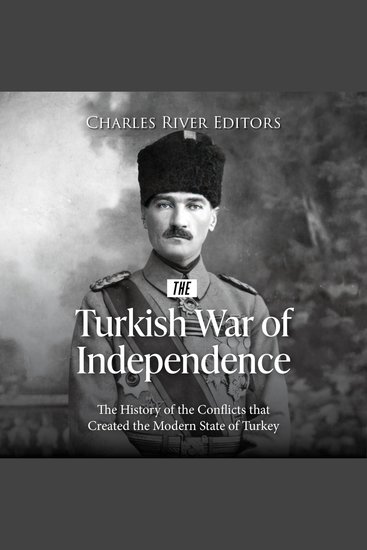
    The fall of the Ottoman Empire set the political and geostrategic scene of the new Middle East. In 1920, two years after the end of the war, the region was already experiencing growing instability. The issues and trends that would plague the region until today were growing. On April 4, Arab riots broke out in Jerusalem, fueled by the growing hostility against the Zionist movement. The British passivity would convince one of the Jewish leaders, Vladimir Jabotinsky (the future founder of the Israeli right-wing), of the strategic necessity of a strong Jewish military as the core of the future state.  
    	Just two weeks later in Turkey, the Grand National Assembly in Ankara set the foundation of the Turkish state, opening the way for several years of reforms. In Iraq, a Shiite revolt broke out in the south, as locals demanded the creation of an Islamic state. The British compromise was to place Faisal, the son of Sharif Hussein and a Sunni, on the throne. His father, meanwhile, was embroiled in a conflict with a local tribe, the Ibn Saud, that sought to carve a new kingdom in the Arabian Peninsula. 
    	As this makes clear, the collapse of the Ottoman Empire entirely altered the imperial complexion of the world, leaving a vacuum in the midst of which the surviving imperial powers felt obligated to secure and protect their strategic interests. More broadly, the long decline of the “sick man of Europe” fostered the emergence of nationalistic and ideological movements that are still key to any understanding of the Middle East today. The compatibility between the Islamic religion and culture and Western reforms were first discussed within the Ottoman Empire, and they are still up for debate today. Abdul Hamid’s pan-Islamism, while its results at the time remain limited, still resonates within the Muslim world and can still be seen as a viable rival to the region’s various nationalistic aspirations. 
    Ver libro