¡Acompáñanos a viajar por el mundo de los libros!
Añadir este libro a la estantería
Grey
Escribe un nuevo comentario Default profile 50px
Grey
Suscríbete para leer el libro completo o lee las primeras páginas gratis.
All characters reduced
The Robbers - cover

The Robbers

Friedrich Schiller

Editorial: Phoemixx Classics Ebooks

  • 0
  • 0
  • 0

Sinopsis

The Robbers Friedrich Schiller - Contains all 9 Volumes. Clarissa, or, the History of a Young Lady is an epistolary novel by Samuel Richardson, published in 1748. It tells the tragic story of a heroine whose quest for virtue is continually thwarted by her family, and is one of the longes.
Disponible desde: 16/11/2021.
Longitud de impresión: 222 páginas.

Otros libros que te pueden interesar

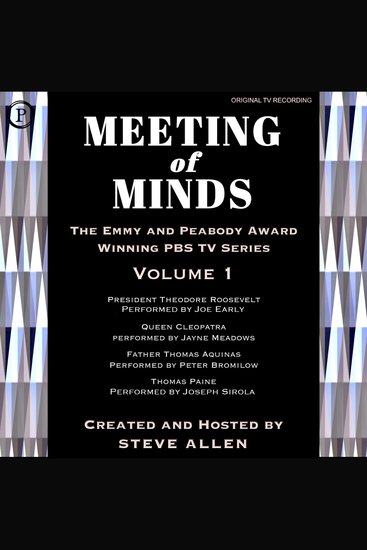
  • Meeting of Minds - Volume I - cover

    Meeting of Minds - Volume I

    Steve Allen

    • 0
    • 0
    • 0
    By " assembling" some of the most fascinating figures in world history, Meeting of Minds provided a groundbreaking opportunity for audiences to be exposed to ideas by way of a medium not normally known for its intellectual vigor. Portrayed by actors, panelists engage in stimulating round-table discussions that were conducted like any other talk show but featured prominent influencers from bygone generations— not just philosophers and politicians, but poets, playwrights, and presidents. From activists and artists to international leaders— both famous and infamous— these conversations are unfailingly witty, thought-provoking, and genuinely entertaining.
    An innovative series, Meeting of Minds remains one of the most delightful ways of gaining historical perspective ever devised, and these original soundtrack recordings capture the intellectual and spirited debates of the episodes hosted by Steve Allen. The panelists featured in this volume are President Theodore Roosevelt, Queen Cleopatra, theologian Thomas Aquinas, and American revolutionary Thomas Paine.
    Ver libro
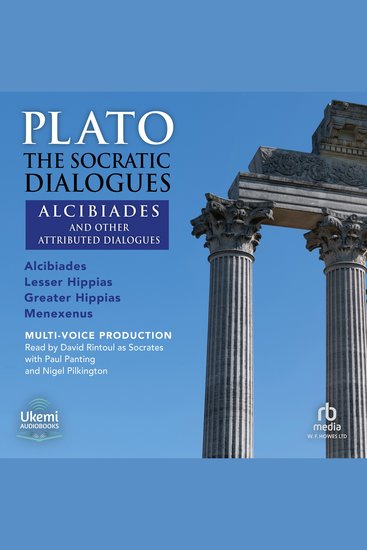
  • The Socratic Dialogues - Alcibiades and Other Attributed Dialogues - cover

    The Socratic Dialogues -...

    Plato

    • 0
    • 0
    • 0
    The influence of Plato, his Dialogues and his ‘Academy’, cast a long shadow. Around 35 Dialogues, almost all featuring Socrates as the principal figure, are generally ascribed to Plato and form one of the most important threads in Western philosophy  These four Dialogues may fall into the ‘Attributed Texts’ category, but they are of sufficient interest to warrant study in our time and when set against the principal canon.  
     
    The recording opens with Alcibiades I. Socrates’ interlocuter is well known as a young, charismatic figure of the time, and appears in the Symposium and Protagoras. The subject under discussion is justice and injustice. Socrates questions the over-confident Alcibiades about his understanding of these issues, which is crucial for someone about to play an active role in public life. It is the longest Dialogue of the four. 
     
    Hippias is another young man. A Sophist, brimming with the confidence of youth to the extent of being vain and boastful. He appears in two Dialogues on this recording, the Lesser Hippias and the Greater Hippias. The Lesser Hippias is a witty and lively conversation in which Hippias is keen to display his abilities only to be shaken by patient questioning by the astute Socrates. The Greater Hippias, a discussion about beauty, contains some interesting elements, while also showing how the form became diluted in the hands of lesser followers of Plato.  
     
    The final Dialogue, Menexenus is a special case. It was an important form in Athenian society and this is a rare surviving example. It has been included here in a new recording so it can be listened to in the context of ‘Attributed Dialogues’, rather than a fully accepted work by Plato. The background to each Dialogue is set by Benjamin Jowett. David Rintoul continues his persuasive characterisation of the masterful Socrates.
    Ver libro
  • The Shocking Truth about Media Bias - cover

    The Shocking Truth about Media Bias

    Zoey Fraisers

    • 0
    • 0
    • 0
    The media plays an essential role in shaping public perception, influencing opinions, and determining which issues receive attention. Every day, millions of people rely on news outlets to stay informed, trusting that journalists will present facts objectively. However, the reality is far more complex. Media bias is an undeniable force that affects how stories are reported, which facts are emphasized, and how narratives are framed. This bias can be subtle or overt, intentional or unintentional, but its consequences are profound.  
      
    Throughout history, media bias has been used as a tool for persuasion, propaganda, and agenda-setting. Governments, corporations, and interest groups have long recognized the power of controlling information. Whether through selective reporting, misleading headlines, or emotional language, media outlets can manipulate public sentiment. The question is not whether bias exists, but how it manifests and how it influences society.  
      
    One of the biggest challenges in recognizing bias is its ability to blend seamlessly into seemingly objective reporting. The way a journalist chooses to present a story—what details they include, the sources they cite, and even the language they use—can subtly push readers or viewers toward a particular perspective. Some media organizations openly align with political ideologies, while others claim impartiality but still reflect the interests of their ownership or advertisers. In a time when trust in journalism is declining, it is crucial to understand how bias operates and how to separate fact from opinion. 
    Ver libro

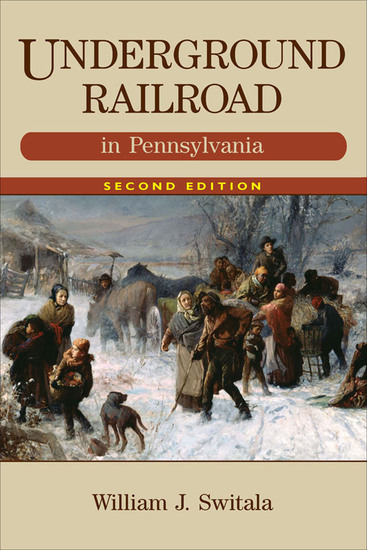
  • Underground Railroad - in Pennsylvania - cover

    Underground Railroad - in...

    William J Switala

    • 0
    • 0
    • 0
    A revised and expanded history of Pennsylvania’s role in the Underground Railroad, featuring escape route maps and eyewitness accounts. Organized in antebellum America to help enslaved people escape to freedom, the Underground Railroad was cloaked in secrecy and operated at great peril to everyone involved. The system was extremely active in Pennsylvania, with routes running through cities and towns in all parts of the state.  This revised second edition of Underground Railroad in Pennsylvania retraces the routes with detailed maps, discusses the large city networks, identifies the houses and sites where escapees found refuge, and records the names of the people who risked their lives to support the operation.
    Ver libro
  • JD Vance and the Future of the Republican Party - cover

    JD Vance and the Future of the...

    Frank DeVito

    • 0
    • 0
    • 0
    Before 2016, JD Vance was completely unknown to the American public. He 
    had a compelling life story: A poor kid from a dysfunctional family in 
    Middletown, Ohio, encouraged by the loving support of his grandmother and a 
    handful of others within his family and community. He rose from a broken 
    home and a broken community, joined the Marines, went to Yale Law School, 
    and ended up an elite lawyer working in Silicon Valley with some of the 
    richest and smartest people in the world. 
    Now, Vance is one of the most powerful and influential Republicans in the 
    country. But unlike many politicians, Vance is a public intellectual. Years 
    before he ran for public office, Vance was a prolific thinker, writer, and 
    speaker, grappling with some of the most important issues that face the 
    Republican Party and the nation today. 
    Vance has a solid grip on where the Republican Party has come from and 
    where it is heading. He sees the various factions and coalitions that make up 
    the Party and understands them deeply. As the Republican Party works to 
    adapt to the political changes initiated by Trump to truly become the profamily and pro-worker Party of the American middle class, Vance stands alone 
    as the most knowledgeable and capable politician to bring the Republican 
    Party—and the nation—into the post-Donald Trump world.
    Ver libro
  • The Supreme Court - Power Politics and Law - cover

    The Supreme Court - Power...

    Newbury Publishing

    • 0
    • 0
    • 0
    As the highest court in what has become the world's most powerful nation, The Supreme Court of the United States sits at the faultline between the ideal and the real, between justice and power, between the serene majesty of The Law and the sometimes bombastic, sometimes grubby disputes that define our politics. 
    In the arguments before the court, principles clash with ambition and avarice, and it can be difficult to tell which is which. The decisions that the justices hand back are often wise and reasonable, but there have been moments of folly as well, and on more than one occasion it has taken decades for Americans to recognize the difference. 
    Learn more about the Supreme Court through this series.
    Ver libro