Junte-se a nós em uma viagem ao mundo dos livros!
Adicionar este livro à prateleira
Grey
Deixe um novo comentário Default profile 50px
Grey
Assine para ler o livro completo ou leia as primeiras páginas de graça!
All characters reduced
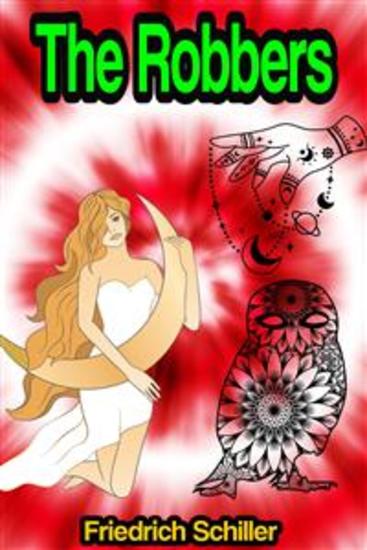
The Robbers - cover
LER

The Robbers

Friedrich Schiller

Editora: Memorable Classics eBooks

  • 0
  • 0
  • 0

Sinopse

The Robbers by Friedrich Schiller  is the first drama by German playwright Friedrich Schiller. The play was published in 1781 and premiered on 13 January 1782 in Mannheim, Germany, and was inspired by Leisewitz' earlier play Julius of Taranto. It was written towards the end of the German Sturm und Drang ("Storm and Stress") movement, and many critics, such as Peter Brooks, consider it very influential in the development of European melodrama.

The play astounded its Mannheim audience and made Schiller an overnight sensation. It later became the basis for Verdi's opera of the same name, I masnadieri.

The plot revolves around the conflict between two aristocratic brothers, Karl and Franz Moor. The charismatic but rebellious student Karl is deeply loved by his father. The younger brother, Franz, who appears as a cold, calculating villain, plots to wrest away Karl's inheritance. As the play unfolds, both Franz's motives and Karl's innocence and heroism are revealed to be complex.

Schiller's highly emotional language and his depiction of physical violence mark the play as a quintessential Sturm und Drang work.[citation needed] At the same time, the play utilizes a traditional five-act structure, with each act containing two to five scenes. The play uses alternating scenes to pit the brothers against each other, as one quests for money and power, while the other attempts to create a revolutionary anarchy in the Bohemian Forest.

Schiller raises many disturbing issues in the play. For instance, he questions the dividing lines between personal liberty and the law and probes the psychology of power, the nature of masculinity and the essential differences between good and evil.
Disponível desde: 03/06/2022.


Outros livros que poderiam interessá-lo

  • After Your Child's Autism Diagnosis - A Quick Supportive Guide - cover

    After Your Child's Autism...

    Sally Willbanks

    • 0
    • 0
    • 0
    Receiving your child's autism diagnosis can be very stressful. Emotions run high and time is in short supply. This book was written to help you during this time. Each chapter is concise and full of information to help you start your journey as a parent of an awesome autistic child.
    Ver livro
  • Farnsworth's Classical English Argument - cover

    Farnsworth's Classical English...

    Ward Farnsworth

    • 0
    • 0
    • 0
    Learn how to argue from the masters. This book is a complete course on the art of argument, taught by the greatest practitioners of it: Churchill, Lincoln, and hundreds of others from the golden age of debate in England and America. 


    The book's concise chapters provide lessons in all aspects of give and take—the syllogism and the slippery slope, the argumentum ad hominem and reductio ad absurdum, the fallacy and the insult. Ward Farnsworth shows how the full range of such techniques can be used or repelled, and brings them to life with examples that are fascinating and instructive. 


    The result is a must-listen reference that will leave you better able to win arguments and to defend yourself under fire. It's also an entertaining reminder that argument can be a source of beauty and delight. As Farnsworth says of the examples, they show talented advocates "crossing analytical swords and exchanging abuse when those things were done with more talent and dignity than is common today. They made argument a spectator sport of lasting value and interest."
    Ver livro
  • The Timeline of Intelligent Life on Earth - From Millions of Years Ago To the Present - cover

    The Timeline of Intelligent Life...

    Martin K. Ettington

    • 0
    • 0
    • 0
    I’m fascinated with Ancient History because there are continuous new discoveries which push back the dawn of civilization by thousands of years. In the last couple of decades, the discoveries at Gobekli Tepe in eastern Turkey pushed back man-made structures to the time period of 9,000-11,000 B.C. Thousands of years before the next know civilizations existed. 
    This book includes my research on ancient sites around the world, underground structures, giants, the destruction of civilization about 10,500 B.C., the real Atlantis, and out of place objects which can be millions of years old. 
    Yes-I’m saying intelligent life has existed on Earth that long, and since humanity and even primates don’t exist in those times at all, aliens must have lived on the Earth at that time. 
    There are three parts to this book: 
    Part One - Millions of Years Ago 
    This includes stories of aliens existing on Earth in our history, and many out of place objects made by intelligent beings, and the fossil record which provides supporting evidence that intelligent life did exist at those times. 
    Part Two - The Unknown Civilizations of Man 
    Here we have evidence of structures built by man but way before any accepted records that civilization or man made constructions existed. Some of these things may go back 100,000 years ago. 
    Part Three – Post Ice Age Civilizations 
    This part includes evidence that the Younger Dryas event was actually comets striking the Earth which caused major disasters and probably the destruction of civilizations about 10,500 B.C. 
    My intention is that this timeline will provide a skeleton of mankind and intelligent life’s early history on Earth which can be filled in overtime to become much more detailed and prove the truth of this point of view to skeptics worldwide. 
     
    Ver livro
  • Egyptian Science and Technology - Innovations of the Ancient World - cover

    Egyptian Science and Technology...

    Omar Khalil

    • 0
    • 0
    • 0
    Ancient Egypt, renowned for its monumental architecture and sophisticated culture, was also a hub of intellectual and scientific advancements. At the heart of Egyptian knowledge was a unique blend of practical experience, religious beliefs, and cultural traditions. Understanding the foundations of their knowledge requires examining the interplay between mythology, early scientific thought, and the ways this knowledge was transmitted through generations. 
    The role of religion and mythology in ancient Egypt cannot be overstated. Egyptian cosmology deeply influenced how people understood the world around them. Deities associated with creation, the afterlife, and natural phenomena shaped the Egyptians' perception of science and technology. For example, the god Thoth was believed to be the deity of wisdom, writing, and mathematics, and his influence permeated educational practices. Priests and scribes, who were often part of temple schools, acted as custodians of this sacred knowledge. Their training combined religious teachings with practical subjects like astronomy, mathematics, and medicine. 
    Early scientific thought in ancient Egypt was pragmatic rather than theoretical. Egyptians were skilled observers, and much of their knowledge arose from practical problem-solving. Whether it was calculating the Nile's flooding patterns or designing complex irrigation systems, their science emerged from the need to manage everyday challenges. For instance, their understanding of geometry developed out of the necessity to remeasure fields after the annual inundation of the Nile. Similarly, medical practices were rooted in practical observations of ailments and their treatments, blending empirical knowledge with spiritual beliefs.
    Ver livro
  • History of Ukraine - The Country’s Origin Conflicts Holodomor Soviet Era and More - cover

    History of Ukraine - The...

    Kelly Mass

    • 0
    • 0
    • 0
    The early history of the territory now known as Ukraine is marked by a series of ancient cultures and civilizations that shaped the region's development before and during the Dark Ages. The area was initially inhabited by the Dacians, a group known for their connections to the wider Thracian culture, alongside various nomadic tribes such as the Cimmerians, Scythians, and Sarmatians. These peoples made significant contributions to the cultural and political landscape of Eastern Europe during the Iron Age. 
    From around 750 BC to 250 BC, the Scythians established a powerful kingdom that extended its influence over much of the Eurasian steppes, including the territories of modern-day Ukraine. The Scythian kingdom is well-known for its unique art, horse-riding culture, and its role as a dominant force in the region. Meanwhile, Greek colonists founded several cities on the northern shores of the Black Sea during the 6th century BC, including Tyras, Olbia, and Hermonassa. These cities became important trading hubs and cultural centers, remaining under Roman and later Byzantine control until the 6th century AD.
    Ver livro
  • Learn Hungarian While Sleeping - Learn While Sleeping - cover

    Learn Hungarian While Sleeping -...

    Innovative Language Learning, ...

    • 0
    • 0
    • 0
    Can you learn while sleeping? Studies* say that… yes you can.


    Listening to a language while asleep can help supercharge your vocabulary.


    Learn Easily with the Power of Pleasant Repetition


    With the Learn Hungarian While Sleeping Audiobook, you’ll absorb over 430 Hungarian words and phrases effortlessly.


    You can use this Beginner-Level Audiobook to
     
    • Relax while listening to Hungarian phrases and translations
     
    • Relieve stress. Just listen in — No confusing grammar rules
     
    • Wind down before bed to help you fall asleep
     
    • And of course — learn words passively — in your sleep.


    How does it work? Just press play... and listen to the gentle voice of a native teacher.


    Our teacher repeats each word and phrase multiple times... so you’ll retain them better… whether you’re awake or in bed. For best results, listen while awake first. Then, listen while falling asleep.


    What Will You Learn? You’ll Master 430+ Beginner Words & Phrases Including
     
    • Basic Greetings
     
    • Numbers in Hungarian
     
    • Common Questions and Answers
     
    • Words for Introducing Yourself
     
    • Basic Verbs & Adjectives
     
    • And much more


    The Learn Hungarian While Sleeping Audiobook includes
     
    • 13 Beginner-Level Audio Lessons
     
    • 6+ Hours of Lessons in Total
     
    • Accompanying PDF eBook with all of the words, phrases and translations


    * Züst, Mark Alain et al. “Implicit Vocabulary Learning during Sleep is Bound to Slow-Wave Peaks.” Current Biology. October 21, 2019.


    Download the PDF and read along
    Ver livro