Junte-se a nós em uma viagem ao mundo dos livros!
Adicionar este livro à prateleira
Grey
Deixe um novo comentário Default profile 50px
Grey
Assine para ler o livro completo ou leia as primeiras páginas de graça!
All characters reduced
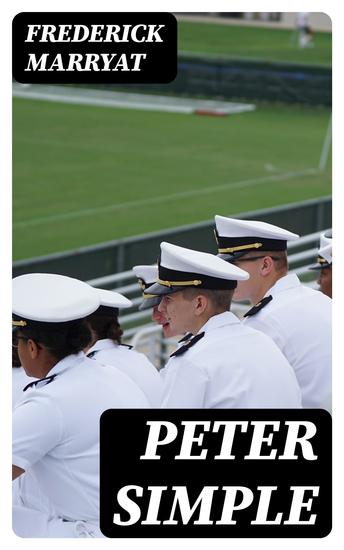
Peter Simple - cover
LER

Peter Simple

Frederick Marryat

Editora: DigiCat

  • 0
  • 0
  • 0

Sinopse

In 'Peter Simple,' Frederick Marryat delivers a captivating narrative filled with adventure and humor, embodying the spirit of the early 19th century British novel. The story follows the exploits of its eponymous hero, Peter, who embarks on a naval career that mirrors Marryat's own experiences as a sailor. This witty and episodic tale is rich in satire, exploring themes of identity, rank, and the moral complexities of maritime life, all while employing a vivid and accessible prose style that engages readers throughout. The novel demonstrates the influences of Romanticism and the nascent Victorian literary scene, which emphasized personal development and social critique. Frederick Marryat, a former naval officer and a pioneering figure in sea literature, drew from his own adventurous life at sea while crafting 'Peter Simple.' Born in 1792, Marryat's real-life experiences on the ocean, coupled with his keen observations of naval culture, informed his storytelling. Notably, his naval career allowed him intimate access to the unique challenges faced by seamen, lending authenticity and depth to Peter's character and his trials, ultimately shaping the trajectory of nautical fiction. 'Peter Simple' is a must-read for those who appreciate classic literature infused with humor and insightful commentary. Marryat's skillful blending of adventure and moral reflection resonates with contemporary readers, making this maritime odyssey not only an engaging escapade but also a profound exploration of human nature and societal norms. This novel is sure to appeal to lovers of sea tales, character-driven narratives, and readers interested in the intricate tapestry of early 19th-century British literature.
Disponível desde: 16/09/2022.
Comprimento de impressão: 404 páginas.
Outros livros que poderiam interessá-lo

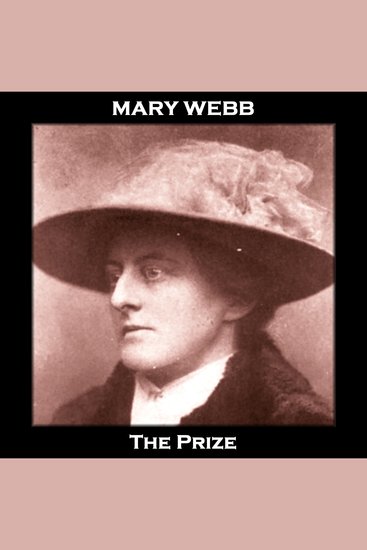
  • The Prize - From their pens to your ears genius in every story - cover

    The Prize - From their pens to...

    Mary Webb

    • 0
    • 0
    • 0
    Mary Gladys Meredith was born on 25th March 1881 at Leighton Lodge in the village of Leighton, near Shrewsbury in Shropshire.  
    Mary was home-schooled by her father before being sent to a finishing school in Southport in 1895. Her longs walks in the countryside helped her develop a heightened sense of observation and description, of both people and places, which later infused both her poetry and prose. 
    When she was 20 she developed symptoms of Graves' disease, a thyroid disorder that caused bulging protuberant eyes and throat goitre. This caused life-long ill health and was a possible contributor to her early death.  
    Mary was first published as a teenager when her brother sent to a local newspaper her poem on a recent rail accident.  Mary, who was in the habit of destroying her work was appalled though placated when she discovered that it had received some positive appreciation in readers letters. 
    1912 brought marriage to Henry Bertram Law Webb, a teacher. He supported her literary work which, in 1917, resulted in the publication of her novel ‘The Golden Arrow.’ 
    A few years later they acquired a property in London where, it was hoped, recognition of her literary talents would be more easily recognised.   
    Her 1924 novel, ‘Precious Bane’, won the Prix Femina Vie Heureuse, the prestigious French literary prize awarded by an all-female jury. 
    Most of her poetry and various other works were only published after her death. 
    By 1927 her health was deteriorating and her marriage failing.   
    Mary Webb died on 8th October 1927 at St Leonards-on-Sea, East Sussex.  She was 46.
    Ver livro
  • Sappho: One Hundred Lyrics - cover

    Sappho: One Hundred Lyrics

    Bliss Carman

    • 0
    • 0
    • 0
    In one hundred lyrical poems Carman strives to recreate the Lost Songs of Sappho, a task he fulfills both with imaginative freedom and great attention to the original fragments. Summary by inflected.
    Ver livro
  • Whirligigs - cover

    Whirligigs

    O. Henry

    • 0
    • 0
    • 0
    Not Yet Available
    Ver livro
  • A Lesson on a Tortoise - From their pens to your ears genius in every story - cover

    A Lesson on a Tortoise - From...

    D H Lawrence

    • 0
    • 0
    • 0
    David Herbert Lawrence was born on the 11th September 1885 in Eastwood, Nottinghamshire, a coal mining town where the reality of a harsh life was only useful as experiences for future literary works. 
    He was educated at Beauvale Board School and became the first local boy to receive a scholarship to attend Nottingham High School. After 3 years he became a junior clerk in Haywood’s surgical appliances factory. He was also attempting a literary career which, in the short term, led to a teacher training position in Eastwood and later a teaching qualification from University College, Nottingham.  
    Lawrence’s first efforts were poems, short stories and a draft of ‘The White Peacock’. Moving to London and a teaching position in Croydon his writing attracted the attention of Ford Madox Ford, editor of The English Review, and he commissioned him to write ‘Odour of Chrysanthemums’.  
    Wanting to write full-time he now began work on what would become ‘Sons and Lovers.   
    In 1912 he met the older and married mother-of-three Frieda Weekley. They eloped to Germany and here Lawrence could see for himself the growing tensions with France.  So keen was his interest that he was arrested and accused of being a British spy.  
    In early 1914 Frieda obtained her divorce and they returned to Britain to be married just days before the outbreak of war. Owing to her German parentage, and his own public dislike of militarism and violence, the couple were treated with contempt and suspicion throughout the war years.  
    Despite this he continued to write but his reputation in England was so tarnished and, mirrored by his own disdain for the country, he and Frieda left England in November 1919, first for Europe and then America via Ceylon and Australia. 
    They bought a ranch in Taos, New Mexico and visited Mexico several times. The third visit in March 1925 caused a near fatal attack of malaria. To convalesce they moved to Florence. Here he continued work on ‘Lady Chatterley’s Lover’ which for many years would cause controversy. A renewed interest in oil painting resulted in an exhibition in 1929 which was raided by the police and several works were confiscated.  
    D H Lawrence died of complications arising from a bout of tuberculosis on the 2nd of March 1930 in Vence, France.  He was 44.
    Ver livro
  • Two Bagger - With Bonus Story by Elmore Leonard "Chickasaw Charlie Hoke" - cover

    Two Bagger - With Bonus Story by...

    Michael Connelly

    • 0
    • 0
    • 0
    Suspense! Baseball! Here are two tales that combine both, written by master storytellers Michael Connelly and Elmore Leonard.
    In "Two Bagger," a pair of detectives follow a recently released felon who has been hired to make a hit at an LA Dodgers baseball game—and the suspenseful cat and mouse games begin.
    In "Chickasaw Charlie Hoke," a retired professional baseball player is looking for employment and telling stories—but are the stories true?
    These stories—by two of the best thriller writers to ever put pen to paper—is packed with twists, turns, of course, baseball.
    Ver livro
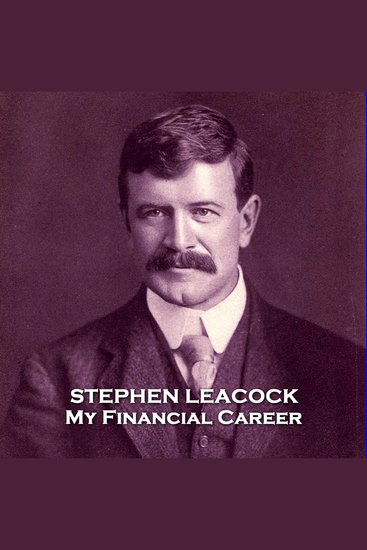
  • My Financial Career - From their pens to your ears genius in every story - cover

    My Financial Career - From their...

    Stephen leacock

    • 0
    • 0
    • 0
    Stephen P H Butler Leacock FRSC was born on 30th December 1869 in Swanmore, near Southampton, England.  He was the third of eleven children. 
    The family emigrated to Canada in 1876, settling on a 100-acre farm in Sutton, Ontario.  There Leacock was home-schooled until, funded by his grandfather, he was enrolled into the elite private school Upper Canada College in Toronto.  Academically he was very strong.  In 1887, at age 17, he became head boy and then proceeded on to the University of Toronto to study languages and literature.  Despite completing two years of study in only one, he was obliged to leave the university because his father, an alcoholic, had abandoned the family and finances could not be stretched to continue his attendance.  Leacock now enrolled in a three-month course at Strathroy Collegiate Institute to become a qualified high school teacher with a regular income. 
    He worked at Upper Canada College from 1889 through 1899 and later resumed his studies part-time at the University of Toronto, graduating with a B A in 1891.  It was during this period that he was first published in The Varsity, a campus newspaper.  But his passion was now economics and political theory.  In 1899 he enrolled for postgraduate studies at the University of Chicago and earned his PhD in 1903. 
    Leacock had married Beatrix Hamilton in 1900 and 15 years later the couple had their only child, Stephen.  In time father and son developed a love-hate relationship, partially caused by his son’s diminutive stature of only four feet.  
    Accepting a post at McGill University Leacock would remain there until he retired in 1936.  In 1906, he wrote ‘Elements of Political Science’, quickly adopted as a standard textbook for the next two decades and his most profitable book.  He also began public speaking and lecturing, and took a year's leave of absence in 1907 to speak throughout Canada on the subject of national unity.  
    Leacock had submitted humourous articles to the Toronto magazine Grip in 1894, and was soon published in other Canadian and US magazines.  In 1910, he printed privately a collection of these as ‘Literary Lapses’.  Acquired by the British publisher, John Lane, it was released in London and New York.   He was now a commercially successful writer.  There soon followed ‘Nonsense Novels’ (1911) and the sentimental favourite, ‘Sunshine Sketches of a Little Town’ (1912).  His ‘Arcadian Adventures with the Idle Rich’ (1914) is a darker collection that satirizes city life.  Collections of sketches continued to be published almost annually, filled with a mixture of light-hearted whimsy, parody, nonsense, and satire. 
    In later life, he wrote on the art of humour writing and published biographies on Twain and Dickens.  Together with continued speaking tours he also added to his non-fiction with many well-regarded and award-winning volumes on Canada. 
    Politically Leacock was a social conservative and a partisan Conservative.  He opposed women’s right to vote and had a varied record on non-English immigration.  He was a champion of Empire but an advocate of social welfare legislation and wealth redistribution, but he often caused friction with his racist views towards blacks and Indigenous peoples. 
    Leacock has for some time been forgotten as an economist, but it’s often quoted that in 1911 more people had heard of him than had heard of Canada.  For the decade after 1915 Leacock was the most popular humorist in the English-speaking world. 
    Stephen Leacock died on 28th March 1944 of throat cancer in Toronto, Canada.  He was 74.  He was buried in the St George the Martyr Churchyard, Sutton, Ontario.
    Ver livro