Join us on a literary world trip!
Add this book to bookshelf
Grey
Write a new comment Default profile 50px
Grey
Subscribe to read the full book or read the first pages for free!
All characters reduced
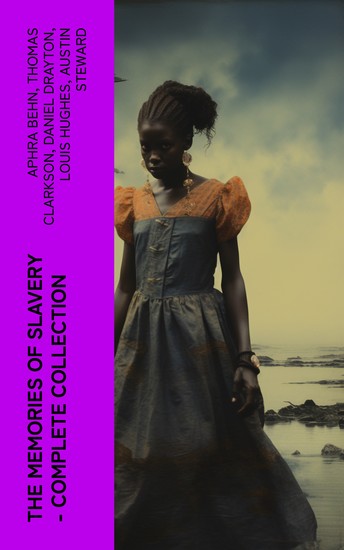
The Memories of Slavery - Complete Collection - Slave Narratives Abolitionist Voices and the Struggle for Freedom - cover

The Memories of Slavery - Complete Collection - Slave Narratives Abolitionist Voices and the Struggle for Freedom

Frederick Douglass, Booker T. Washington, William Craft, Ellen Craft, Sojourner Truth, Aphra Behn, Harriet Jacobs, Solomon Northup, Stephen Smith, Louis Hughes, Elizabeth Keckley, Nat Turner, Mary Prince, Olaudah Equino, Charles Ball, Willie Lynch, John Gabriel Stedman, Ida B. Wells-Barnett, William Still, Henry Bibb, Josiah Henson, Brantz Mayer, Moses Grandy, Sarah H. Bradford, Jacob D. Green, Austin Steward, L. S. Thompson, Kate Drumgoold, Lucy A. Delaney, Henry Box Brown, Margaretta Matilda Odell, Thomas S. Gaines, Theodore Canot, Daniel Drayton, Thomas Clarkson, F. G. De Fontaine, John Dixon Long, Joseph Mountain, Administration Work Projects

Publisher: e-artnow

  • 0
  • 0
  • 0

Summary

The Memories of Slavery—Complete Collection gathers an extraordinary archive of testimony, autobiography, abolitionist argument, travel writing, documentary record, and literary representation. Spanning Atlantic slavery, bondage in the United States, escape, emancipation, and Reconstruction, it juxtaposes first-person recollection with polemical, legal, and historical materials. Accounts of flight, family separation, resistance, and self-fashioning stand beside texts that expose the contested means by which slavery was narrated, remembered, and politically mobilized. Its contributors encompass formerly enslaved people, abolitionists, journalists, reformers, observers, and compilers of historical testimony, from the transatlantic world of Equiano and Prince to nineteenth-century African American activism and the documentary ambitions associated with the Work Projects Administration. These diverse voices illuminate Black literary and political traditions of witness while situating antislavery writing within wider movements for abolition, citizenship, education, and racial justice. The collection's varied provenance also invites critical attention to mediation, editorial framing, and the reliability of historical documents. Recommended for students, scholars, and general readers, this volume offers a rare opportunity to trace slavery's many lived realities and afterlives across genres and generations. Its breadth encourages comparative reading: voices of survival and resistance enter dialogue with reformist rhetoric, public memory, and archival evidence. The result is both an invaluable educational resource and a compelling invitation to examine how narratives of slavery have shaped historical understanding.
Available since: 12/13/2023.
Print length: 13589 pages.

Other books that might interest you

  • Camilla - From Outcast to Queen Consort - cover

    Camilla - From Outcast to Queen...

    Angela Levin

    • 0
    • 0
    • 0
    For many years, Camilla was portrayed in a poor light, blamed by the public for the break-up of the marriage between Prince Charles and Lady Diana. Initially, Queen Elizabeth refused to see or speak to her, but, since the death of Prince Philip, Camilla had become one of the Queen's closest companions. Her confidence in Camilla and the transformation she had seen in Prince Charles since their wedding resulted in her choosing the first day of her Platinum Jubilee year to tell the world that she wanted Camilla to be Queen Consort, not the demeaning Princess Consort suggested in 2005. 


    Angela Levin uncovers Camilla's rocky journey to be accepted by the royal family and how she coped with her brutal portrayal in Netflix's The Crown. The public have witnessed her tremendous contribution to help those in need, especially during COVID. Levin has talked to many of Camilla's long-term friends, her staff, and executives from the numerous charities of which Camilla is patron. She reveals why Camilla concentrates on previously taboo subjects, such as domestic violence and rape. Most of all, Levin tells the story of how Camilla has changed from a fun-loving young woman to one of the senior royals' hardest workers. She has retained her mischievous sense of humor, becoming a role model for older women and an inspiration for younger ones.
    Show book
  • Damned Ghost - How Shakespeare saw through it and we didn't - cover

    Damned Ghost - How Shakespeare...

    Eliza Langland

    • 0
    • 0
    • 0
    In Hamlet, Shakespeare's play, a ghost tells a prince a terrible tale. ‘Is it true?’ the prince asks himself.  This book asks, and answers, that same question.  
    A ghost is something one may see and believe or look through and doubt. Doubt runs through the entire play. But it is in how Shakespeare used the ghost - missing from the original tale - The Story of Amleth - that he revealed a surprising truth; something not generally known. A story, from real-life history, sits unrecognised behind this play. Retold in the Ghost’s speech. Shakespeare lifted it almost word for word. And it tells us why Hamlet is right to test its word. To those who knew the truth, the ghost was transparent (and will be again to the readers or listeners of this book).  
    Shakespeare, as always, lets us decide. From where he sat, writing his play in his own and his audience's time, he was imagining a future yet to come based on what had recently come to pass. We, in our time... we forgot. 
     
    (As a bonus, listeners will finally find out what is that book that Hamlet reads. You know the one? Containing "words, words words"?)   
     
    Abridged and adapted for audio from Elsinore: Hamlet, History Hidden in Plain Sight, by the same author, this book, written in a conversational style, follows a film crew shooting on location, looking for where Hamlet was really set. (It’s not where you think.) The title - Damned Ghost - is from the scene in which Hamlet tells Horatio, ‘There is a play tonight before the King. One Scene of it comes near the circumstance which I have told thee of my Father’s death.’ He says that if the king does not betray himself as a murderer, well, then the ghost was lying. ‘Observe mine Uncle. If his occulted guilt do not itself unkennel in one speech, it is a damnèd ghost that we have seene.' But we don’t start there. We're on a film set watching another re-enactment of real-life history and a very significant real-life death ...
    Show book
  • This Tumbleweed Landed - Life in the 50s & 60s in Rural America - cover

    This Tumbleweed Landed - Life in...

    Larada Horner-Miller

    • 0
    • 0
    • 0
    Growing up as a member of a ranching family in Branson, a small town in southeastern Colorado, provided author Larada Horner-Miller a treasure-trove of stories, characters, and emotional moments that make up her touching memoir, This Tumbleweed Landed. This collection of poems and prose transports readers back to rural America during the fifties and sixties, to one idyllic, tight-knit community in particular. Each of the book’s eight sections weaves a nostalgic yarn that tells of playtimes with friends and neighbors, favorite hiding places, living without a telephone for the first eleven years of life, and the touching memories of growing up on a ranch community. Whether it is Saturday night dances or hot days working with 4-H at the county fair, the poems and pages roll along like a tumbleweed in search of a place to land. Readers will find themselves longing to go back to this very specific time and place, whether they actually experienced it in their own lives or not. 
    Read about this daddy’s little girl and her adventures that mold and shape her formative years. Where will this tumbleweed land, and what kind of woman will she be when she finally arrives?
    Show book
  • America’s Most Notorious Natural Disasters - cover

    America’s Most Notorious Natural...

    Charles River Editors

    • 0
    • 0
    • 0
    It had taken about 40 years for Chicago to grow from a small settlement of about 300 people into a thriving metropolis with a population of 300,000, but in just two days in 1871, much of that progress was burned to the ground. In arguably the most famous fire in American history, a blaze in the southwestern section of Chicago began to burn out of control on the night of October 8, 1871.  
    In 2005, the world watched in horror as Hurricane Katrina decimated New Orleans, and the calamity seemed all the worse because many felt that technology had advanced far enough to prevent such tragedies, whether through advanced warning or engineering. However, the failure of human engineering like that seen in New Orleans was nothing new, and it had previously had even deadlier consequences in Johnstown, Pennsylvania. Although floods rarely get as much coverage as other kinds of natural disasters like volcanic explosions, the Johnstown Flood of 1889 has remained an exception due to the sheer destruction and magnitude of the disaster.  
    As bad as Hurricane Katrina was, the hurricane that struck Galveston, Texas on September 8, 1900 killed several times more people, with an estimated death toll between 6,000-12,000 people. Prior to advanced communications, few people knew about impending hurricanes except those closest to the site, and in the days before television, or even radio, catastrophic descriptions were merely recorded on paper, limiting an understanding of the immediate impact.   
    	On April 18, 1906, most of the residents of the city of San Francisco were sound asleep when the ground started to shake around 5:15 a.m., but what started as fairly soft tremors turned into a violent shaking in all directions. The earthquake lasted about a minute, but it had enough destructive force to divert the course of entire rivers and level much of the 9th largest city in America at the time. 
    Show book
  • Neither Confirm Nor Deny - Lawless Agent Running the Supression of Truth and MI5 - cover

    Neither Confirm Nor Deny -...

    John Ware

    • 0
    • 0
    • 0
    In January 1980, a secret review quietly rewired Britain’s war in Northern Ireland. Commissioned by the Chief Constable of the RUC and led by future MI5 Director General Sir Patrick Walker, it placed intelligence above the law - and changed everything. 
     
    What followed was a vast, covert agent-running machine that penetrated the Provisional IRA at unprecedented depth. Thousands of informers were recruited and handled outside any legal framework, authorised to lie, collude, and kill. Publicly, ministers spoke of the rule of law. Privately, the State crossed its own red lines. 
     
    Supporters claim Walker’s revolution saved lives and forced the IRA towards politics, helping pave the way to the Good Friday Agreement. Critics argue it licensed murder, subverted justice, and corrupted policing beyond repair. As one damning note to Tony Blair put it: ‘The State is assassinating people.’ 
     
    Primed with new and important revelations, this meticulously researched book is the inside story of the decades-long struggle to expose that truth - an attritional battle between detectives, lawyers, and a powerful ‘Securocracy’ determined to protect its secrets. From shoot-to-kill and collusion inquiries to Operation Kenova and the Stakeknife scandal, it reveals how the State has so doggedly fought to control the narrative, silence scrutiny, and preserve its legacy, whatever the cost.
    Show book
  • Resistance from the Right - Conservatives and the Campus Wars in Modern America - cover

    Resistance from the Right -...

    Lauren Lassabe Shepherd

    • 0
    • 0
    • 0
    Pivoting from studies that emphasize the dominance of progressivism on American college campuses during the late sixties and early seventies, Lauren Lassabe Shepherd positions conservative critiques of, and agendas in, American colleges and universities as an essential dimension of a broader conversation of conservative backlash against liberal education. 


    This book explores the story of how stakeholders in American higher education organized and reacted to challenges to their power from the New Left and Black Power student resistance movements of the late 1960s. By examining the range of conservative student organizations and coalition building, Shepherd shows how wealthy donors and conservative intellectuals trained future GOP leaders such as Karl Rove, Bill Barr, Jeff Sessions, Pat Buchanan, and others in conservative politics, providing them with tactics to consciously drive American politics and culture further to the authoritarian right and to "reclaim" American higher education.
    Show book