¡Acompáñanos a viajar por el mundo de los libros!
Añadir este libro a la estantería
Grey
Escribe un nuevo comentario Default profile 50px
Grey
Suscríbete para leer el libro completo o lee las primeras páginas gratis.
All characters reduced
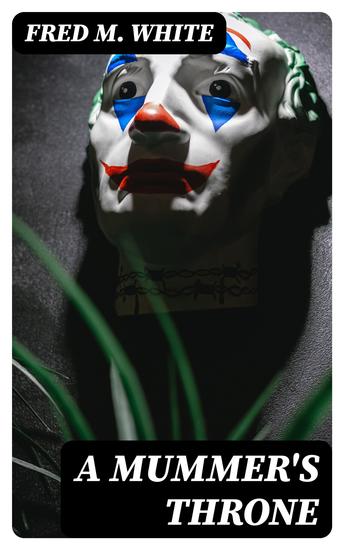
A Mummer's Throne - cover

A Mummer's Throne

Fred M. White

Editorial: DigiCat

  • 0
  • 0
  • 0

Sinopsis

In "A Mummer's Throne," Fred M. White weaves a captivating narrative that combines elements of romance, adventure, and social commentary. Set against the backdrop of the theatrical underworld of the Victorian era, the story unfolds through lively dialogue and vivid descriptions, capturing the complexities of human emotions and societal constraints. White's keen understanding of the performative aspects of identity is evident in his portrayal of characters who navigate the blurred lines between reality and illusion, illustrating the era's fascination with both theatre and personal reinvention. Fred M. White was a prolific English author, known for his diverse range of work, including novels, short stories, and plays. His experiences in journalism and literature, along with a deep appreciation for the theatrical arts, undoubtedly influenced his approach to storytelling in "A Mummer's Throne." This work reflects White's insights into the societal dynamics of his time, showcasing both the allure and the pitfalls of fame and ambition in a world steeped in performance. This novel is a compelling read for those interested in historical fiction that explores the intersections of art and life. Readers will appreciate White's dexterous storytelling and his nuanced characters, making it an essential addition to the canon of Victorian literature and a vivid exploration of the lengths to which individuals will go for love and recognition.
Disponible desde: 22/11/2022.
Longitud de impresión: 53 páginas.
Otros libros que te pueden interesar

  • Hand and Heart - From their pens to your ears genius in every story - cover

    Hand and Heart - From their pens...

    Elizabeth Gaskell

    • 0
    • 0
    • 0
    Elizabeth Stevenson was born in Chelsea in London on 29th September 1810.  
    Both parents embedded their strong Unitarian beliefs into Elizabeth who rebelliously was often reluctant to display these religious convictions.  
    The early death of Elizabeth’s mother saw her sent away to be brought up by her maternal aunt in Knutsford, Cheshire.  
    Her father now remarried but Elizabeth spent most of her childhood in Cheshire away from her father and his new family but was supportive towards her half-siblings.  
    Elizabeth’s aunt encouraged her education and particularly to read and express herself through writing.   
    In 1828, her brother John, who worked in the merchant navy, disappeared on a journey to India. This disastrous loss depressed her father, and she went to his household to nurse him for the next year before he died.  
    In 1832, she fell in love with William Gaskell, a Unitarian minister like her father, and married him.  They settled in Manchester. This booming industrial city had a great impact on Elizabeth who felt the need to speak up for poor workers and their exploitation by large industrial companies. A collection of poems and short stories, ‘Sketches among the Poor’ appeared in 1837, co-authored by her husband.  Her first major work, under a pseudonym, was ‘Mary Barton: A Tale of Manchester Life’ published in 1848. 
    During her career she worked continually with Charles Dickens and published much in his various magazines. With him she published ‘Lizzie Leigh’ in 1850 which dealt with the taboo subject of prostitution.  She was an excellent writer and impressed her many Victorian literary peers. Much of her writing reflects her work as a social critic highlighting the exploitation of the working class and the situation of women in society.  
    On 12th November 1865, Elizabeth Gaskell died in Holybourne, Hampshire, after suffering from a heart attack a month earlier.
    Ver libro
  • The Time Machine The Lost Manuscript - cover

    The Time Machine The Lost...

    H. G. Wells

    • 0
    • 0
    • 0
    Herbert George Wells was an English writer. Prolific in many genres, he wrote dozens of novels, short stories, and works of social commentary, history, satire, biography, and autobiography. His work also included two books on recreational war games. Wells is now best remembered for his science fiction novels and is often called the "father of science fiction", along with Jules Verne.During his own lifetime, however, he was most prominent as a forward-looking, even prophetic social critic who devoted his literary talents to the development of a progressive vision on a global scale. A futurist, he wrote a number of utopian works and foresaw the advent of aircraft, tanks, space travel, nuclear weapons, satellite television, and something resembling the World Wide Web. His science fiction imagined time travel, alien invasion, invisibility, and biological engineering. Wells's earliest specialized training was in biology, and his thinking on ethical matters took place in a specifically and fundamentally Darwinian context. He was also an outspoken Socialist from a young age, often (but not always, as at the beginning of the First World War) sympathizing with pacifist views. His later works became increasingly political and didactic, and he wrote little science fiction, while he sometimes indicated on official documents that his profession was that of a journalist. Novels such as Kipps and The History of Mr. Polly, which describe lower-middle-class life, led to the suggestion that he was a worthy successor to Charles Dickens, but Wells described a range of social strata and even attempted a diagnosis of English society as a whole.
    Ver libro
  • The Iron Heel - cover

    The Iron Heel

    Jack London

    • 0
    • 0
    • 0
    A rising tyranny. A world slipping into darkness. A resistance that refuses to die.
    Told through the passionate voice of Avis Everhard, The Iron Heel traces the terrifying rise of a ruthless oligarchy determined to crush democracy and control society. As workers revolt and the powerful tighten their grip, Avis and her husband Ernest become symbols of a rebellion that demands everything—courage, sacrifice, and unshakable faith in human freedom.
    
    Praised as "one of the earliest and most prophetic dystopian novels," Jack London's masterpiece blends political drama, emotional intensity, and startling foresight. Its warnings about power, class struggle, and authoritarianism feel more relevant than ever.
    
    If you crave bold ideas, high-stakes conflict, and dystopian storytelling that hits with real-world force, this classic will grip you until the final page.
    
    Open the book—and step into a future that still echoes in our world today.
    Ver libro
  • The Picture of Dorian Gray - A chilling masterpiece of Philosophical Fiction where a young man trades his soul for eternal youth while his hidden portrait bears the terrifying scars of his sins - cover

    The Picture of Dorian Gray - A...

    Oscar Wilde

    • 0
    • 0
    • 0
    What would you give to remain flawless forever? One young man gave his soul. 
    In the decadent heart of Victorian London, the exquisitely beautiful Dorian Gray sits for his portrait. Enchanted by his own perfection and corrupted by the cynical, pleasure-seeking Lord Henry Wotton, Dorian makes a desperate, chilling vow: he will remain forever young, while the painted canvas bears the burden of his age and his inevitable moral decay. 
    Freed from the physical consequences of his actions, Dorian plunges into a life of unchecked hedonism, secret sins, and tragic romance. Yet, locked away in his attic, the portrait begins to warp, reflecting the horrific, rotting truth of his soul. As the bodies pile up and the paranoia mounts, Dorian must ultimately face the terrifying reality of his bargain. 
    Why you will love this audiobook: A crowning achievement of Philosophical Fiction, this mesmerizing classic explores the corrupting nature of vanity, the pursuit of beauty, and the ultimate price of hedonism. Blending lush gothic horror with razor-sharp societal critique, it remains a timeless exploration of humanitys darkest desires. 
    About the Author: Oscar Wilde was a legendary nineteenth century Irish poet and playwright known for his biting wit, flamboyant style, and triumphs on the London stage. Though highly celebrated for his comedic plays, this solitary novel cemented his legacy as a profound, if controversial, literary genius.
    Ver libro
  • Madame Bovary - The Classic Tale - cover

    Madame Bovary - The Classic Tale

    Gustave Flaubert

    • 0
    • 0
    • 0
    Written over a century and a half ago, Madame Bovary is still an extraordinarily fresh, exciting and shockingly frank novel, at once an acute psychological study of a woman drawn into adultery through circumstances we can partly understand, and a sharply-observed comedy that offers a fascinating glimpse of the social and cultural divisions running through French provincial society in the mid nineteenth century. This translation is by Eleanor Marx-Aveling, a prominent social activist and literary translator. She was the youngest daughter of Karl Marx. 
     
    Gustave Flaubert was a highly influential, he has been considered the leading exponent of literary realism in his country. According to the literary theorist Kornelije Kvas, "in Flaubert, realism strives for formal perfection, so the presentation of reality tends to be neutral, emphasizing the values and importance of style as an objective method of presenting reality".He is known especially for his debut novel Madame Bovary (1857), his Correspondence, and his scrupulous devotion to his style and aesthetics. The celebrated short story writer Guy de Maupassant was a protégé of Flaubert. On the occasion of Flaubert's 198th birthday (12 December 2019), a group of researchers at CNRS published a neural language model under his name.
    Ver libro
  • Making a Living - From their pens to your ears genius in every story - cover

    Making a Living - From their...

    Charlotte Perkins Gilman

    • 0
    • 0
    • 0
    Charlotte Perkins Gilman was born on 3rd July 1860 in Hartford, Connecticut, to an unaffectionate mother and a father who abandoned her and her older brother to a life of poverty. 
    Inevitably her schooling was limited and by 15 she had attended seven different schools but received only four years education.  However Charlotte was resourceful and did spend time with her father’s aunts – the suffragist Isabella Beecher Hooker and the ‘Uncle Tom Cabin’s’ author, Harriet Beecher Stowe as well as many hours at the public library studying ancient civilisations. 
    In 1878, she enrolled in classes at the Rhode Island School of Design where she met Martha Luther and they developed a close relationship until Luther married in 1881. Charlotte was devastated and detested romance and love until she met and married the artist Charles Walter Stetson.  
    Their only child, Katharine Beecher Stetson, was born in 1885 but left Charlotte with post-natal depression, then often dismissed as a case of hysteria or nerves.  Unsuited to domestic life she ruptured her life and moved to California with Katherine.  She divorced in 1894 and then sent Katharine east to live with her father and his second wife confirming that his paternal rights be acknowledged and that Katherine establish a relationship with her father. 
    After her mother died in 1893, Charlotte moved back east and became involved with her first cousin, Wall Street attorney, Houghton Gilman who she married in 1900. After his death she moved back to California, where Katherine now lived.   
    Her most popular story is ‘The Yellow Wallpaper’ which touched on her own post-partum depression and underlined the need for women to be responsible for their mental and physical well-being, as the narrator is ordered by her husband/doctor to take compete rest in her room where she is isolated and becomes obsessed with the revolting yellow wallpaper.   
    She wrote other notable short stories the best of which we also include.   
    Charlotte lectured widely for social reform, wrote important non-fiction works that questioned our patriarchal system and left a legacy as a leading and positive spokesperson for feminism.  
    She was diagnosed with incurable breast cancer in 1932 and, as she wrote in her suicide note and autobiography, she ‘chose chloroform over cancer’    
    Charlotte Perkins Gilman took her own life on 17th August 1935, aged 75, in Pasadena, California.
    Ver libro